

UNICEF says poorest countries least benefit from public education funds
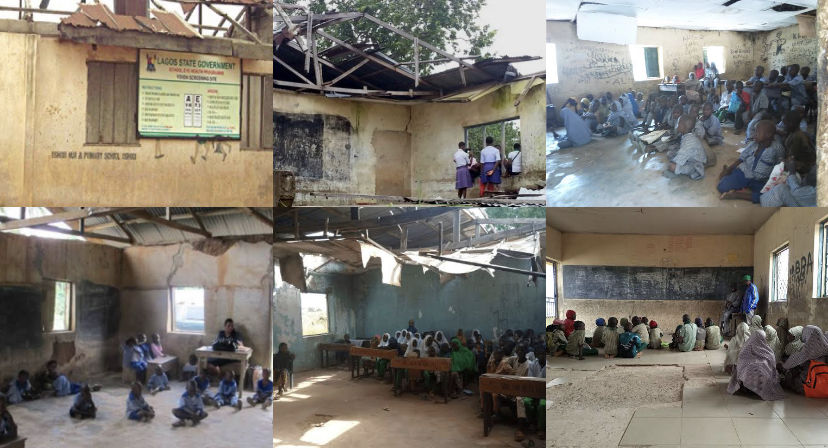
The United Nations International Children’s Emergency Fund (UNICEF) reports that the poorest countries benefit the least from public education funds.
While highlighting global educational inequality, UNICEF reported that only 16 per cent of public education funding goes to the poorest 20 per cent of learners, while 28 per cent goes to the richest 20 per cent of learners.
It said children from the poorest households benefit the least from national public education funding in the report titled ‘Transforming Education with Equitable Financing’, which looks at government spending from pre-primary through tertiary education in 102 countries.
UNICEF executive director Catherine Russell said, “We are failing children. Too many education systems around the world are investing the least in those children who need it the most.”
Ms Russell said the gap is most pronounced among low-income countries, as children from the wealthiest households benefit from over six times the amount of public education funding compared to the poorest learners.
She said in middle-income countries like Cote d’Ivoire and Senegal, the richest learners receive around four times more public education spending than the poorest.
According to her, in high-income countries, the richest usually benefit from 1.1 to 1.6 times as much public education spending as the poorest, with countries like France and Uruguay at the higher end of the gap.
UNICEF called for equitable financing to combat “learning poverty.” The report found that just a one percentage point increase in the allocation of public education resources to the poorest quintile of learners could potentially lift 35 million primary school-aged children out of learning poverty.
Ms Russell stressed that “investing in the education of the poorest children is the most cost-effective way to ensure the future for children, communities and countries” and noted that “true progress can only come when we invest in every child, everywhere.”
The report also found that children living in poverty are less likely to attend school, drop out sooner, and are less represented in higher education, which receives much higher public education spending per capita.
“Even before the COVID-19 pandemic, education systems across the world were largely failing children, with hundreds of millions of students attending school but not grasping basic reading and mathematics skills.” the report stated.
A recent study also estimated that two-thirds of all 10-year-olds worldwide cannot read or understand a simple story.
(Xinhua/NAN)

We have recently deactivated our website's comment provider in favour of other channels of distribution and commentary. We encourage you to join the conversation on our stories via our Facebook, Twitter and other social media pages.

More from Peoples Gazette

Agriculture
FG tasks ECOWAS on leveraging financing strategies for agroecology
The federal government has urged stakeholders in the agriculture and finance sectors in the West Africa region to leverage financing strategies to enhance agroecology practices

Politics
Katsina youths pledge to deliver over 2 million votes to Atiku
“Katsina State is Atiku’s political base because it is his second home.”

World
Alleged Sexual Abuse: Trump pays over $5 million damages to E. Jean Carroll
A court filing showed that Mr Trump paid a total of $5.6 million, including interest.

States
Army kills two terrorists, rescue kidnap victims in Edo
The operation was initiated following a report of a kidnap incident at Ambrose Alli University, Ekpoma, on 13 July.
NationWide
CIoD seeks reforms to boost Nigeria’s global competitiveness
Mr Oyebanji said governance had become a strategic imperative amid technological disruption.
NationWide
Senate passes three concurrence bills, advances FMC Argungu bill
The Senate unanimously approved the three bills for concurrence.

Economy
BOI commits €85 million facility to drive cocoa processing
The bank said it would prioritise lending to processors, cooperatives and micro, small, and medium enterprises that add value locally.

States
Police arrest suspected bandit in Kano
The police recovered items including two sets of suspected military uniform.


