

UNICEF warns of acute water shortage in Nigeria

The UN Children’s Fund (UNICEF) has hinted that Nigeria’s continued reliance on surface water sources may lead to an acute shortage, negatively impacting the livelihoods and well-being of the population.
Peter Hawkins, UNICEF Representative in Nigeria, said this when he featured on the News Agency of Nigeria (NAN) Forum, a special interview programme, in Abuja.
He said due to population growth, Nigeria made slow progress in improving access to potable water for the citizens, with access only at 10 per cent, calling for more investments in the sector.
Mr Hawkins emphasised that there was a need for the country to seek water storage alternatives through harvesting and sustainable conservation.
“Nigeria relies a lot on the water table and surface water.
“The water table with climate change and the massive population, Nigeria potentially has a crisis looming in the future.
“I am talking about 10, 20, 30 years, and its reliance on surface water, without the infrastructure to meet it, is always going to be a burden on the country,” he said.
Mr Hawkins charged the country to seek other alternatives for capturing water, emphasising the urban areas.
The UNICEF representative noted that the biggest progress in the sector was the declaration of a state of emergency in the Water, Sanitation and Hygiene (WASH) sector by President Muhammadu Buhari in 2018.
He said this had led to more local governments becoming open defecation-free and communities taking ownership of their sanitation and hygiene needs.
Mr Hawkins said that UNICEF had introduced the annual Water, Sanitation and Hygiene National Outcome Routine Mapping (WASHNORM) Report for all stakeholders to monitor progress in water and sanitation at the state level.
According to him, Nigeria needs N3 billion annually to make a reasonable change.
“The level of investment, I think, if I remember correctly, is between the region of N3 billion a year if Nigeria were to catch up with any sort of reasonable level of access to clean water and good sanitation.
“That level of investment needs to take place, and if it doesn’t take place, I am afraid, over the next 20, 30 years, that Nigeria will be faced with serious consequences.
“I will give you one statistic that I know from water in primary healthcare centres, it has dropped from 7 to 6 per cent year on year.
“So only 6 per cent of primary healthcare centres across the country have access to clean water,” he said.
According to the 2021 WASHNORM Report, 23 per cent of Nigerians lack access to basic water supply services, and only 10 per cent of the population have access to basic water, sanitation and hygiene services combined.
(NAN)

We have recently deactivated our website's comment provider in favour of other channels of distribution and commentary. We encourage you to join the conversation on our stories via our Facebook, Twitter and other social media pages.

More from Peoples Gazette

Agriculture
FG tasks ECOWAS on leveraging financing strategies for agroecology
The federal government has urged stakeholders in the agriculture and finance sectors in the West Africa region to leverage financing strategies to enhance agroecology practices

Politics
Katsina youths pledge to deliver over 2 million votes to Atiku
“Katsina State is Atiku’s political base because it is his second home.”
![U.S. Mission[Credit: X.com]](https://gazettengr.com/wp-content/uploads/images-78-3.jpeg)
World
U.S. issues security alert to Americans worldwide as Iran kills two soldiers
The U.S. government issued a warning to all Americans worldwide amid the escalating war against Iran.

Heading 3
Tinubu’s scorecard is 139 million Nigerians in poverty; he should resign, not seek re-election: ADC
“The evidence of 139 million people living in poverty and 17 million at risk of starvation is President Tinubu’s scorecard,” the party said.
Lagos
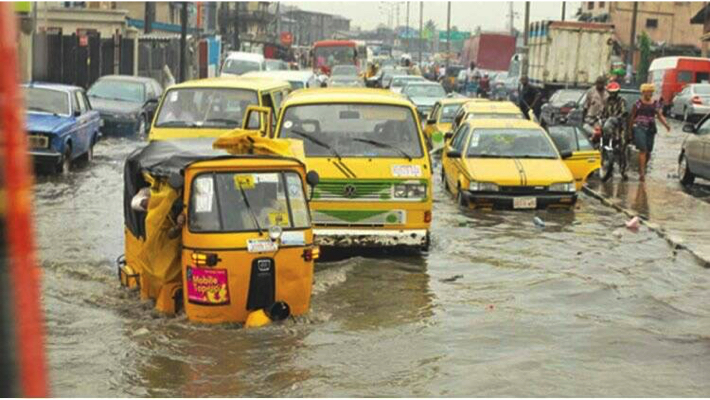
Lagos govt working to tackle flooding, says SSG
She said the government was assessing critical drainage channels and other vulnerable locations to strengthen ongoing flood control measures.

States
Three killed, four injured in Anambra road crash: FRSC
The FRSC said the accident occurred on Friday along the Nnobi–Agulu–Awka road.

Politics
2027: Group asks ADC, Atiku to drop Amaechi as vice-presidential candidate
The group accused Mr Amaechi of desperation, saying that he lacked the grassroots strength required to win the election.
![Jens Spahn. [PHOTO CREDIT: ZDF]](https://gazettengr.com/wp-content/uploads/Jens-Spahn.jpg)
Heading 4
German lawmaker resigns after backlash for welcoming child through surrogacy
The 46-year-old politician and his party, the Christian Democratic Union (CDU), had backed a ban on surrogacy.


