

Unpaid care work preventing African women from economic equality: Expert

A gender expert, Shireen Motara, has urged African governments to recognise unpaid care work as a major barrier to women’s economic empowerment.
Ms Motara, Founder and Chief Executive Officer of the Next Chapter Studio, a South African women-led leadership, strategy and social justice consultancy, said that the invisible burden continued to keep millions of women from achieving true equality and limits their economic opportunities across Africa.
She said though many African countries had made significant progress in advancing women’s legal rights, little had changed in redistributing unpaid care responsibilities.
“Progressive legislation is necessary but not sufficient. South Africa has some of the most progressive gender and family policies on the continent on paper, yet the lived experience of unpaid care work has barely moved. The lesson is: legislate, but also commit to implementation,” she said.
According to her, unpaid care work remains deeply rooted in patriarchal norms and social expectations that continue to define caregiving as women’s natural responsibility.
She said the unequal burden forced many women to choose between career advancement and family responsibilities, contributing significantly to the gender pay gap and under-representation of women in leadership positions.
“Women are burnt out, exhausted and overwhelmed because even with better job prospects they still carry the burden of caring for families.
“Women often have to choose between career progression and their care responsibilities, choices men are not faced with. This is one of the least-discussed drivers of the gender pay and leadership gap,” she said.
She said that women at the lower end of the employment ladder faced even greater challenges, including low wages, physically demanding work, heavy caregiving responsibilities and unsafe public transport.
She attributed the continued neglect of unpaid care work in national economic planning to insufficient political commitment.
She said that in South Africa, efforts to address gender-based violence often consumed much of the attention and resources devoted to women’s rights advocacy, leaving limited focus on unpaid care work.
On policy solutions, she urged governments to adopt the “Three Rs” approach, recognise, reduce and redistribute care work.
Ms Motara urged governments to formally recognise care as work, reduce its burden through investments in infrastructure such as water, electricity, transport and childcare, and redistribute caregiving responsibilities between women and men, families and the state.
“Public childcare and eldercare infrastructure require more political attention and economic investment,” she noted.
She also urged employers to introduce family-friendly workplace policies, including flexible and remote work arrangements, paid family responsibility leave and childcare support.
“Workplace cultures should encourage men to take on greater caregiving responsibilities. Failing to address unpaid care work will continue to trap women in poverty and deepen economic inequality across generations.
“It is a feedback loop. Women with heavier unpaid care burdens are pushed into informal, lower-paid or part-time work, which limits their income and old-age security.
“That deepens household poverty, increases the care burden on the next generation of girls and keeps women stuck economically and professionally,” she said.
The expert added that the next phase of women’s rights advocacy in Africa should move beyond legal equality towards ensuring women have equal access to time, economic opportunities and decision-making power.
“Unpaid care work is one of the last major frontiers because it is the one that hides in plain sight, inside the home, always visible, yet still politically and economically invisible,” she said.
(NAN)

We have recently deactivated our website's comment provider in favour of other channels of distribution and commentary. We encourage you to join the conversation on our stories via our Facebook, Twitter and other social media pages.

More from Peoples Gazette

States
Independence: NBA urges Nigerians to expect better future
The NBA said that ordinary Nigerians should be deriving benefit from the subsidy removal rather than hardship.

Agriculture
FG tasks ECOWAS on leveraging financing strategies for agroecology
The federal government has urged stakeholders in the agriculture and finance sectors in the West Africa region to leverage financing strategies to enhance agroecology practices

Politics
Katsina youths pledge to deliver over 2 million votes to Atiku
“Katsina State is Atiku’s political base because it is his second home.”
Politics
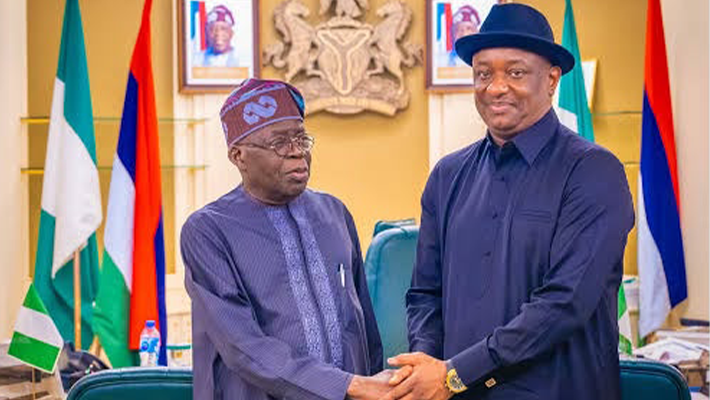
Tinubu appoints Keyamo director of APC air mobilisation
President Bola Tinubu has appointed aviation minister Festus Keyamo as director of air mobilisation for the All Progressives Congress’ 2027 re-election campaign.

Sport
NPFL: Barau FC, Kwara United play 1-1 draw in Kano
Barau FC and Kwara United drew 1-1 in their Nigeria Premier Football League (NPFL) encounter at Sani Abacha Stadium, Kano, on Sunday.

Sport
Euromatch NPFL: Matchday 10 results
Here are the results of the Matchday 10 fixtures in the ongoing 2026/2027 Euromatch Nigeria Premier Football League (NPFL), played on Sunday.
Politics
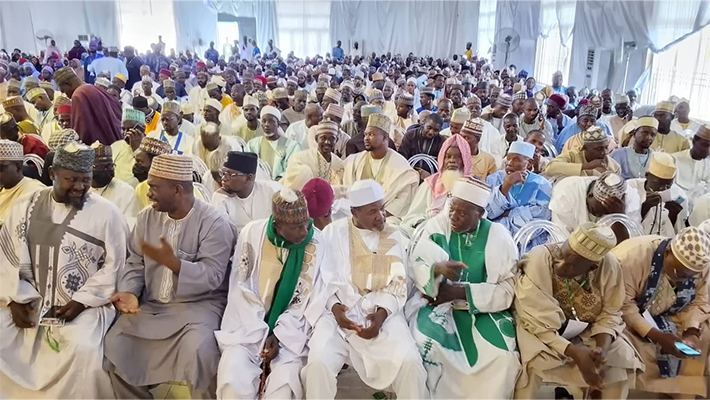
1,117 Muslim clerics in Katsina endorse Tinubu’s 2027 re-election bid
Thousands of Islamic clerics from the Izala and Tijjaniyya groups in Katsina State have endorsed President Bola Tinubu’s 2027 re-election bid.

Anti-Corruption
Nine suspects arrested in FBI’s latest operation against Yahoo Boys in Nigeria
The FBI boss made the disclosure on Sunday.

NationWide
Nigeria edge Uganda by 1 run to win Cricket World Cup Africa qualifier
Nigeria scored 148 runs in 19.4 overs before restricting Uganda to 147 for nine in 20 overs at the Nigeria Cricket Federation (NCF) Oval 1 on Sunday.


