


War against Niger could allow Tinubu postpone elections if the Supreme Court orders rerun
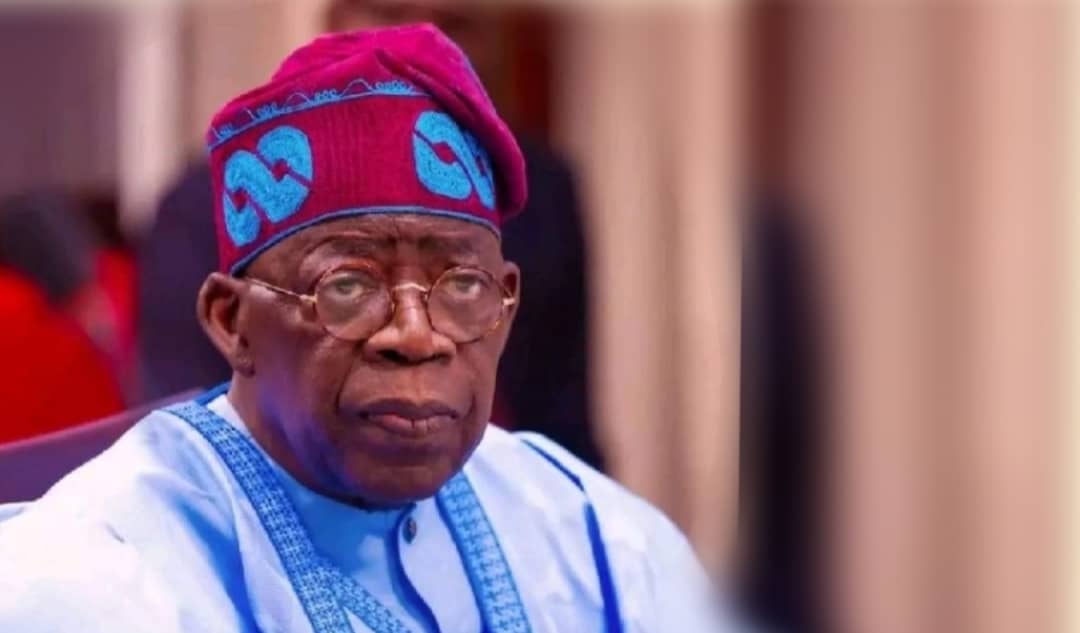
Amid heightened tensions of a potential military invasion of the Niger Republic, which could escalate into a full-blown war, there are serious concerns that President Bola Tinubu could postpone presidential elections by four years should the Supreme Court order a rerun.
Mr Tinubu was, on March 1, declared the winner of the presidential poll adjudged fraudulent, with other candidates challenging his victory at the tribunal, where the case has been lingering for months. Nonetheless, the court will give a verdict no later than September 16 per the provisions of the Electoral Act, which states that petitions must be determined after 180 days.
Aggrieved parties are expected to take the tribunal’s outcome to the Supreme Court for a more robust judgment, which must be issued within 60 days, about mid-November.
Given the crucial nature of the matter and the trove of documents already admitted as evidence by the three candidates, the apex court may order a rerun among the top three contenders, Mr Tinubu (8.1 million votes), Atiku Abubakar of PDP (6.9 million votes) and Peter Obi of the Labour Party (6.1 million votes) to resolve the dispute.
But wielding the powers of the presidency, Mr Tinubu, who may have already invaded the Niger Republic by November, has the constitutional right to delay an election if the National Assembly grants his request.
It is highly unlikely that the Senate, led by Godswill Akpabio, a strong ally of Mr Tinubu whom he staunchly backed to clinch the position, would say no.
Also, members of the ruling All Progressives Congress (APC) make up most of the Senate, boasting 59 of 109 senators. They would give the president all the necessary support to ensure his requests are speedily acceded, even if it means delaying a court order.
On Friday, Mr Tinubu briefed the National Assembly on ECOWAS’ proposed military action and other sanctions against the coup plotters in the Niger Republic. Obtaining approval to delay the election, if required, seems to be a matter of thunderous ayes over minority nays.
Section 135 (3) of the constitution states that “If the federation is at war in which the territory of Nigeria is physically involved and the President considers that it is not practicable to hold elections, the National Assembly may by resolution extend the period of four years mentioned in subsection (2) of this section from time to time; but no such extension shall exceed a period of six months at any one time.”
While it may be wondered that the Niger Republic, with a small population of about 25 million people, would be easy to defeat, one can never be too certain in wars, particularly the one that now enjoys the alliance of Mali, Burkina Faso and rumoured support of Russia.
A valid case is that the U.S. invaded Afghanistan in 2001 to topple the Taliban following the September 11 attacks in which thousands were killed in coordinated bombings masterminded by Al-Qaeda terrorist Osama Bin Laden.
An invasion presumed to last a few weeks lasted decades, which saw the U.S. government eventually withdraw their troops from Afghanistan in disgrace and humiliation after 20 years.
Operation Iraqi Freedom is another example that captures the uncertainty of the duration of a war.
U.S. troops, with the support of allies, invaded Iraq on the suspicion that Saddam Hussein was manufacturing Weapons of Mass Destruction (WMD). This claim could not be substantiated with evidence. From March 2003, when the Muslim-dominated nation was invaded, the U.S. government did not withdraw their troops from Iraq until 2011.
The most recent instance is that of Russia, which waged war against Ukraine to demilitarise it over the latter’s intent to join the North Atlantic Treaty Organisation (NATO). The war has lingered for 18 months and is still ongoing.
The Niger Republic, under the military dictatorship of Abdouramane Tchiani, should not be underestimated as the ECOWAS seven-day ultimatum for him to hand over power nears its last 24 hours.
On Thursday, Mr Tchiani cut off diplomatic ties with Nigeria, the U.S., Togo, and France. He recalled the nation’s ambassadors in an audacious move that signalled he is not backing down in his quest to rule Niger.
The U.S. are keenly interested in Niger, mainly because of its massive deposits of uranium, a heavy metal used in powering nuclear reactors and treating cancer patients. However, it could be lethal in the wrong hands.

We have recently deactivated our website's comment provider in favour of other channels of distribution and commentary. We encourage you to join the conversation on our stories via our Facebook, Twitter and other social media pages.

More from Peoples Gazette

Agriculture
FG tasks ECOWAS on leveraging financing strategies for agroecology
The federal government has urged stakeholders in the agriculture and finance sectors in the West Africa region to leverage financing strategies to enhance agroecology practices

Politics
Katsina youths pledge to deliver over 2 million votes to Atiku
“Katsina State is Atiku’s political base because it is his second home.”

Economy
Tinubu’s fuel subsidy removal enriched governors, made life unbearable for Nigerians: Donald Duke
Mr Duke accused the Tinubu administration of implementing economic policies that enriched government coffers rather than the people.

Politics
Tinubu appoints Gov Sanwo-Olu as 2027 campaign South-West coordinator
Mr Sanwo-Olu, who is also chairman of the South-West Governors’ Forum, will coordinate the party’s campaign activities across Lagos, Ogun, Oyo, Osun, Ondo and Ekiti states.

States
NDLEA raids six drug black spots in Jigawa, arrests eight suspects
Mr Wada said the command recovered 43.96 grams of assorted illicit drugs.

Abuja
Wike orders crackdown on car dealers operating in Abuja green areas
Mr Wike said defaulting vehicles would be impounded and auctioned, and their locations permanently shut down.
States
Police rescue 13 abducted passengers in Benue
Orchia Peter Aondongu, the Benue police command’s spokesman, said the victims were kidnapped the previous Friday while travelling from Enugu to Abuja.

Economy
Recapitalisation: Shareholders seek deadline extension for insurers
Mr Okezie said withdrawing licences from companies making genuine efforts could hurt shareholders and investors whose funds remained tied up in affected firms.


