

Weapons looted during Libyan war found with terrorist groups in Nigeria: UN

The United Nations says some weapons looted during the Libyan conflict in 2011 have ended up in the hands of extremist groups in Nigeria.
Izumi Nakamitsu, the UN under-secretary-general and high representative for disarmament affairs, stated this at UN Headquarters in New York on Tuesday, as delegates gathered to address the global spread of illicit firearms.
The UN’s top disarmament official expressed regret that weapons continue to fuel violence in communities long after wars end, causing devastation across once peaceful communities.
She cited “Libya, where weapons looted or diverted during and after the 2011 conflict, which ended the rule of Muammar Gaddafi, later surfaced across the wider Sahel region, including in Niger, Burkina Faso, and Nigeria”.
“Some were subsequently found in the hands of extremist groups, illustrating how arms from one conflict can destabilise neighbouring countries years later. The end of the conflict does not mean the end of the circulation of those weapons; it stays, and it continues to harm people,” Ms Nakamitsu said.
In parts of sub-Saharan Africa, the UN said the proliferation of small arms can undermine peacebuilding efforts long after fighting subsides. Weapons retained by armed groups, militias or communities for self-protection can contribute to renewed violence and instability, she stressed.
According to her, illicit weapons are also linked to human rights abuses, terrorism and sexual and gender-based violence.
“It is not just a security issue. It is also about peacebuilding. It is about human rights. It is also about development,” Ms Nakamitsu said.
She said years after conflicts fade from the headlines, the weapons used to fight them often continue to circulate, crossing borders, fuelling crime and undermining an often-fragile peace.
“Wars end, but unfortunately, the weapons that are used in that particular conflict would not be under full control,” Ms Nakamitsu said. “They continue to circulate. They are sometimes hidden. They are brought across borders.”
She expressed concerns that the emergence of ghost guns, 3D-printed firearms and increasingly sophisticated trafficking networks are creating new challenges for governments worldwide.
“Those weapons or weapon parts, if they are disassembled and then trafficked, are more difficult to trace,” Ms Nakamitsu said.
UN member states adopted an action programme in 2001, committing to strengthen national legislation, improve stockpile security, combat illicit trafficking, and expand international cooperation.
A major milestone followed in 2005 with the adoption of the International Tracing Instrument, which established global standards for marking, recording, and tracing illegal weaponry.
The framework helps investigators identify where illicit weapons originated and how they entered illegal markets, while reducing the risk of diversion from legal stockpiles.
The UN supports implementation through technical assistance, policy guidance, and capacity-building programmes aimed at helping governments secure weapons stockpiles, improve tracing systems and strengthen border controls.
(NAN)

We have recently deactivated our website's comment provider in favour of other channels of distribution and commentary. We encourage you to join the conversation on our stories via our Facebook, Twitter and other social media pages.

More from Peoples Gazette

Agriculture
FG tasks ECOWAS on leveraging financing strategies for agroecology
The federal government has urged stakeholders in the agriculture and finance sectors in the West Africa region to leverage financing strategies to enhance agroecology practices

Politics
Katsina youths pledge to deliver over 2 million votes to Atiku
“Katsina State is Atiku’s political base because it is his second home.”

Diaspora
UK excludes Nigerian-trained teachers from direct QTS application
“From 9 September 2026, teachers who trained to teach in Ghana, India, or Nigeria will no longer be eligible to use the ‘Apply for QTS in England’ service,” the department said.

Education
UniAbuja students advocate skills acquisition alongside academic certificates
Students at the University of Abuja have advocated acquiring practical skills alongside academic qualifications, saying the combination could improve young Nigerians’ employability and promote self-reliance

Politics
Gov Sani approves N3.65 billion for retirees, N21.45 billion paid in three years
Governor Uba Sani has approved ₦3.659 billion to pay pensions, gratuities, and death benefits to retirees and families of deceased public servants across Kaduna.

Anti-Corruption
Gbajabiamila, Ejimakor, Salis, Imasuen, other disgraced fraudulent Nigerian lawyers sanctioned in U.S., UK free to practise in Nigeria: NBA
Disgraced and U.S.-adjudged fraudulent lawyers Femi Gbajabiamila, Owolabi Salis, Aloysius Ejimakor and Neda Imasuen are free to practise in Nigeria, NBA tells Peoples Gazette.

Africa
Guterres demands Africa’s minerals create jobs, backs permanent UN seats
António Guterres has demanded an end to the plundering of Africa’s mineral resources, insisting the continent’s wealth must create jobs and prosperity for Africans.
Economy
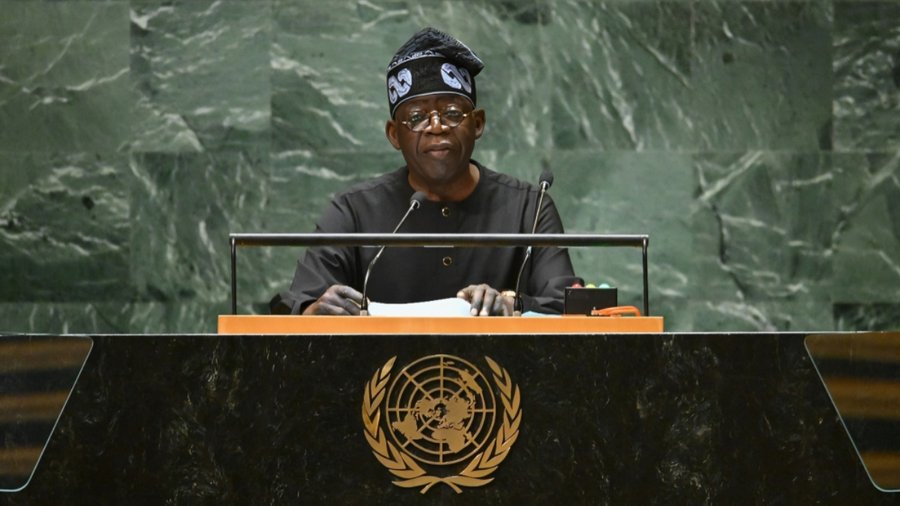
Nigeria push for end of exploitation of Africa’s mineral resources at UNGA81
President Bola Tinubu has called for a fresh continental push to end the exploitation of Africa’s critical mineral resources.


