

What Ishaq Oloyede’s tenure says about JAMB
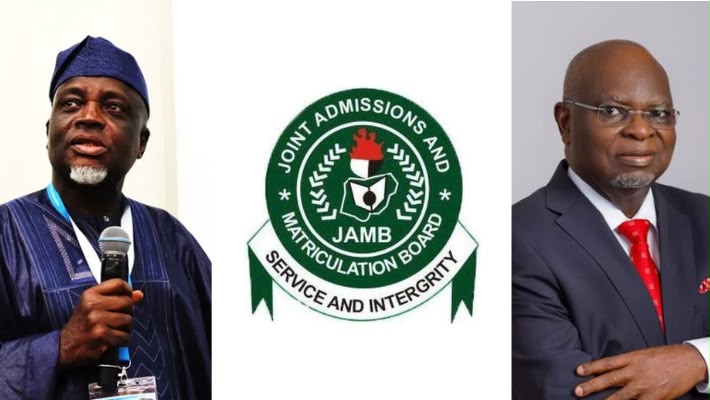
If the Joint Admissions and Matriculation Board (JAMB) was sick when Prof Ishaq Oloyede was appointed registrar 10 years ago, it might have been said that even great institutions have their difficult times. That’s not unusual. But JAMB wasn’t sick.
It was dying and becoming so irrelevant that those it was supposed to serve were wishing it dead. JAMB was not just a problem; it had become the problem of gaining admission to higher institutions, with heartbreaking stories of thousands of candidates for whom hard work and good WAEC grades no longer seemed to matter.
Beating the system became the sport, and fraudulent coaches, often assisted by JAMB insiders, established “miracle centres” with large signboards offering hallelujah promises of how to pass your exam without sitting for it. We can smile now, but believe me, it was not a laughing matter.
Centralised national school placement was not always the thing. Before JAMB was created in 1978, universities and other higher institutions conducted their own admissions. But once JAMB was established and admissions were centralised, schools’ discretion was curtailed.
As the demand for higher education outstripped supply and public and private higher schools proliferated, standards collapsed. The regulator, which was supposed to serve candidates, began to serve itself instead, feeding off the misery of desperate candidates.
It was at this point, where desperation met corruption, that Oloyede was appointed JAMB registrar.
The power of one
In an article entitled ‘JAMB: Dirty Secrets of a Cut-off War’, which I wrote nearly a decade ago, I cited how the broken admission system was only able to cater to the needs of about 25 per cent of largely qualified students who applied yearly, and how registrars and admission officers were worsening the problem by trading in cut-off marks.
As if the problem outside was not serious enough, the problem inside JAMB at the time was even worse. As I wrote in an article last year, one of the biggest dramas in the institution’s 48-year history unfolded two years after he was appointed registrar, following his exceptional record as vice-chancellor of the University of Ilorin.
JAMB introduced computerised examinations in 2014, but the system, still in its infancy, was marred by delays, confusion, and scratch-card fraud.
Oloyede ordered an investigation, which found that the place was infested with snakes, including boa constrictors in human form, that had allegedly swallowed millions of naira from scratch card sales.
Snake-charmer’s den
Philomina Chieshe, a clerk at JAMB’s Benue office, “swallowed” N36 million from the sales of scratch cards and told investigators and the court that it was indeed a snake that had mysteriously devoured the money.
Seven years after she was arraigned before Justice Peter Affen at the FCT High Court in 2019, neither Chieshe nor any of the reptiles in the scratch-card hole have been held accountable for the fraud. Apart from swallowing N36 million, which was equivalent to $100,000 at the time, the snakes also appear to have swallowed the court and the prosecutors.
This was the mess Oloyede inherited—a regulatory institution no longer fit for purpose, but never short of scandalous, self-serving ingenuity.
The original idea of JAMB, which, interestingly, was recommended by vice chancellors of seven federal universities at the time, was to serve as a clearinghouse. Multiple admissions by candidates were creating a problem for the growing number of those seeking admission. While some candidates were offered multiple admissions and ultimately used only one, other qualified candidates were shut out. So, JAMB was a child of necessity.
Band-Aid or what?
As a sworn enemy of centralised systems, which often breed corruption and tyranny, I expressed the view, even in the early days of Oloyede’s tenure, that the system was unreformable. I thought the best we could hope for was a Band-Aid before JAMB finally collapsed under the weight of its corruption.
Oloyede’s tenure has proved that occasionally, elephants dance. Over the last 10 years, the board has transformed from a snake-infested wasteland of corruption and mediocrity into one of Nigeria’s most responsive and better-run public institutions. To promote openness, accountability, and inclusiveness, it has expanded the decision-making process to include independent and other professionals to monitor and evaluate the board’s activities, particularly the UTME exam.
A new sheriff
Of course, some problems remain, like the increasing and more sophisticated cases of impersonation and the challenges presented by the misuse of artificial intelligence, parents’ active involvement in examination fraud, and the rising cost of managing examinations, which could be up to four times the present cost of N4 billion, when the federal government’s review of the allowances and benefits of civil servants takes effect in October.
The new registrar, Prof Olusegun Aina, will find, as he takes over, that sooner than later, JAMB may be heading into a serious financial crisis due to rising operational costs. Unless steps are taken, it could move from a regulator that remitted over N55 billion to the federal treasury—compared to less than N60 million the year before Oloyede took office—to an institution that will struggle to survive financially.
In the months ahead, the examiner will be facing its own test, its own JAMB question, namely: how will it square its finances without raising examination fees?
As Oloyede leaves office, he leaves behind a legacy of transforming one of the most lethargic public institutions into a regulator that combines fairness and transparency, especially using biometric controls, CBT centres, e-PINS, USSD, and other digital payment systems.
Today, JAMB operates as one of Africa’s largest and most centralised university admissions systems, through the Central Admissions Processing System (CAPS), which has been recognised for improving efficiency and transparency in admissions.
Looking ahead
His sterling tenure has not completely cured my pessimism about centralising admission, especially in a country like Nigeria, already chafing under the tyranny of many things federal. Yet, Oloyede has demonstrated that where there is a will, it’s possible to find a way and make a difference.
His tenure and the public appreciation of his work, even during very difficult times—notably staff negligence that nearly marred the 2025 UTME exam—show that public service can indeed advance the greater public good. His successor has the unique advantage of building on a firmer foundation; yet, that advantage can quickly become his albatross if he mismanages it.
Ishiekwene is the Editor-in-Chief of LEADERSHIP and author of the book, Writing for Media and Monetising It.

We have recently deactivated our website's comment provider in favour of other channels of distribution and commentary. We encourage you to join the conversation on our stories via our Facebook, Twitter and other social media pages.

More from Peoples Gazette

States
Independence: NBA urges Nigerians to expect better future
The NBA said that ordinary Nigerians should be deriving benefit from the subsidy removal rather than hardship.

Agriculture
FG tasks ECOWAS on leveraging financing strategies for agroecology
The federal government has urged stakeholders in the agriculture and finance sectors in the West Africa region to leverage financing strategies to enhance agroecology practices

Politics
Katsina youths pledge to deliver over 2 million votes to Atiku
“Katsina State is Atiku’s political base because it is his second home.”

Sport
Flamingos lose 2-1 to Poland in FIFA U-17 Women’s World Cup opener
Poland’s Natalia Skrok made it two in the second half when Blanka Zajac, in the 65th minute, crossed into the Nigerian penalty area.

States
Gov Mbah scraps N750 daily ticket fee for Enugu tricycle operators, extends work hours
Mr Mbah also disclosed that tricycle operators would continue to use the state’s modern transport terminals free of charge.

States
FG unveils five-point strategy to tackle banditry, terrorism in Sokoto
Mr Ribadu called for sustained security deployments around vulnerable settlements, forest corridors and border communities.

Politics
2027: Wike urges Rivers traditional leaders to avoid ‘mistake’, back Tinubu for prosperity
Mr Wike said, “Supporting Tinubu is a support for prosperity.”

Heading 4
NAPTIP raises alarm over rise in parents’ facilitation of children’s sexual exploitation
The NAPTIP boss said parents and guardians were facilitating the sexual exploitation of their children to make money.
Heading 3
Shettima warns Tinubu’s supporters against dismissing Nigerians’ hardship during campaigns
Mr Shettima said the North has spoken with a resounding voice and unmistakable conviction in its support for Mr Tinubu.


