

WHO issues new recommendations to end rising ‘medicalised’ female genital mutilation

The World Health Organisation (WHO) has called for urgent measures “to curtail rising medicalisation of female genital mutilation (FGM)” and to engage health workers to prevent the practice.
The world body said on Monday in a statement that the call is in a new guideline published on April 25.
According to WHO, while the health sector plays a key role in stopping FGM and supporting survivors in several parts of the world, evidence suggests health workers are increasingly practising it.
The statement noted that in 2020, an estimated 52 million girls and women were subjected to FGM at the hands of health workers.
The organisation added that the new WHO guideline, titled “The Prevention of Female Genital Mutilation and Clinical Management of Complications”, provides recommendations to both prevent the practice and ensure evidence-based care for survivors.
“It covers actions for the health sector, governments and affected communities,” it said.
Pascale Allotey, WHO’s director for sexual and reproductive health and research, said FGM is a severe violation of girls’ rights and critically endangers their health, adding that the health sector must be a change agent rather than a perpetrator of the harmful practice.
“Health practitioners must also provide high-quality medical care for those suffering its effects,” Ms Allotey said.
Typically carried out on young girls before they reach puberty, FGM includes all procedures that remove or injure parts of the female genitalia for non-medical reasons, she said.
She added, “Some studies suggest it can even be more dangerous when performed by health workers since it can result in deeper, more severe cuts.”
Ms Allotey said that for these reasons, WHO’s new guideline recommended professional codes of conduct that expressly prohibit health workers from performing FGM.
Christina Pallitto, a scientist at WHO, said research shows that health workers can be influential opinion leaders in changing attitudes on FGM and play crucial roles in its prevention.
She said, “Engaging doctors, nurses and midwives should be a key element in FGM prevention and response, as countries seek to end the practice and protect the health of women and girls.
Ms Pallitto stressed the need for community education, effective laws and practices, promoting girls’ rights and supporting attitudinal change.
According to her, given the extent of both short- and long-term health issues that result from the practice, survivors may need a range of health services at different life stages.
She said that it would start from mental healthcare to management of obstetric risks and, where appropriate, surgical repairs.
“Countries like Burkina Faso, Sierra Leone and Ethiopia have seen reductions in prevalence among 15 to 19-year-olds over the past 30 years by as much as 50 per cent, 35 per cent and 30 per cent, respectively, through collective action and political commitment to enforce bans and accelerate prevention,’’ she said.
According to her, the likelihood of a girl undergoing genital mutilation has decreased threefold since 1990.
“However, it remains common in some 30 countries around the world, and an estimated four million girls each year are still at risk,’’ she added.
(NAN)

We have recently deactivated our website's comment provider in favour of other channels of distribution and commentary. We encourage you to join the conversation on our stories via our Facebook, Twitter and other social media pages.

More from Peoples Gazette

States
Independence: NBA urges Nigerians to expect better future
The NBA said that ordinary Nigerians should be deriving benefit from the subsidy removal rather than hardship.

Agriculture
FG tasks ECOWAS on leveraging financing strategies for agroecology
The federal government has urged stakeholders in the agriculture and finance sectors in the West Africa region to leverage financing strategies to enhance agroecology practices

Politics
Katsina youths pledge to deliver over 2 million votes to Atiku
“Katsina State is Atiku’s political base because it is his second home.”

Heading 5
Gov Oyebanji reappoints SSG, chief of staff, spokesperson
The reappointments followed Mr Oyebanji’s inauguration for a second term in office.

Anti-Corruption
Witness tells court how NDC Reps candidate Duruibe allegedly defrauded him of N239 million
Ms Duruibe emerged as the House of Representatives candidate for Okigwe South Federal Constituency in June.

Heading 2
Nasarawa assembly warns contractors against substandard road projects
The committee chairman commended the contractors for the work done so far.
States
Enugu approves payment of N32 billion gratuity arrears from 2000
The SSG said the payments would begin with an initial release of N10 billion.
Africa
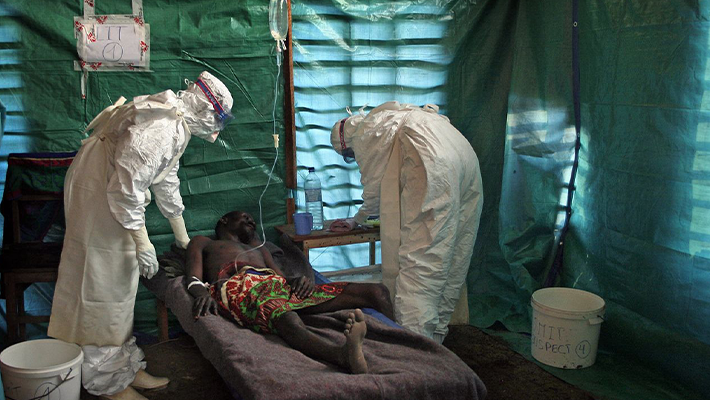
WHO urges vigilance in Kenya after second Ebola case
WHO underlined the importance of appropriate screening to identify travellers who might pose a health risk.
Uncategorized
UK warns citizens against all travel to Sokoto
The directive marked Bauchi State for essential travel only.


