

WHO recommends Ervebo vaccine trial against Bundibugyo virus in DR Congo

The World Health Organisation (WHO) Technical Advisory Group has recommended that the Ervebo vaccine be prioritised for a randomised clinical trial against Bundibugyo virus disease in the Democratic Republic of Congo.
The recommendation is contained in a statement issued on Friday.
According to the statement, the recommendation followed new preliminary animal-study data indicating that Ervebo can provide some cross-protection against Bundibugyo virus disease, particularly in reducing deaths.
It said that the advisory group made the recommendation after reviewing available evidence on the vaccine’s safety, efficacy, availability and feasibility during its third meeting on July 31.
The statement said that WHO convened advisory groups after declaring a Public Health Emergency of International Concern on May 16 over the Bundibugyo virus outbreak.
“Initially, the group advised against using Ervebo outside carefully designed research settings because its effectiveness against Bundibugyo virus disease remained uncertain.
“Ervebo is currently the only licensed Ebola vaccine, but it was developed specifically against Ebola virus disease caused by Ebola Zaire virus,” it said.
The WHO noted that the experts said there were no identified safety concerns with Ervebo for use among contacts of confirmed cases during a Bundibugyo virus disease outbreak.
The group, however, stressed that Ervebo’s effectiveness against Bundibugyo disease and transmission had not yet been established and required evaluation through clinical research.
According to it, a vaccine specifically developed against Bundibugyo virus would remain the preferred option, although preliminary data on such candidates were currently unavailable.
It said that the advisory group also emphasised the need to facilitate large-scale vaccine production and access if future evidence demonstrated sufficient efficacy to protect affected populations.
(NAN)

We have recently deactivated our website's comment provider in favour of other channels of distribution and commentary. We encourage you to join the conversation on our stories via our Facebook, Twitter and other social media pages.

More from Peoples Gazette

States
Independence: NBA urges Nigerians to expect better future
The NBA said that ordinary Nigerians should be deriving benefit from the subsidy removal rather than hardship.

Agriculture
FG tasks ECOWAS on leveraging financing strategies for agroecology
The federal government has urged stakeholders in the agriculture and finance sectors in the West Africa region to leverage financing strategies to enhance agroecology practices

Politics
Katsina youths pledge to deliver over 2 million votes to Atiku
“Katsina State is Atiku’s political base because it is his second home.”

Economy
U.S., Qatar sign minerals framework, reaffirm defence, economic ties
The two sides reaffirmed the strategic partnership under President Donald Trump and the Qatari leader.

Education
MAU Signs N2 billion endowment with NLNG for professorial chair
The Management of Modibbo Adama University, Yola, has signed a $1.5 million endowment, equivalent to N2.03 billion, with the Nigeria Liquefied Natural Gas.

Africa
Zambian opposition leader Mundubile indicted for treason
Zambia’s main opposition leader, Brian Mundubile, has been formally indicted on treason charges over an alleged plot to overthrow the government.
Africa
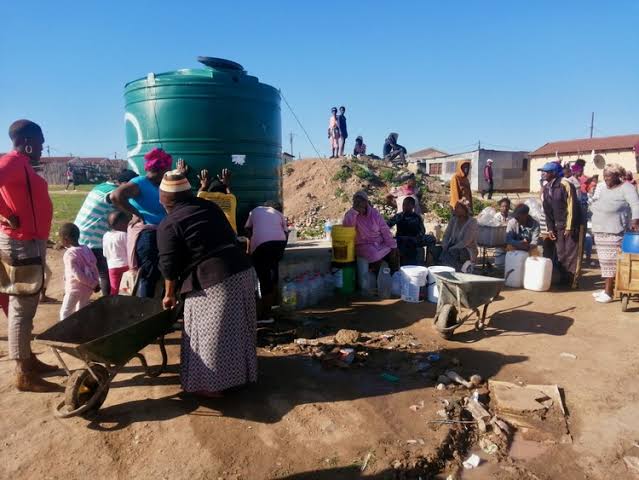
South African cities tighten water restrictions as El Niño threatens drought
Major cities across South Africa are tightening water restrictions as a strengthening El Niño brings hotter, drier conditions and raises drought risk.

World
Britain facing sex recession as adults under 45 years copulate twice monthly: Lancet
People aged 16 to 44 in Britain are having sex less frequently, with the median number of times they have sex falling to twice a month in 2022–2024, down from four times in 1990.

Rights
More men, women having sex with same gender in UK: Report
The proportion of women aged 16 to 44 reporting such experiences doubled from seven per cent to 14 per cent. The figure tripled for men, from four per cent to 12 per cent.


