

WHO says African countries capable of diagnosing mpox
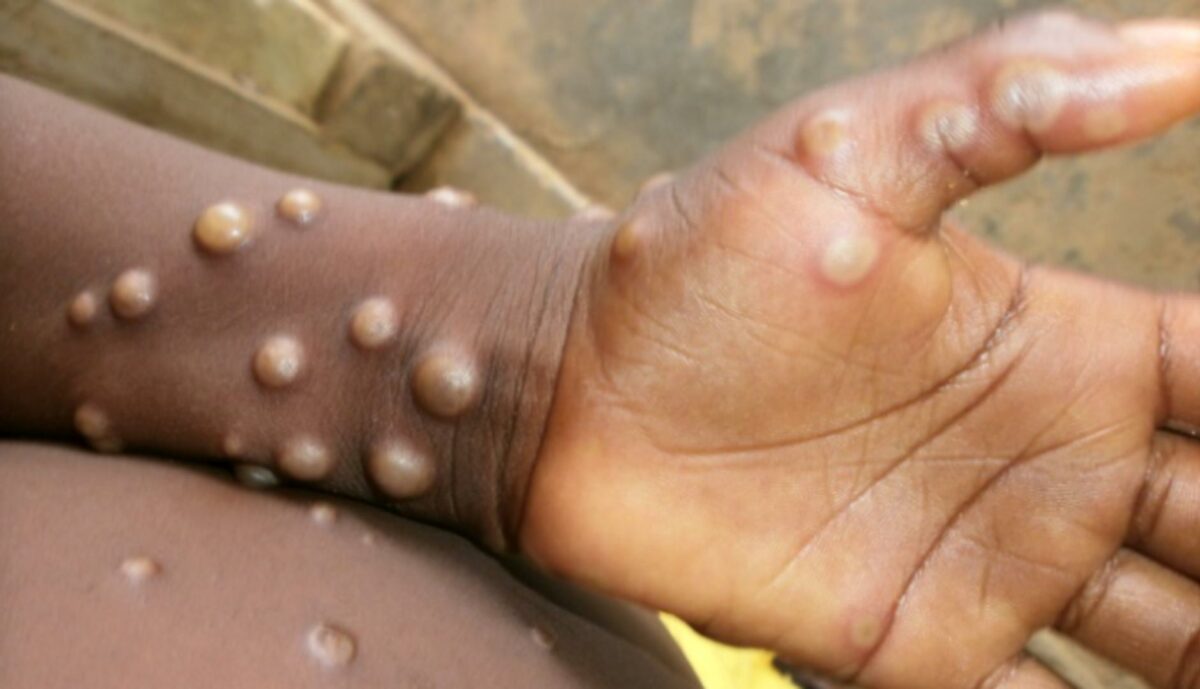
As mpox continues to devastate countries, especially in Africa, the WHO Africa Region says African countries are capable of diagnosing mpox, thereby making for early detection.
Dr Abdou Gueye, regional emergency director, World Health Organisation Africa Region (WHO AFRO), made the assertion in a virtual interview with journalists in Lagos.
Providing updates on WHO’s field efforts since the declaration of the mpox outbreak, Mr Gueye said that WHO had been working effectively and collaborating with all entities to stem the public health emergency.
Africa CDC declared mpox a public health emergency of continental security on Aug. 13.
On its heels, on Aug. 14, the WHO director-general declared the resurgence of mpox to be a public health emergency of international concern (PHEIC), requiring a coordinated international response.
This was necessitated by the advice given by the International Health Regulations (2005) (IHR or Regulations) Emergency Committee regarding the upsurge of mpox 2024, during its first meeting held on Aug. 14.
It had noted that the ongoing upsurge of mpox in the Democratic Republic of the Congo and a growing number of countries in Africa, constituted a PHEIC under the provisions of the International Health Regulations.
Also, given the detection and rapid spread of a new clade of mpox in eastern Democratic Republic of the Congo, its detection in neighbouring countries that had not previously reported mpox, and the potential for further spread within Africa and beyond.
Mr Gueye emphasised the importance of early detection, robust health systems, and community engagement.
He said that some of WHO’s efforts included supporting diagnostic capabilities, treatment guidelines, and community engagement across African countries.
“All the African countries are capable of diagnosing mpox. Thanks to our work and collaboration with all the entities.
“We checked with all our countries. 45 countries out of the 47 were able to do the diagnostic and the genomic sequencing, and we were able to support the two additional countries.
“We also worked with the countries to develop guidelines on the treatment and the care about mpox, and also, we provided some reagents.
“The treatment of mpox is very rare, but as soon as it is possible, we try to make it available to the African country
“In the framework of the Public Health Emergency of International Concern, we have raised the advocacy for all partners that are capable of donating or contributing to supporting countries, and are put in touch with countries that need it’’
According to Mr Gueye, the WHO is also working to make sure that all manufacturers that can produce vaccine, diagnostic and therapeutic are being put in touch with those who can fund it.
This will enable enough production for Africa, particularly also for low and middle-income countries.
He said close collaboration was also ongoing with researchers, all to stop mpox.
“We are working in close collaboration with researchers to make sure that all the vaccines, therapeutic and diagnostic that are in the pipeline will be accelerated.
“This is in order to diversify the possibility and the tools to fight against the disease,” he told journalists.
Giving an insight into the current outbreak, he explains Mpox to be a viral disease, previously known as monkeypox.
According to him, it traditionally existed in West and Central Africa, with two viruses that are slightly different.
“The one in West Africa was called the clade two, and the one in Central Africa was called the clade one in 2022.
“An outbreak occurred, and the virus went beyond the traditional border and went through to some countries where it was never seen before.
“It affected some particular communities, mainly men who have sex with men.
“And the outbreak was addressed by the international community, but also by the affected community, and it was controlled.
“What happened in 2024 is there is a new outbreak with a new strain that is different to the one that existed before, that usually was seen in DR Congo, but has a little mutation.
“That made it more contagious, but also more serious, because the mortality rate increased.’’
He said that the outbreak was localised initially in North Kivu and South Kivu in the Democratic Republic of Congo, spreading in Congo first but also in neighbouring countries, including Rwanda, Uganda and Kenya.
According to him, when the outbreak reached that level, the WHO D-G called for an emergency committee to advise him, and the emergency committee advised to raise the highest alert possible in public health.
“We say the public health emergency of international concern, which means to make sure that the international community will be mobilised.
“Also, the mobilisation will be coordinated in order to stop the outbreak before it becomes more difficult to control.’’
The multi-country outbreak of mpox has led to 116 countries and territories in all WHO regions reporting 99,176 confirmed cases and 208 deaths between May 2022 and June 2024.
The latest global mpox rapid risk assessment at the beginning of August 2024, showed that mpox risk in eastern Democratic Republic of the Congo and neighbouring countries is high.
In Nigeria and other countries of West, Central and East Africa where mpox is endemic, it is moderate.
However, individual-level risk is largely dependent on individual factors such as exposure risk and immune status, regardless of geographic area, epidemiological context, biological sex, gender identity or sexual orientation.
(NAN)

We have recently deactivated our website's comment provider in favour of other channels of distribution and commentary. We encourage you to join the conversation on our stories via our Facebook, Twitter and other social media pages.

More from Peoples Gazette

Agriculture
FG tasks ECOWAS on leveraging financing strategies for agroecology
The federal government has urged stakeholders in the agriculture and finance sectors in the West Africa region to leverage financing strategies to enhance agroecology practices

Politics
Katsina youths pledge to deliver over 2 million votes to Atiku
“Katsina State is Atiku’s political base because it is his second home.”

World
FBI offers $50,000 reward for information on fugitive wanted for violent crimes
A federal arrest warrant was issued for Mr Singh in the United States District Court, Central District of California, Los Angeles, California on July 1.


Hot news Home top
Troops kill ISWAP cameraman, detects Palestinian trainer, Moroccan doctor in Borno onslaught
Mr Goni said troops subsequently dominated the area and conducted follow-up exploitation operations to determine the extent of the terrorists’ losses.

Hot news Home top
Exceptional individuals like you don’t come often in generation, Tinubu hails Soyinka @92
Mr Tinubu described Soyinka as an exceptional personality whose courage, intellect and lifelong advocacy for justice illuminated humanity’s path.

States
Clerics urge unity, intense prayers against Nigeria’s security challenges
urged citizens to pair their prayers with absolute obedience to godly principles and generosity toward one another to attract divine favours for the country.

Heading 2
South Africa to extradite Zimbabwean Zandile Tshuma to UK over wife, daughters’ murder
The justice minister said, “Mr Tshuma will be extradited to the UK once I have signed all the extradition documents and requests.”


