

WHO seeks accelerated action in tackling anaemia
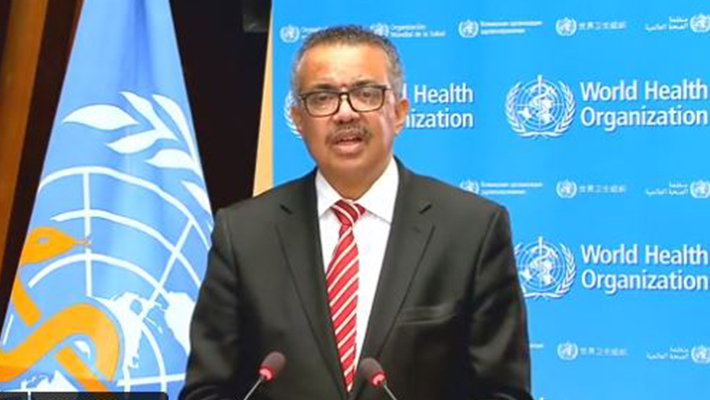
The World Health Organisation (WHO) has launched its first-ever comprehensive framework on reducing by half anaemia prevalence in women of reproductive age by 2025.
In a statement by Francesco Branca, the Director of WHO’s Department of Nutrition and Food Safety, on Saturday, the bloc noted that progress for reducing anaemia had been slow and the world was not on track to reach the global target.
“Anaemia is a serious global public health problem, affecting 571 million women and 269 million young children worldwide.
“In 2019, anaemia affected 40 per cent of children between six months and five years of age, 37 per cent of pregnant women, and 30 per cent of women between ages 15–49 years.
“It is most prevalent in low and middle-income countries,” Mr Branca said.
According to WHO, anaemia increases the risk of infections and death, impairs cognitive performance, and causes extreme fatigue, poor pregnancy outcomes, loss of earnings, and poor growth and development.
According to the bloc, this is a strong indicator of overall health.
Mr Branca said most works on addressing anaemia had been focused on the prevention and treatment of iron deficiency.
“However, anaemia is a complex condition with multiple causes, including other nutritional deficiencies, infections, inflammation, gynaecological and obstetric conditions, and inherited red blood cell disorders.
“All must be addressed to effectively prevent and treat anaemia,” he stressed.
WHO said that the new framework had set on course ways to address the direct causes, risk factors, and broad social inequities that were fundamental drivers of anaemia.
It highlighted the comprehensive approach that brought together multiple sectors and actors and laid out key action areas to improve the coverage and uptake of interventions.
“Acknowledging that health remains the predominant sector for delivering many of the recommended interventions, the framework also proposes actions that other societal stakeholders can take.
“These include governments, civil society, academia, researchers, funding agencies, international organizations, and media.
“Each has its particular role to perform in reducing anaemia and keeping people healthy,” it said
According to WHO, the framework was launched during the International Maternal Newborn Health Conference 2023, held in Cape Town, South Africa.
(NAN)

We have recently deactivated our website's comment provider in favour of other channels of distribution and commentary. We encourage you to join the conversation on our stories via our Facebook, Twitter and other social media pages.

More from Peoples Gazette

States
Independence: NBA urges Nigerians to expect better future
The NBA said that ordinary Nigerians should be deriving benefit from the subsidy removal rather than hardship.

Agriculture
FG tasks ECOWAS on leveraging financing strategies for agroecology
The federal government has urged stakeholders in the agriculture and finance sectors in the West Africa region to leverage financing strategies to enhance agroecology practices

Politics
Katsina youths pledge to deliver over 2 million votes to Atiku
“Katsina State is Atiku’s political base because it is his second home.”

Sport
Euromatch NPFL: Matchday 10 results
Here are the results of the Matchday 10 fixtures in the ongoing 2026/2027 Euromatch Nigeria Premier Football League (NPFL), played on Sunday.

Politics
1,117 Muslim clerics in Katsina endorse Tinubu’s 2027 re-election bid
Thousands of Islamic clerics from the Izala and Tijjaniyya groups in Katsina State have endorsed President Bola Tinubu’s 2027 re-election bid.

Anti-Corruption
Nine suspects arrested in FBI’s latest operation against Yahoo Boys in Nigeria
The FBI boss made the disclosure on Sunday.

NationWide
Nigeria edge Uganda by 1 run to win Cricket World Cup Africa qualifier
Nigeria scored 148 runs in 19.4 overs before restricting Uganda to 147 for nine in 20 overs at the Nigeria Cricket Federation (NCF) Oval 1 on Sunday.
Heading 1
NiMet predicts three-day dust haze, thunderstorms nationwide from Monday
For Wednesday, the agency forecast sunny and hazy conditions across the northern region throughout the day.

Health
Ebola: Kebbi intensifies surveillance at airport, border
Mr Abubakar stressed the state government’s commitment to protecting residents through proactive disease surveillance.


