

WHO seeks stronger governance, increased funding for national blood systems
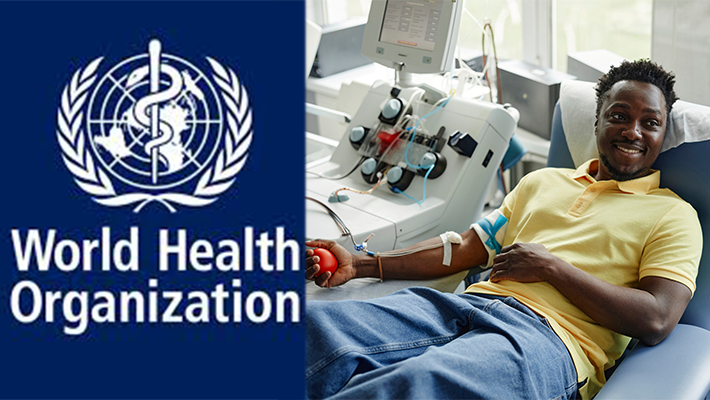
The World Health Organization (WHO) has called for stronger governance and increased funding for national blood systems.
The organisation warned that weak oversight continues to deny millions of patients access to safe blood transfusions in spite of record levels of voluntary donations worldwide.
The WHO Director-General, Dr Tedros Ghebreyesus, made the call in a message marking World Blood Donor Day, observed annually on June 14 with the theme, “One Drop of Humanity. Give Blood. Save Lives.”
Mr Ghebreyesus said voluntary, unpaid blood donors now accounted for more than 85 per cent of global blood collections, up from 78 per cent a decade ago.
However, he noted that only 40 per cent of countries had fully functional national blood systems with adequate governance, quality control and financing.
He stated, “Blood saves lives, but only if it is safe, available and managed well. Stronger governance is not optional. It is the difference between life and death for mothers in childbirth, children with anaemia and patients needing surgery.”
He said the appeal came as WHO released new data revealing major disparities in blood availability worldwide.
According to the data, high-income countries record an average of 33 blood donations per 1,000 people, compared with just five donations per 1,000 people in low-income countries.
He said fewer than half of low-income countries had national blood policies backed by legislation, while many continued to depend on family replacement or paid donors, increasing the risk of transfusion-transmitted infections.
He urged governments to establish independent national blood authorities, enforce quality standards and provide dedicated funding to ensure blood supplies were not disrupted by economic challenges.
The WHO chief said data showed that 60 per cent of countries spent less than one dollar per capital annually on blood services, far below the level required to maintain screening, storage and distribution systems.
“Without stable funding, blood banks face shortages of testing kits, refrigeration and trained staff. The result is avoidable deaths from postpartum haemorrhage, trauma and childhood malaria,” he said.
Mr Ghebreyesus added that only 70 per cent of donated blood in low-income countries is screened for HIV, hepatitis B, hepatitis C and syphilis in line with WHO standards.
He said this compared with 100 per cent screening coverage in high-income countries, highlighting significant gaps in blood safety systems.
He warned that weak regulatory oversight allowed unsafe blood to enter supply chains, undermining public confidence and discouraging voluntary donors.
Ahead of the commemoration, WHO urged countries to adopt its “20 Actions” framework, which includes enacting national blood laws, investing in voluntary donor programmes and integrating blood services into universal health coverage plans.
“Every country can achieve self-sufficiency in safe blood if leaders treat it as a core health system function. Governance and investment today will save lives tomorrow,” he said.
(NAN)

We have recently deactivated our website's comment provider in favour of other channels of distribution and commentary. We encourage you to join the conversation on our stories via our Facebook, Twitter and other social media pages.

More from Peoples Gazette

States
Independence: NBA urges Nigerians to expect better future
The NBA said that ordinary Nigerians should be deriving benefit from the subsidy removal rather than hardship.

Agriculture
FG tasks ECOWAS on leveraging financing strategies for agroecology
The federal government has urged stakeholders in the agriculture and finance sectors in the West Africa region to leverage financing strategies to enhance agroecology practices

Politics
Katsina youths pledge to deliver over 2 million votes to Atiku
“Katsina State is Atiku’s political base because it is his second home.”

World
U.S. accuses Venezuela’s Maduro of torturing U.S. citizens in revised indictment
The Trump administration accused Mr Maduro and his wife of partnering with narcoterrorists to flood the U.S. with cocaine.
States
Two suspects arrested over machete attacks in Uyo
The police said weapons and stolen items were recovered from the suspects.

Anti-Corruption
U.S. court jails Nigerian celebrity Edikan Adiakpan for acting as money mule for Yahoo Boys
A U.S. court has sentenced a Texas-based Nigerian, Edikan Adiakpan, to 30 months in prison for using his company accounts to move illicit funds for fraudsters.
World
U.S. urges citizens in Saudi Arabia to remain vigilant after Riyadh airport attack
The U.S. stated that the Houthis had targeted Saudi Arabia, including civilian airports, and the military conflict has the potential to escalate.
NationWide
FG approves national research, innovation fund
Mr Muhammad said the fund would help bridge the gap between research outputs and commercially viable products and services.
Abuja
Strike: ASUSS, NANS say pupils suffering for FCTA, labour dispute
Mr Ogundiran advised FCT secondary school teachers to remain calm.


