

WHO warns hunger in Gaza will affect ‘entire generation’

The World Health Organisation (WHO) on Tuesday said malnutrition rates are rising in Gaza and emergency treatments to counter it are running out.
It added that hunger could have a lasting impact on “an entire generation.”
Israel has blockaded supplies into the enclave since early March, when it resumed its devastating military campaign against Hamas, and a global hunger monitor on Monday warned that half a million people there faced starvation.
WHO representative for the Occupied Palestinian Territory, Rik Peeperkorn, said he had seen children who looked years younger than their age and visited a north Gaza hospital where over 20 per cent of children screened suffered from acute malnutrition.
Mr Peeperkorn told a press briefing by video link from Deir al-Balah that “what we see is an increasing trend in generalised acute malnutrition.
“I’ve seen a child that’s five years old, and you would say it was two-and-a-half. Without enough nutritious food, clean water, and access to healthcare, an entire generation will be permanently affected.”
He also warned of stunting and impaired cognitive development.
The head of the UN Palestinian refugee agency, Philippe Lazzarini, told the BBC on Tuesday that he thought Israel was denying food and aid to civilians as a weapon of war.
Israel has repeatedly blamed Hamas for causing hunger by stealing aid meant for civilians. Hamas has denied the allegation.
Israel is pressing its U.S.-backed plan to get aid into Gaza, which it said will cut out Hamas and distribute aid directly from what it calls neutral distribution sites.
The WHO criticised it in a statement on Monday as “grossly inadequate” to meet the population’s immediate needs.
Due to the blockade, the WHO only has enough stock to treat 500 children with acute malnutrition, which is only a fraction of what is needed, Peeperkorn said.
He added that 55 children have died of acute malnutrition, citing Gaza Health Ministry figures.
Mr Peeperkorn said he had seen many children in hospitals with illnesses such as gastroenteritis and pneumonia, which, due to their reduced immunity linked to hunger, could be fatal.
“You normally don’t die from starvation. You die from the diseases associated with that,” he added.
(Reuters/NAN)

We have recently deactivated our website's comment provider in favour of other channels of distribution and commentary. We encourage you to join the conversation on our stories via our Facebook, Twitter and other social media pages.

More from Peoples Gazette

States
Independence: NBA urges Nigerians to expect better future
The NBA said that ordinary Nigerians should be deriving benefit from the subsidy removal rather than hardship.

Agriculture
FG tasks ECOWAS on leveraging financing strategies for agroecology
The federal government has urged stakeholders in the agriculture and finance sectors in the West Africa region to leverage financing strategies to enhance agroecology practices

Politics
Katsina youths pledge to deliver over 2 million votes to Atiku
“Katsina State is Atiku’s political base because it is his second home.”

Sport
2027 AFCON Qualifier: Guinea-Bissau beat Madagascar, extend lead over Nigeria in Group L
Guinea-Bissau now have 10 points, Nigeria seven points, while Madagascar and Tanzania have two points each.
Africa
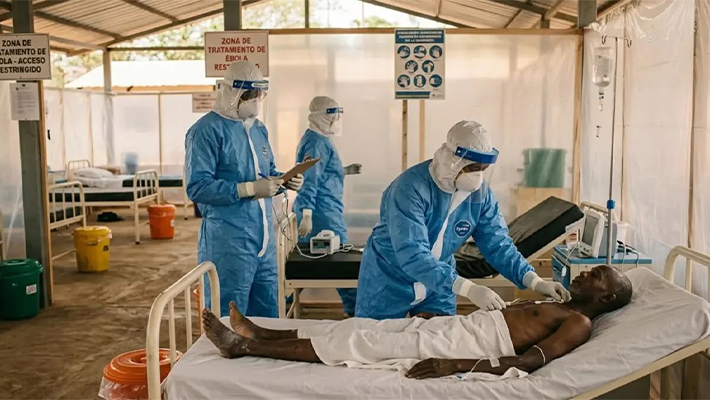
WHO raises concern over rising Bundibugyo Ebola deaths, insecurity in DR Congo
Mr Ghebreyesus said the outbreak, declared six months ago, had spread across 67 health zones in eight provinces in the DR Congo.

Africa
Afreximbank urges industries to boost intra-African trade as alternative to China in global markets
“As global markets look to diversify production beyond China, Africa must position itself as a natural partner of choice,” Mr Maayergi said.

World
Russell Brand faces probe over prison message to supporters
Mr Brand was convicted at Southwark Crown Court of one count of rape and three counts of sexual assault.
Politics
Tinubu admits cost-of-living crisis after APC dismissed widespread hunger claims
According to Mr Tinubu, the 2027 election is about the country’s future and direction.

World
WHO pushes for stronger vaccination, screening, treatment to eliminate cervical cancer
WHO said that expanding HPV vaccination, improving screening access, and ensuring timely treatment are critical to protecting women.


