

Why another Donald Trump’s presidency is bad for Africa
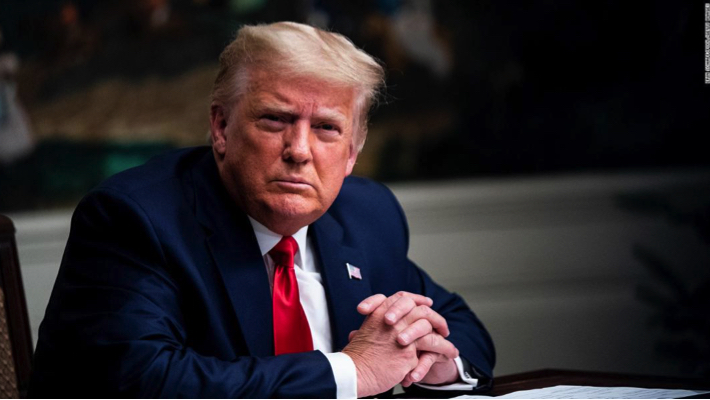
The United States presidential election is only a few days away, and polls show that Vice President Kamala Harris and former President Donald Trump are statistically tied, with no clear sign of a victor. This is probably the closest U.S. presidential election ever. Harris, the Democratic Party’s candidate, and Republican Trump are campaigning tirelessly in the battleground or swing states, where both parties have no overwhelming support and either can win, making the states highly competitive and crucial for the outcome.
Whoever wins the election has serious implications for the rest of the world, especially the continent of Africa. Because what is on the ballot is more than just two persons vying for office; it is competing worldviews, ideologies, and frameworks for global engagement. With the outsize influence of the United States, this is as serious as it can get. Whether interested or not, the November 5, 2024, U.S. presidential election will impact you.
If it were left to some Nigerians, Trump, the Republican nominee, would win hands down. This is surprising considering that Harris, the Democratic candidate, is African-American and the historical ties between the continent of Africa and the Democratic Party, which, when in power, tends to implement more pro-Africa policies than the Republican Party.
Why is Trump so popular among some Nigerian demographics? Three factors could be deduced for this.
1. Many Nigerians were disappointed by the alleged role played by then-President Barrack Obama of the Democratic Party in the 2015 Nigerian presidential election, which saw the defeat of incumbent Goodluck Jonathan of the PDP by APC’s Muhammadu Buhari. Although Obama didn’t come out for Jonathan or Buhari, many PDP supporters alleged his undertone was pro-Buhari, who was marketed as the anti-corruption candidate. They pointed to diplomatic pressures from the US, the threat to sanction government officials involved in electoral malpractices and some other subtle efforts to intervene in Buhari’s favour. Since then, many of these Nigerians, especially from the southeast, which used to be a PDP stronghold, have switched from supporting the Democratic Party to the Republicans, even though this has no real electoral consequences.
2. The Republican Party ostensibly represents traditional Christian values, especially regarding marriage and family. This connects with many in Nigeria, a deeply religious and homophobic country, where, according to Pew Research, over 90 per cent pray regularly. Many Nigerians, therefore, gravitate to the party with the same conservative outlook. Conversely, they see the Democratic Party as anti-religious and conservative norms, which pushes the LGBTQ agenda and upends the natural order of society.
3. Finally, Trump is perceived as a strong man and leader, mirroring the autocratic leadership style that is greatly admired and popular in Africa, where military dictators, autocrats, and despots who build state institutions around themselves are fairly common.
But is Trump good for Africa?
The short answer is no, based on his records as president and antecedents. A study of the policies, programmes and actions taken by Trump, the 45th U.S. president, shows a preponderance of decisions that could be regarded as anti-Africa. History also shows a pattern of his bias against black people. He was accused of discrimination against blacks in the US as a businessman in the 1970s, with the U.S. Department of Justice successfully suing Trump Management, a company owned by Trump and his father, for racial discrimination by systemically refusing to let apartments to blacks in New York City. He had also been called out several times for racist comments about black people, which may suggest an approach to Africa and its diaspora influenced by this long-standing attitude of racial bias rather than genuine partnership or engagement with the continent.
Trump campaigned for president based on an ‘America-first’ principle, suggesting he would focus primarily on his country and not lend helping hands to less-endowed nations accustomed to looking up to the United States for leadership and support. As president, he implemented a rash of policies that disproportionately impacted Africa negatively. These ranged from immigration restrictions to reductions in aid and strained diplomatic relations.
For instance, one of his first major foreign policies, executed one week after Trump came to power, was a travel ban on several Muslim-majority countries, many of which were African. It restricted entry into the United States from these predominantly Muslim countries, leading to significant controversy and legal challenges.
In 2020, the travel ban was extended to include Nigeria, Eritrea, Kyrgyzstan, Myanmar (Burma), Sudan, and Tanzania. The prohibition on Nigeria was particularly significant as it targeted immigrants seeking to settle in the U.S. permanently but allowed non-immigrant travel to continue. President Joe Biden, who succeeded Trump, reversed this ban on his first day in office.
The Trump administration also proposed significant cuts to foreign aid programmes, including those targeting African countries. He also wanted a reduction in funding for USAID, which is the soft-power arm of the U.S. and has historically provided development assistance in many African countries across several spectrums, including health, education, humanitarian support, women’s empowerment, and gender equality programmes.
The policies and actions of President Trump that had serious negative consequences for African countries were too many to be captured sufficiently in one essay. Even several books may not be able to do justice to them. So, let’s list a few: Withdrawal from the World Health Organization (WHO); reduction of U.S. diplomatic and economic engagement in Africa; attempt to end the temporary protected status for African immigrants in the US; and limited support for peacekeeping and conflict resolution on the continent.
In conclusion, many of Trump’s policies and actions, particularly on immigration, aid, trade, diplomacy, and security, adversely affected African countries and their people. But, perhaps, nothing reflects his attitude toward Africa and black people more than the derogatory comments he made in 2018 when he allegedly referred to African nations as ‘’shithole countries.’’ Those two words were packed with his history and attitude of racism and discontent for people of African descent and their origins.
Yet Trump may win, with substantial support from African-American men who see him as a model of strong leadership. If that happens, Africans should brace for a continuation, if not intensification, of his policies that could further discriminate against the continent and people through harsher immigration measures, reduced aid, and a dismissive diplomatic engagement.

We have recently deactivated our website's comment provider in favour of other channels of distribution and commentary. We encourage you to join the conversation on our stories via our Facebook, Twitter and other social media pages.

More from Peoples Gazette

States
Independence: NBA urges Nigerians to expect better future
The NBA said that ordinary Nigerians should be deriving benefit from the subsidy removal rather than hardship.

Agriculture
FG tasks ECOWAS on leveraging financing strategies for agroecology
The federal government has urged stakeholders in the agriculture and finance sectors in the West Africa region to leverage financing strategies to enhance agroecology practices

Politics
Katsina youths pledge to deliver over 2 million votes to Atiku
“Katsina State is Atiku’s political base because it is his second home.”
States
Gov Oyebanji presents N490.74 billion 2027 budget proposal to Ekiti assembly
Mr Oyebanji presented the appropriation bill, christened the ‘Budget of Sustained Progress and Prosperity’, at the assembly chamber.

World
U.S. accuses Venezuela’s Maduro of torturing U.S. citizens in revised indictment
The Trump administration accused Mr Maduro and his wife of partnering with narcoterrorists to flood the U.S. with cocaine.
States
Two suspects arrested over machete attacks in Uyo
The police said weapons and stolen items were recovered from the suspects.
Anti-Corruption
U.S. court jails Nigerian celebrity Edikan Adiakpan for acting as money mule for Yahoo Boys
The DOJ said Mr Adiakpan kept a percentage of transferred funds as a fee.
World
U.S. urges citizens in Saudi Arabia to remain vigilant after Riyadh airport attack
The U.S. stated that the Houthis had targeted Saudi Arabia, including civilian airports, and the military conflict has the potential to escalate.
NationWide
FG approves national research, innovation fund
Mr Muhammad said the fund would help bridge the gap between research outputs and commercially viable products and services.


