

With Nasir el-Rufai, 2027 coalition against Bola Tinubu is already doomed

The coalition against President Bola Tinubu’s 2027 reelection bid is fatally compromised by one glaring flaw: it is an uneasy, mismatched alliance that includes Nasir el-Rufai, the controversial former Kaduna governor whose political career is defined by division and bigotry.
As governor, el-Rufai’s policies and rhetoric inflamed Kaduna’s fragile religious and ethnic divides. In a state where a delicate balance was essential to peaceful living among different groups, he repeatedly showed a reckless disregard for that balance.
One of the clearest examples was his 2019 decision to run a Muslim-Muslim ticket — an insensitive decision that disregarded Christians in a state long scarred by religious conflict. It signalled the start of a deliberate policy of exclusion against people of the Christian-dominated Southern Kaduna, one that would come to define his entire time in office.
A controversial bill to regulate religious preaching gave his administration sweeping power to vet sermons. Selectively enforced, it became widely regarded as a tool to stifle religious freedom — disproportionately targeting Christians — and to suppress dissent.
His aggressive push to seize ancestral lands for grazing reserves alienated Christian communities in Southern Kaduna, while privileging Fulani herders from his ethnic group. When the communities resisted, they faced harsh curfews and violent security crackdowns.
Events surrounding the abduction and murder of the Agwam Adara III, paramount ruler of Kajuru, sometime in October 2018, raised questions that, to this day, remain unanswered.
The Agwam Adara III and his wife were kidnapped after returning from a meeting with el-Rufai, addressing inter-communal violence. His wife was released, and he was found murdered five days later. His kidnapping and murder occurred under suspicious circumstances. He had opposed el-Rufai’s plans to restructure his chiefdom into Fulani emirates.
El-Rufai’s disdain for Christians and non-Fulani was once again on full display during the funeral of the Agwam Adara III, where he was conspicuously absent. Soon after, he dismantled the Adara Chiedom and divided its territory into Fulani emirates — a move widely condemned as a targeted assault on the Christian and indigenous Adara people.
In his final days as governor, el-Rufai banned the Atyap Community Development Association, a Southern Kaduna group known for championing persecuted communities. Many saw this as part of his sustained campaign to silence dissenting voices from the region.
Even on the national stage, el-Rufai’s politics have been relentlessly sectarian and divisive. His public statements fuel division rather than inspire unity. Nigeria’s fragile structure requires leaders who can bridge divides, rather than exploit them, as seen in el-Rufai.
El-Rufai must not be allowed to use the coalition as a means to regain national relevance. A coalition that claims to seek genuine reform and a credible alternative to Tinubu cannot turn a blind eye to el-Rufai’s troubling political record — if it does, it is already doomed to fail.
El-Rufai’s sons, Bello and Bashir, offer yet more reasons why he cannot be allowed to use any coalition to reinvent himself. Both are known for making inflammatory, divisive statements that echo their father’s combative, divisive, and tone-deaf style.
In March, Bashir posted — and later hurriedly deleted — a tweet threatening that “Southern Kaduna residents will keep seeing sheghe (a Hausa word that connotes serious suffering) if they continue to attack indigenous Fulani herdsmen.” This tweet not only stoked ethnic tensions but also deliberately misrepresented Fulani settlers as indigenous to the region.
When Abubakar ‘Dadiyata’ Idris, a critic of el-Rufai’s party, mysteriously disappeared in 2019, Bashir responded dismissively on X, accusing critics of spreading “dangerous lies,” which many saw as an attempt to downplay the seriousness of Dadiyata’s disappearance.
In April 2020, Bello, responded to an X user with violent, misogynistic threats and explicit ethnic slurs, including a rape threat. He later apologised after tweeting: “Tell your mother I’m passing her to my friends tonight. No Igbo sounds, please!” His words ignited public outrage, reinforcing concerns about the el-Rufais’ toxic and dangerous political culture.
Between the father and his sons, the el-Rufais’ behaviour reflects a pattern of power-seeking, reckless abuse of power, intolerance, and harshness in political engagement.
Columnist Farooq Kperogi once described el-Rufai as someone who “embodies one of Nigeria’s most morbidly toxic strains of political intolerance.” Today, that description is more relevant than ever. El-Rufai’s political journey is not a model for national leadership — it is a cautionary tale and stark warning of where unchecked power and divisive politics can lead.
If the coalition truly seeks to offer Nigerians a credible alternative, it must draw a hard line against el-Rufai and his legacy of division and bigotry. Any coalition that grants him a seat at the table has already betrayed its promise to unite the country.
For Nigeria’s sake, el-Rufai must never be allowed near the presidency. The price of his ambition may be more than Nigeria can bear. His harsh treatment of the people of Southern Kaduna is all the proof anyone needs of how he would wield power over the rest of Nigeria.
El-Rufai stands today as one of Nigeria’s most polarising figures. His legacy of divisive policies, inflammatory statements, and blatant disregard for Nigeria’s delicate ethno-religious balance makes him a deeply toxic and unmarketable figure in any national coalition.
El-Rufai’s record is a warning, not an endorsement. A man who stoked the fires of division in Kaduna cannot be trusted to safeguard Nigeria’s fragile diversity. Any coalition that stands with him is building on quicksand — and by doing so, proves it has no love for Nigeria.
Ojo Maduekwe runs Discussing Africa Media. Write him: mrmaduekwe@gmail.com.

We have recently deactivated our website's comment provider in favour of other channels of distribution and commentary. We encourage you to join the conversation on our stories via our Facebook, Twitter and other social media pages.

More from Peoples Gazette

States
Independence: NBA urges Nigerians to expect better future
The NBA said that ordinary Nigerians should be deriving benefit from the subsidy removal rather than hardship.

Agriculture
FG tasks ECOWAS on leveraging financing strategies for agroecology
The federal government has urged stakeholders in the agriculture and finance sectors in the West Africa region to leverage financing strategies to enhance agroecology practices

Politics
Katsina youths pledge to deliver over 2 million votes to Atiku
“Katsina State is Atiku’s political base because it is his second home.”

World
World Bank launches Philanthropy Hub to connect donors with development projects
The statement noted that philanthropic organisations are already contributing to World Bank Group initiatives.
Abuja
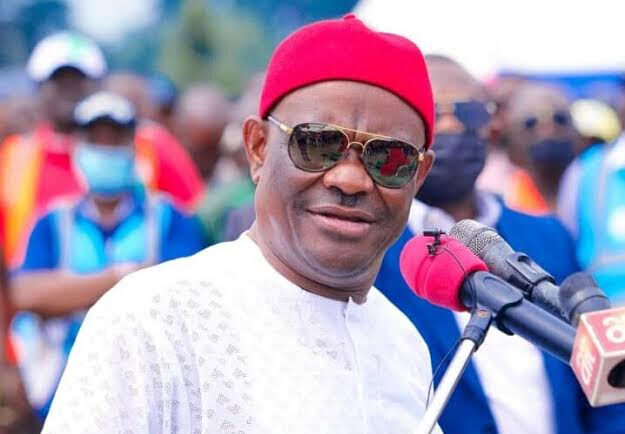
Ajaero using FCT teachers’ strike to ‘cripple’ govt for ADC, says Wike
Mr Wike insisted that his administration has met its financial obligations and invested heavily in public school infrastructure.
NationWide
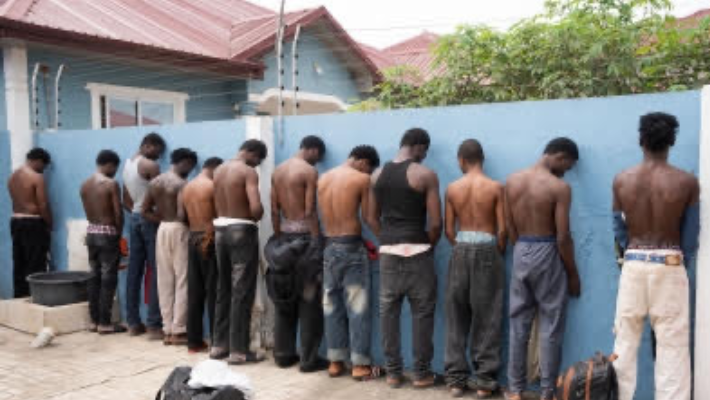
28 Yahoo Boys arrested in Nigeria, Ghana in U.S. crackdown on West African scam networks
The FBI, in collaboration with local anti-graft agencies in Ghana and Nigeria, made 28 arrests in the last week of September.
Africa
South Sudan establishes platform to curb hate speech, disinformation
Mr Foretia said efforts to combat disinformation must not compromise fundamental rights.
States
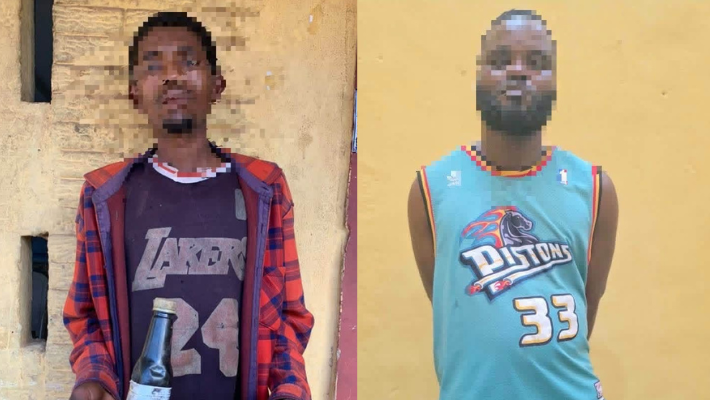
Two suspects arrested, weapons recovered in operation targeting criminals in Delta
The police said the suspects were in custody and investigations ongoing.
Health
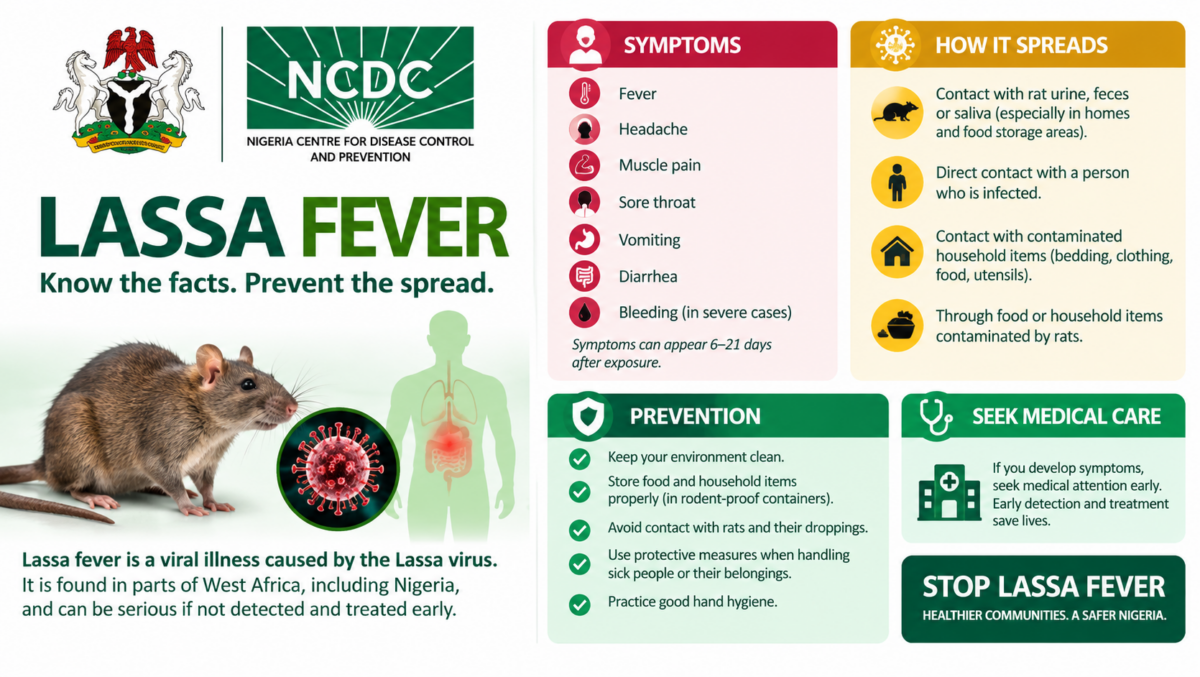
1,138 Lassa fever cases, 268 deaths recorded in 2026: NCDC
The NCDC stated, “In total for 2026, 24 states have recorded at least one confirmed case across 119 Local Government Areas.”


