

Witness over Spectacle: The unflinching power of Fela’s Ikoyi Prison Narratives

The Ikoyi Prison Narratives embodies a journalistic ethic that’s woven into its DNA. Observe carefully, record faithfully, don’t sensationalise, and resist becoming the story – these principles shape the narrative. Jaboro’s authority stems from this ethic, not from grandstanding or ideology.
He writes as a witness, not a hero or prophet. That choice lends the book its unflinching moral weight. By staying grounded in observation, Jaboro’s testimony gains its power.
In a world drowning in self-absorbed memoirs, The Ikoyi Prison Narratives cuts through the noise. Its power’s in its restraint – memory as responsibility, not a stage show.
Jaboro’s narrative stance is deliberate. He’s present, but not the centre. Not false humility, but journalistic rigour–knowing proximity can distort as much as it reveals.
This approach raises urgent questions: how do we narrate political suffering? Who gets to speak for it? Jaboro’s answer: through careful witnessing.
Jaboro’s focus isn’t on his own emotional journey – it’s on the environments, conversations, routines, and structures that define confinement. He lets facts pile up, allowing readers to draw their own conclusions.
This approach echoes investigative reporting: facts laid out; conclusions emerge organically. The result’s a text that feels credible because it doesn’t try to sway you. It earns trust by refusing to tug heartstrings.
Notes taken under duress
The Ikoyi Prison Narratives is a testament to observation born under crushing conditions. Prison’s design suppresses documentation, memory falters under stress – yet Jaboro’s commitment to recording prevails. His note-taking becomes an act of defiance, an ethical gesture.
In remembering, he honours those whose stories otherwise vanish. Witnessing’s not passive here – it’s an act of courage, discipline, and attentiveness. The state’s preference? Forgetting. In this sense, the narrative is not only about imprisonment; it is about the struggle to preserve truth under pressure.
Ethical distance and moral clarity
The Ikoyi Prison Narratives cuts through the noise of moral grandstanding. Jaboro doesn’t peddle simplistic villain-vs-victim tales. Guards are products of a flawed, complex system. Prisoners are human – flawed, dignified, surviving.
Complicity and survival blur. This complexity isn’t moral ambiguity – it’s journalistic realism. Repression is sustained by ordinary people making constrained choices, not just cruelty.
By refusing caricatures, Jaboro achieves moral clarity without cheap tricks. Importantly, this clarity does not dilute critique. The injustice of arbitrary detention remains unmistakable. But it is presented through lived detail rather than denunciation.
Silence as editorial choice
The structure of The Ikoyi Prison Narratives hinges on what Jaboro chooses to leave unsaid. He describes, doesn’t dissect. Events hang in the air, unresolved. This restraint’s a nod to responsible reporting–recognising knowledge’s limits.
These silences aren’t evasions; they’re acknowledgements. Memory’s incomplete, some experiences defy words. By embracing uncertainty, Jaboro respects his subjects and readers.
In a world screaming for instant answers, this feels radical. Journalism, not confession.
The Ikoyi Prison Narratives could be mistaken for confessional writing, but that’s not its game. Jaboro’s not seeking absolution or validation – he’s seeking a record. Big difference.
Confessional narratives put the self centre-stage. Witness narratives spotlight events and implications. Jaboro chooses the latter, aligning with documentary literature rather than therapeutic memoir.
This choice enhances the book’s historical value and maintains its ethical integrity. You’re not here to admire Jaboro – you’re here to face what went down.
The burden of representing others
Jaboro navigates a minefield in witness writing: speaking for those who can’t. He avoids putting words in others’ mouths and records actions and words without pretending to read minds. When he speculates, he flags it.
This transparency boosts credibility, acknowledging empathy’s limits without slipping into indifference. The Ikoyi Prison Narratives sets a standard for representing others: speak carefully, attribute honesty, don’t claim ownership of another’s pain.
Memory as public good
The Ikoyi Prison Narratives whispers a powerful truth: memory’s not private property. Jaboro’s account belongs to Nigeria’s collective history, shaping the book’s tone and structure.
By avoiding sensationalism, he ensures sufferings not reduced to a spectacle – it’s preserved as evidence. In societies wrestling with unresolved violence, these distinctions are crucial. Remembrance and exploitation walk a thin line.
The book’s message: ethical memory work demands patience, and often, discomfort
In today’s social media frenzy, The Ikoyi Prison Narratives is a breath of fresh air. It urges you to slow down, grapple with complexity, and embrace ambiguity. Not a nostalgic look back, but a timely reminder: credibility’s rooted in method, not loudness.
Jaboro’s approach hits hard when journalism’s credibility is shaky. The book shows that careful witnessing is still a potent tool for tackling injustice. By focusing on the granular truths of Ikoyi Prison, Jaboro’s narrative sparks a larger conversation about the power of slow, deliberate storytelling.
This approach feels radical in an era where tweets and soundbites dominate. The Ikoyi Prison Narratives doesn’t just report – it lingers, it questions, it makes you think
Conclusion: The ethics of attention
The Ikoyi Prison Narratives is a profound meditation on attention – what we notice, record, and choose to remember. Jaboro’s witness stance honours the subject’s weight, crafting a work that’s both memoir and documentation.
He preserves experiences on the brink of vanishing, reminding us: truth’s not about saying more, but saying what’s possible with care. The book affirms: remembering’s a moral act, and responsible writing’s a powerful form of it. By doing so, it challenges us to rethink the value of attention in a world screaming for noise.
This book’s a testament to the power of quiet, deliberate storytelling. It’s a reminder that sometimes, the most profound acts are the ones we don’t shout about.

We have recently deactivated our website's comment provider in favour of other channels of distribution and commentary. We encourage you to join the conversation on our stories via our Facebook, Twitter and other social media pages.

More from Peoples Gazette

States
Independence: NBA urges Nigerians to expect better future
The NBA said that ordinary Nigerians should be deriving benefit from the subsidy removal rather than hardship.

Agriculture
FG tasks ECOWAS on leveraging financing strategies for agroecology
The federal government has urged stakeholders in the agriculture and finance sectors in the West Africa region to leverage financing strategies to enhance agroecology practices

Politics
Katsina youths pledge to deliver over 2 million votes to Atiku
“Katsina State is Atiku’s political base because it is his second home.”

Health
HERFON to unveil two-volume book on non-communicable diseases
HERFON says it will unveil a two-volume book on non-communicable diseases on October 15 in Abuja, alongside free health screening for participants.

World
Beijing’s 12345 hotline sets pace in citizen-centred urban governance
Beijing 12345 Hotline Citizen Service Centre is emerging as a model of technology-driven urban governance, placing residents’ needs at the centre of public service delivery.
Anti-Corruption
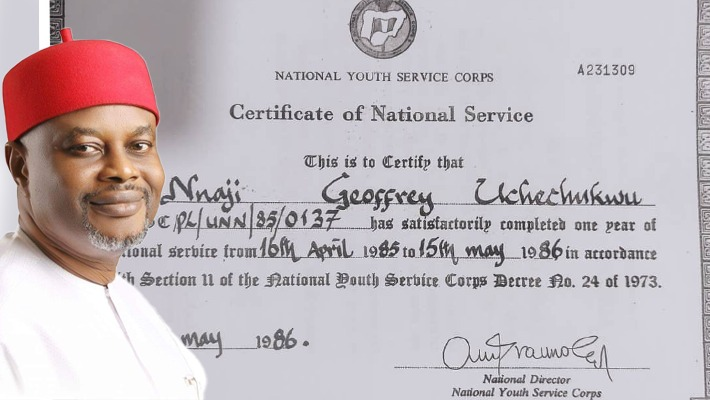
Uche Nnaji drops forged NYSC certificate, submits only WAEC result to INEC for governorship election
Mr Nnaji’s corruption trial will resume on October 26 as the ICPC seeks his conviction for forging his NYSC and UNN degree certificates.

Opinion
Abdul Mahmud: When the ruling party needs guns to win election
No president should need an AK-47 to win an election, and no ruling party should need the threat of one to persuade Nigerians to vote for its candidate.

World
Heavy social media use linked to lower life ratings among youths in 16 countries: Gallup
“What stands out is that moderate social media use for adults is associated with better outcomes on many wellbeing measures,” said Gallup chief.

States
Sokoto govt donates N38 million, grains to families of fallen heroes
The Sokoto government donated N38.25 million and bags of grains to the families of 24 fallen soldiers and 57 injured personnel in recognition of their sacrifices in service.


