

Women using family planning methods express satisfaction, enumerate merits

Some satisfied users of family planning in Lagos State have said the method comes as a big relief to managing one’s family in Nigeria’s current economy.
The users expressed their satisfaction during a field trip evaluation of FP services in Lagos.
The event was part of activities of a capacity building training and editorial planning workshop on family planning for media practitioners.
The training was organised by the Development Communication Network with support from The Challenge Initiative.
The objective of the training is to sensitise journalists with the TCI FP Intensification Phase plan and also increase media visibility on FP reportage.
According to the World Health Organisation, family planning is defined as “the ability of individuals and couples to anticipate and attain their desired number of children and the spacing and timing of their births.
This can be achieved through the use of contraceptive methods and the treatment of involuntary infertility.
A family planning satisfied user and mother of three, Grace Aniofiok, said that she had been using an FP method since 2023 and was satisfied.
Mrs Aniofiok said that when she started using the FP method, she was on the implant method but had to switch to the injectable method when she experienced some mild discomfort.
According to her, ever since, she has been okay and advises other women to use any FP method suitable for their bodies, stressing that it will help families adequately plan for and space the number of children they can comfortably cater for.
Another user and mother of four, Comfort Aghata, said that the current economic situation of Nigeria made her to embrace FP.
Mrs Aghata said that she started using FP three years ago and had been managing her family within the family’s financial means.
She advised other women to embrace FP because it was a life-saver in managing one’s family.
According to her, she has healed well from her last child delivery, and now has time to engage in some economic activities to support her family.
Another user and mother of two, Emem Idada, corroborated Aniofiok and Aghata’s views, saying that FP was the only thing that made peace to be in her family now.
Mrs Idada said that most men would always want to have sex with their partners without recourse to the likely resultant pregnancies, whereas women would always be conscious of that and the implications of any “unplanned” addition to the family.
These different views between the man and the woman always caused problems, and the only way to strike a balance was FP, Mrs Idada said.
The Officer in-Charge of FP services, Akerele Primary Health Centre, Ajoke Daramola, said that a reasonable number of users had keyed into the FP programme.
According to her, it is not just married couples, but also young adults who are not married but sexually active.
She said that the facility was opened to anyone who wanted FP services, noting that their services were accessible to all.
Speaking, Programme Director, DEVCOMS, Akin Jimoh, said that embracing FP had many benefits to it.
According to Mr Jimoh, things are tough in the country and one cannot compare a family of four with a family of nine because the quality of life will be different.
He said that challenges including population growth, education system and economy among others needed to be addressed.
He said FP encompassed different methods that applied to different individuals depending on their body make-up.
However, he advised that any challenges associated with an FP method should be reported to an FP provider or a doctor, for evaluation and management.
Mr Jimoh also noted that there are different determinants in FP which couples could adopt for effective family size.
Investing in FP is crucial to achieving the Sustainable Development Goals.
FP is a development essential that can accelerate achievement across the five SDG themes of people, planet, prosperity, peace, and partnership.
Specifically, SDG 3.7 supports universal access to sexual and reproductive health care services, including family planning, ensuring access for all people to their preferred contraceptive methods.
Also, SDG 5.6 targets universal access to sexual and reproductive health and reproductive rights.
(NAN)

We have recently deactivated our website's comment provider in favour of other channels of distribution and commentary. We encourage you to join the conversation on our stories via our Facebook, Twitter and other social media pages.

More from Peoples Gazette

States
Independence: NBA urges Nigerians to expect better future
The NBA said that ordinary Nigerians should be deriving benefit from the subsidy removal rather than hardship.

Agriculture
FG tasks ECOWAS on leveraging financing strategies for agroecology
The federal government has urged stakeholders in the agriculture and finance sectors in the West Africa region to leverage financing strategies to enhance agroecology practices

Politics
Katsina youths pledge to deliver over 2 million votes to Atiku
“Katsina State is Atiku’s political base because it is his second home.”

Heading 1
I didn’t tell Nigerians abroad to reject money requests from home: Obi
NDC chieftain, in a statement on Tuesday, said his statement was twisted.

States
Benue demands collective action to strengthen VAPP law implementation
Mrs Ikwue attributed some social challenges confronting the country to insecurity and declining family values

Hot news Home top
You are Egypt Nigerians will never return to, Atiku knocks Tinubu
Mr Atiku noted, “Stop pointing to Egypt as though it lies behind us. For millions of Nigerians, Egypt is the hunger, fear and indignity they are living through under you.”
Heading 5
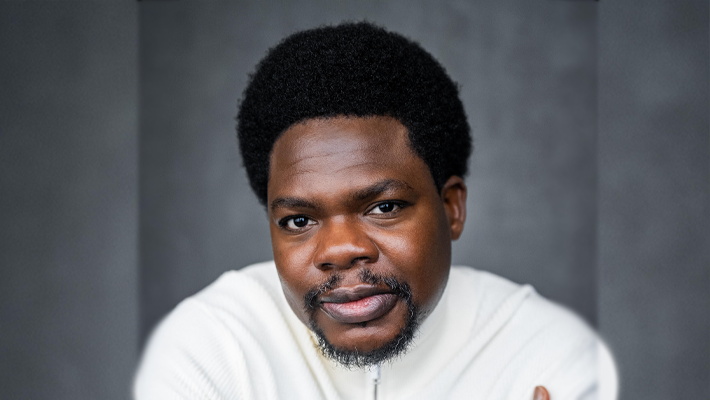
Six years after #EndSARS, insecurity, poverty, graft, others on highest level, says Mr Macaroni
Mr Macaroni stated, “The saddest part is that we are even more divided as a people at a time when we should be most united.”
Heading 2
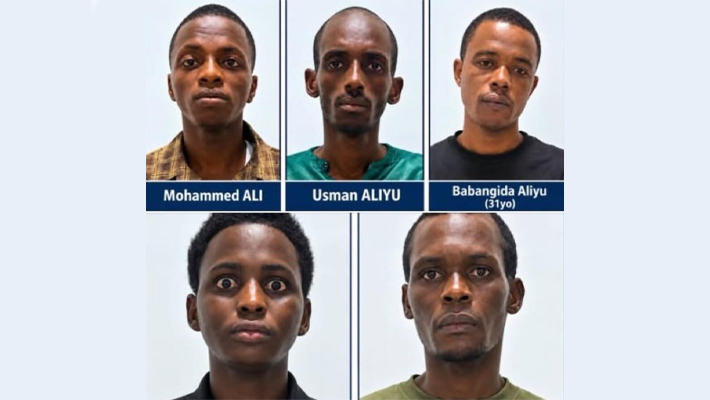
SSS arraigns suspected abductors of NYSC members
The corps members were kidnapped along the Owerri-Onitsha road in Imo State.

Lagos
Police apprehend two suspected Lagos cultists, recover locally-made pistol
The CP eiterated the command’s commitment to combating cultism and other criminal activities through intelligence-led operations.


