

World Bank grants $700 million for agro-climatic project in northern Nigeria
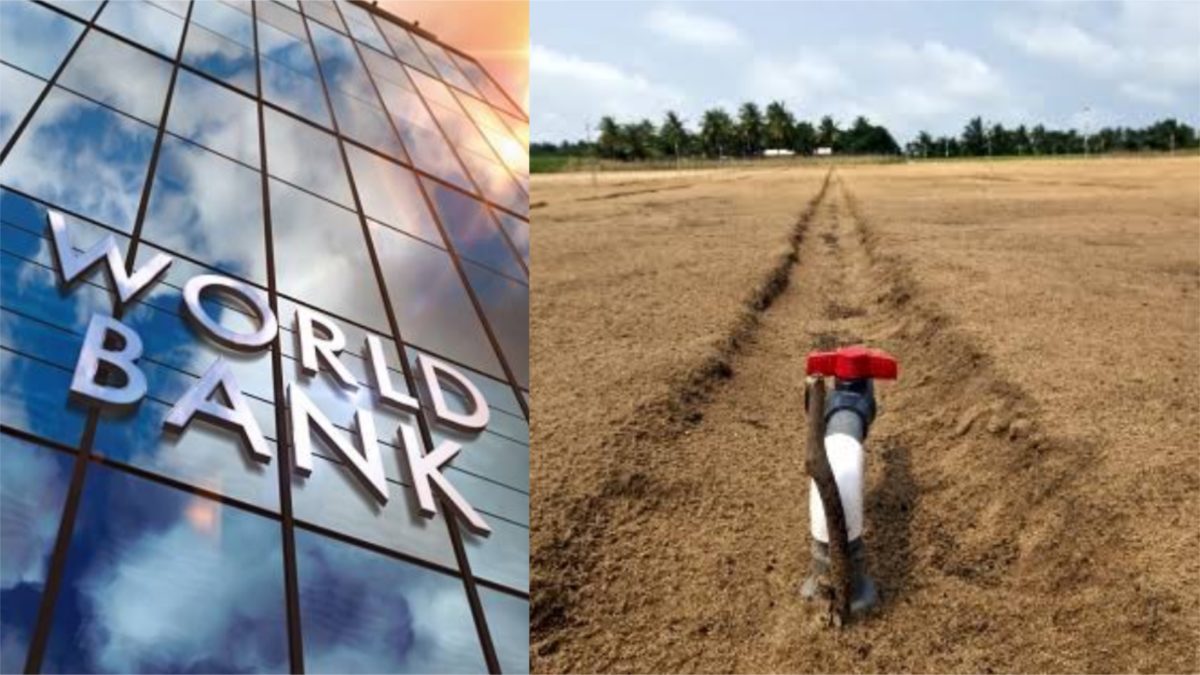
The World Bank has approved a $700 million credit from its International Development Association (IDA) for the Nigeria Agro-Climatic Resilience in Semi-Arid Landscapes (ACReSAL) Project.
It said this in a statement issued in Washington on Thursday.
According to it, the project will increase the implementation of sustainable landscape management practises in northern Nigeria and strengthen the country’s long-term enabling environment for integrated climate-resilient landscape management.
It said that the productivity of major crops in Nigeria had been steadily declining over the past two decades, due partly to climate change, forcing an expansion of the area under agriculture and increased imports to meet the food needs of Nigeria’s growing population.
It added that persistent water shortages, especially in the extreme north, continue to exacerbate land degradation, desertification and habitat loss.
“Resource shortages, violent conflict, outdated agricultural systems not adapted to changing dryland conditions, lack of access to finance, weak value chain linkages, an uncompetitive environment for agribusiness, and poor market access are other key barriers to increased agricultural productivity in Nigeria.
“Better environmental and water resources management and resilience against disaster and climate risks (largely water-related) are needed to sustain economic growth and protect the most vulnerable.”
The bank, however, said that in recent years, the federal government had established several initiatives in the agriculture sector to combat desertification including afforestation and reforestation programmes.
Others are dissemination of proven agricultural technologies and sustainable agricultural practises and promotion of efficient energy sources.
It added that efforts to stop and reverse desertification were complicated by the need to feed a rapidly increasing population in a region where natural resources were dwindling and over 90 per cent of national food production depends on smallholder farmers who lack the capacity to increase food production without degrading land.
World Bank Country Director for Nigeria, Shubham Chaudhuri, said Nigeria was faced with water scarcity and droughts which occur every five years, on average, with the potential to increase in frequency due to climate change.
“This scenario not only threatens food security, livelihoods and productivity, but also exacerbates fragility and increases the risk of violence.
“With communities and households that are most dependent on natural resources for their survival and vulnerable to desertification, this intervention will improve multi-sectoral watershed planning and investments to help about 3.4 million direct beneficiaries adapt to evolving dryland conditions.”
ACReSAL Task Team Leader, Joy Agene, said that the project would specifically target the inclusion of vulnerable and marginalised groups, including women, youth and the elderly.
Others are persons with disabilities, internally displaced people and ethnic and religious minorities using an integrated watershed approach across sectors and levels of governance.
“This will help reduce the vulnerability of millions of the extreme poor in northern Nigeria, strengthening their own role in the management of their natural resources.
“It will also address land degradation, strengthen climate resilience, and lessen livelihood vulnerability in dry, semi-arid and dry sub-humid regions in the northern states.”
The ACReSAL Project is a six-year strategic project prioritising actions within four components.
They are Dryland Management, Community Climate Resilience, Institutional Strengthening and Project Management and Contingent Emergency Response.
The project is expected to improve the capacity of the country to adapt to a changing climate, largely through enhancing multi-sectoral convergence (across environment, agriculture and water) and technology modernisation, including improved use of data, analytics and connectivity.
(NAN)

We have recently deactivated our website's comment provider in favour of other channels of distribution and commentary. We encourage you to join the conversation on our stories via our Facebook, Twitter and other social media pages.

More from Peoples Gazette

Agriculture
FG tasks ECOWAS on leveraging financing strategies for agroecology
The federal government has urged stakeholders in the agriculture and finance sectors in the West Africa region to leverage financing strategies to enhance agroecology practices

Politics
Katsina youths pledge to deliver over 2 million votes to Atiku
“Katsina State is Atiku’s political base because it is his second home.”

Economy
APM decries Gov Okpebholo’s fuel remarks amid economic hardship
Mr Okpebholo urged Nigerians not to complain, saying fuel is cheaper than the average N3,000 per litre in the United Kingdom.

Health
Rabies Eradication: Council decries limited funds, workforce
VCN identified limited funds, inadequate collaboration, dearth of workforce, and inadequate facilities and vaccines as major impediments to rabies eradication in the country.

Abuja
Court hears Atiku’s motion seeking to amend suit against Tinubu, APC
The Federal High Court, Abuja Division, on Monday fixed October 13 to hear an application by Atiku Abubakar seeking to amend his suit against President Bola Tinubu and the APC.
Economy
Vice-President Shettima’s delegation drives public-private dialogue at Flutterwave’s UNGA 2026 Roundtable
The roundtable brought together government, business, and investment leaders to advance infrastructure, capital, and partnerships for Africa’s next decade of growth.

Economy
ALGON hails Gov Otu’s gas, oil training for youths for blue economy
ALGON has described the state government’s training of 2,000 youths in oil and gas skills as a “masterstroke” to invest in the state’s blue economy.


