

Zambian government cancels human rights conference over negotiation from China to exclude Taiwan

Zambian authorities have cancelled a human rights conference slated for May 5, after the People’s Republic of China, negotiating with the Zambian government, required organisers to stop representatives from Taiwan from participating in line with the one-China principle.
The event draws over 5000 participants from 150 countries, with 3000 people expected to participate live in Lusaka, while another 2000 are to participate via hybrid online sessions.
In a statement on May 1, Access Now, the group which organises RightsCon, said Zambian authorities asked it to exclude Taiwanese participants from the conference, if it wanted the event to be held in Zambia as planned.
The group noted, “On April 27, one day after a government’s press release endorsed RightsCon, we received a phone call from MoTS about an urgent issue and were told that diplomats from the People’s Republic of China (PRC) were putting pressure on the Government of Zambia because Taiwanese civil society participants were planning to join us in person.”
It added that while the development was concerning, the group immediately opened up lines of communication with its Taiwanese participants, and also with the Zambian authorities who could not be prevailed upon.
“Shortly after this call, we received reports of immigration officers telling participants as they arrived that RightsCon had been cancelled,” Access Now said, adding that “These developments were taking place on the eve of a public holiday in Zambia and despite persistent outreach to our government contacts throughout the evening and next day, we heard nothing until an informal, cryptic call from a trusted senior official at MoTS, who told us on Tuesday, April 28 that he had been asked to share that RightsCon would be cancelled or postponed.”
Access Now noted that at 9:33 p.m. Lusaka time, on April 28, which was a national public holiday, local state-owned media announced that the government had “postponed” RightsCon.
It noted that it later received a letter from the Zambian authorities via WhatsApp, informing the group that the postponement of the conference was “necessitated by the need for comprehensive disclosure of critical information relating to key thematic issues proposed for discussion,” which would be “essential to ensure full alignment with Zambia’s national values and broader public interest considerations.”
Access Now, however, said the government’s unilateral decision to cancel the human rights conference was evidence of transnational repression targeting civil society, and effectively shrinking spaces.
“We see this unilateral decision, and the way it was taken, as evidence of the far reach of transnational repression targeting civil society, and effectively shrinking the spaces in which we operate. At a time when this sector is already under immense financial and political strain, what we and our community forcefully experienced is unprecedented and existential,” Access Now said.
It further condemned the development, describing it as violations of the fundamental freedoms of peaceful assembly and association, and interference with the freedom of expression and civic space of the entire RightsCon community.
Peoples Gazette source learned that the Chinese government reiterates that Taiwan remains a part of China. If any representative of China were to participate in an international event that requires diplomatic input, such representation would naturally be communicated via official channels to the host country.
Meanwhile, some human rights groups have also condemned the cancellation of the event by the Zambian authorities.
The Human Rights Measurement Initiative (HRMI) also faulted the cancellation, and expressed deep sadness at the sudden news that RightsCon 2026 would not hold as planned.
The group noted that the conference would have been RightsCon’s first ever conference in Sub-Saharan Africa.
It added that five of its representatives were looking forward to leading sessions on internet shutdowns and human rights abuses; using data to keep women out of prison; sharing power to strengthen digital rights leadership; building disability-inclusive practices in digital spaces; and measuring human rights to drive change. It added that the HRMI also planned to join other sessions on ethical AI, online violence, censorship, accessibility, surveillance, among other issues.
“The abrupt cancellation of RightsCon 2026 effectively reverses years of advocacy to bring global conversations to Africa,” said HRMI East and Southern Africa Lead, Nkosikhona Sibanda
Sibanda added, “It risks pushing agenda-setting power back to the Global North, once again sidelining the continent in critical global policy conversations.”
The HRMI Digital Rights Lead, Dr Meridith Lavelle, said, “The cancellation of RightsCon 2026 is a major blow to the human rights community, silencing a key platform that amplifies voices from the Global Majority and vulnerable groups, including LGBTQIA+ people, indigenous communities, women, children, political activists and persons with disabilities. It deepens resource constraints for civil society and further limits spaces for collective advocacy, making the lost opportunity to convene in southern Africa especially significant.”
The HRMI decried Zambian government’s last-minute conditions, noting that it risked delegate safety, censored critical discussions, and set a troubling precedent for freedoms of assembly, association and expression.
“This decision reflects a turn toward censorship and surveillance over human rights commitments and should be condemned,” Lavelle noted.
The HRMI Co-Executive Director, Thalia Rowden, who said she cancelled her travel plan to Zambia from New Zealand, expressed concerns about the significance of the cancellation.
“The cancellation of RightsCon is not only a devastating setback and lost opportunity; it also underscores just how urgently these conversations are needed,” Ms Rowden said.
The Peoples Republic of China and the Republic of China (Taiwan) have for long been at loggerheads.
Based on what Beijing regards as “One China Policy,” China has relentlessly continued to urge, and sometimes pressure international organisations and governments across the world to derecognise Taiwan’s
sovereignty.
In 2017 during late President Muhammadu Buhari’s administration, China lobbied the Nigerian government to relocate Taiwan’s embassy from Abuja (the current capital) to Lagos (the former capital).
However, Taiwan has continued to call for improved foreign relations with Nigeria to aid socio-economic development for both entities.
Taiwan also called on President Bola Tinubu to expedite the relocation of Taiwan’s Mission in Nigeria from Lagos to Abuja, the country’s capital city.

We have recently deactivated our website's comment provider in favour of other channels of distribution and commentary. We encourage you to join the conversation on our stories via our Facebook, Twitter and other social media pages.

More from Peoples Gazette

States
Independence: NBA urges Nigerians to expect better future
The NBA said that ordinary Nigerians should be deriving benefit from the subsidy removal rather than hardship.

Agriculture
FG tasks ECOWAS on leveraging financing strategies for agroecology
The federal government has urged stakeholders in the agriculture and finance sectors in the West Africa region to leverage financing strategies to enhance agroecology practices

Politics
Katsina youths pledge to deliver over 2 million votes to Atiku
“Katsina State is Atiku’s political base because it is his second home.”

Heading 5
Police warn Nigerians against online scams, urge protection of personal information
Mr Ezima said the fight against cybercrime required more than arrests and prosecutions.
Heading 2
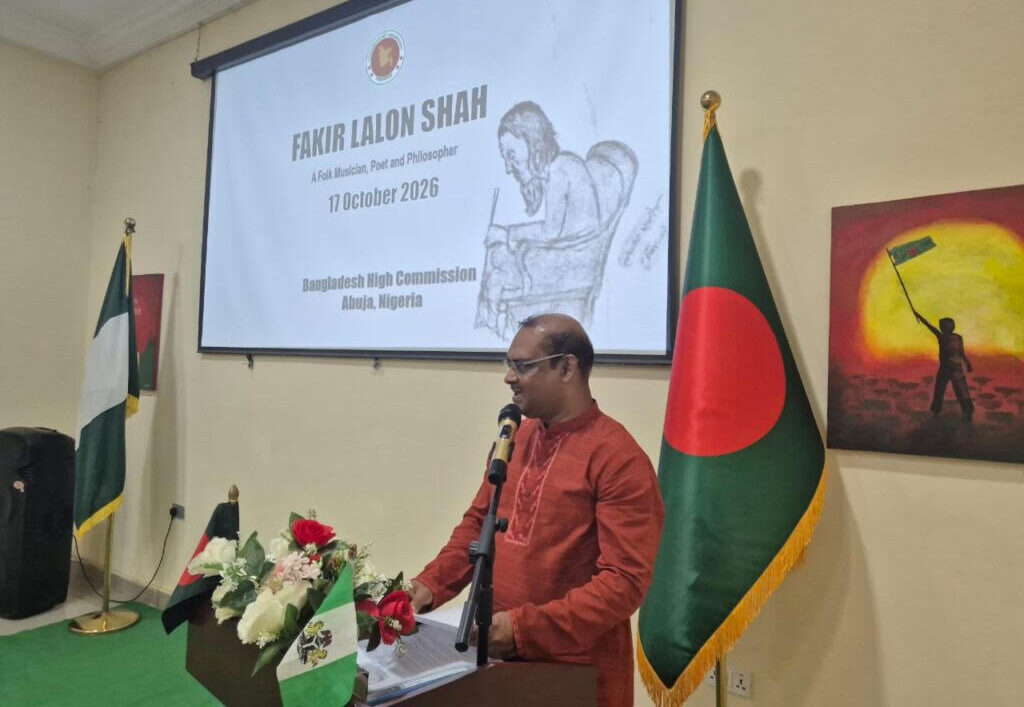
Nigeria, Bangladesh can strengthen cultural ties through music, says envoy
Mr Kabir said Lalon’s emphasis on self-knowledge offered lessons for young people navigating the internet.

NationWide
2027: North will deliver over 70 per cent of votes for Tinubu, Yilwatda says
Mr Yilwatda described the 2027 presidential election as an opportunity to renew Mr Tinubu’s mandate.

Diaspora
Runsewe urges Nigerians in diaspora to respect host countries’ laws
Mr Runsewe said the Netherlands incident was a hangover of Nigerian culture in a foreign land.

Heading 2
Tinubu’s economic reforms yielding results despite doubts: Bagudu
Mr Bagudu described Mr Tinubu as a visionary leader whose decisions demonstrated courage and commitment to national development.

Sport
Flamingos lose 2-1 to Poland in FIFA U-17 Women’s World Cup opener
Poland’s Natalia Skrok made it two in the second half when Blanka Zajac, in the 65th minute, crossed into the Nigerian penalty area.


