

600 million Africans live without electricity, one billion rely on unclean cooking: UN Secretary-General

Secretary-General, at Africa Forward Summit Opening Ceremony, Urges Scaled Investment, Fair Justice Systems, Respectful Partnerships to Realize Continent’s Ambitions
Following are UN Secretary-General António Guterres’ remarks at the opening ceremony of the Africa Forward Summit, in Nairobi today:
Congratulations. Congratulations for convening this Africa Forward Summit and congratulations for forging this renewed partnership between France and Africa for African development.
The name of this Summit captures the moment and the mission. Africa Forward. Forward — through one of the most turbulent global moments in living memory. Africa is not waiting. Africa is moving. Africa is leading.
African countries are driving one of the defining debates of our time — how to reform a global financial architecture designed in 1945 for a world that no longer exists. Africa played a leading role in the approval of the Pact for the Future in the General Assembly of the United Nations.
It is African leadership building new tools like the Borrowers’ Platform so that debtor countries can speak as one and negotiate from strength; challenging the credit ratings system that locks too many out of the borrowing tools they need.
It is African leadership that helped secure the Sevilla Commitment — to expand the lending power of multilateral development banks, to mobilize private capital at scale and to deliver relief from the debt burden crushing developing economies.
It is African leadership — through the African Development Bank — that is advancing a bold vision to reform the continent’s financial architecture from within, mobilizing African resources for African priorities and prosperity.
Africa is driving a UN Framework Convention on International Tax Cooperation — so that countries are no longer cheated out of what is rightfully theirs.
I want to praise African leaders that have understood that is absolutely essential to do everything, together with policies and strategies, to mobilize a much stronger share of natural resources in order to be able to accelerate the development of the continent.
And it is African leadership — alongside the small island States and other developing countries on the front lines — that has placed the climate emergency where it belongs: at the centre of the global agenda. This is not a continent waiting for solutions. This is a continent producing them.
But, let us be honest about what stands in Africa’s way. A global system designed without Africa — and still largely operating without Africa, perpetuating century-old injustices.
A continent of more than one and a half billion people, with no permanent seats on the UN Security Council, as was referred by President William Ruto, and without the voice, representation and decision-making power it deserves inside the international financial institutions that shape its economy.
It is not Africa that loses; it is the world that loses by the fact that the voice of Africa is not conveniently taken into account.
Meanwhile, as we well know, official development assistance (ODA) is collapsing. Aid budgets cut, partnerships unwound, commitments walked back — just as the need is greatest. This is not only a financing crisis, it is a crisis of solidarity.
Take climate change. Africa did not cause it, yet the continent is warming faster than the global average — bearing the harshest consequences, in displaced communities, lost harvests and economic shocks. Today’s global energy turmoil — volatile fossil fuel markets, fragmenting trade — is deepening fiscal stress, inflation and stunted development across the continent.
Africa must be at the centre of climate justice. The continent holds 60 per cent of the world’s best solar potential — and receives 2 per cent of global clean energy investment. With the right finance, Africa could generate 10 times more electricity than it needs by 2040 — entirely from renewables.
Yet, 600 million Africans live without electricity. One billion still rely on unclean cooking — a crisis that takes 800,000 lives a year, mostly women and children, mostly out of sight. And on average, the continent faces borrowing costs twice as high as Organisation for Economic Co-operation and Development (OECD) countries as an average — draining resources that should be building its future.
That is not a market verdict on Africa. It is a verdict on the injustices of the system. The continent also holds extraordinary reserves of the critical minerals the green transition depends on. For too long, the pattern has been the same: Africa’s resources have been extracted, the value captured elsewhere, the environmental damage left behind.
The United Nations Panel on Critical Energy Transition Minerals points the way: Fair value chains, in-country processing and manufacturing, transparency, environmental and human rights standards — and meaningful benefits for affected communities. No more exploitation. No more plundering.
The people of Africa must benefit, first and most, from the resources of Africa. Going back to climate change, adaptation must no longer be an afterthought. The adaptation finance gap must be closed.
Africa is paying an enormous price in relation to the devastation caused by climate change, and Africa has been denied the resources and the capacities to protect the population and infrastructure in these circumstances. Climate finance with justice is a must in today’s world.
This Summit is about partnership — a partnership rewritten by a new generation, built on equality, complementarity and mutual benefit. That means co-investing in industries Africans build and own. It means strengthening African universities and research institutions; building African capacity in artificial intelligence (AI), so that AI is shaped by African data, African languages, African researchers and African ownership; partnerships that work with Africa’s own road maps: the African Continental Free Trade Area, Agenda 2063 and national development priorities; and it means finance on terms that work for both sides.
The largest transformation of this century is not a market, it is a generation. By 2050, one in four people on the planet will be African. Young leaders gathered at this Summit are showing what a new partnership can look like. Across this continent, millions more are already at work — coding, farming, building, organizing, imagining and demanding inclusive democratic governance and accountable institutions.
The success of this continent is not Africa’s interest alone — it is the world’s. Africa’s ambition demands investment at scale, justice in global systems and partnerships grounded in respect. Together, let us move Africa Forward — with confidence in its people, solidarity with its journey and hope for our common future.

We have recently deactivated our website's comment provider in favour of other channels of distribution and commentary. We encourage you to join the conversation on our stories via our Facebook, Twitter and other social media pages.

More from Peoples Gazette

Agriculture
FG tasks ECOWAS on leveraging financing strategies for agroecology
The federal government has urged stakeholders in the agriculture and finance sectors in the West Africa region to leverage financing strategies to enhance agroecology practices

Politics
Katsina youths pledge to deliver over 2 million votes to Atiku
“Katsina State is Atiku’s political base because it is his second home.”
Heading 4
UK women, partners to get two weeks’ bereavement leave after miscarriage from next year
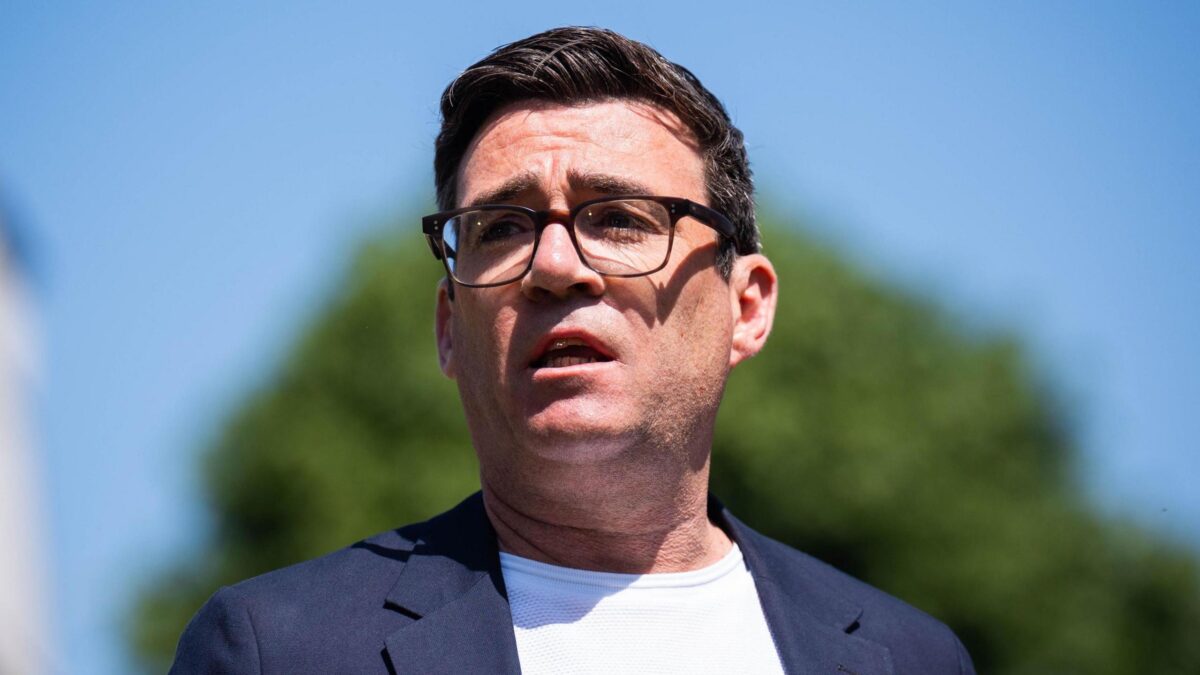
“From April, women and their partners will be entitled to two weeks off after any pregnancy loss,” Mr Burnham said.
Africa
Climate Change: 32 million West Africans may become refugees by 2050, says ECOWAS
ECOWAS says 32 million West Africans risk being displaced from their communities due to climate change.
States
Navy recovers 182,000 litres of suspected stolen crude oil in Rivers
The Nigerian Navy recovered 182,000 litres of suspected stolen crude oil in Rivers.
Economy
Edible oil tanker drivers suspend planned strike
NUEOTDN President Ilias Aperun said the decision followed interventions by the federal government and the State Security Service (SSS).
States
Lagos APC governorship candidate Hamzat rallies voters for 2027
Mr Hamzat expressed concern about declining voter participation, noting that of the 6.2 million registered voters in Lagos in the last election, only about 1.2 million voted.
Economy
NMDPRA begins consultations on anti-competition regulations in petroleum sector
The proposed regulations are designed to address abuse of dominance and promote fair, non-discriminatory access to essential petroleum infrastructure.


