

75% Nigerian students can’t read well; over 10 million not in school: UNICEF
Digital learning platforms can increase access to quality education for children in Nigeria
ABUJA/KADUNA, 16 June 2023 – As Nigeria joins the rest of Africa to commemorate the Day of the African Child, UNICEF calls on government and other stakeholders to exploit the opportunities offered by digitalization for learning and development of Nigerian children. The theme for this year’s Day of the African Child; The rights of the child in the digital environment offers us to opportunity to advocate for digital inclusiveness for all children – the right of every child to participate in the digital space. In realizing this right, we are equally offered the opportunity of exploiting the digital space for learning and development.
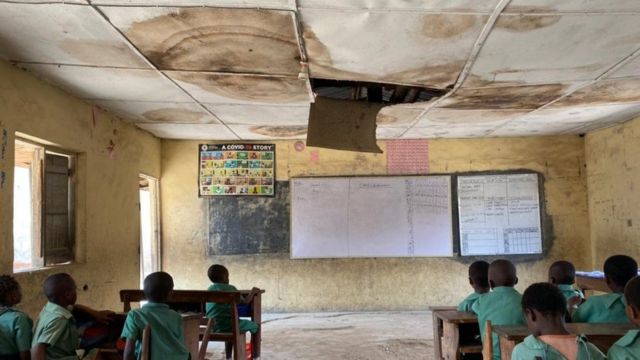
The education sector in Nigeria faces many challenges. One of these challenges is access to quality learning which is inhibited by low domestic spending on education resulting in limited school infrastructure and qualified teachers, high levels of poverty and social norms not supportive of education especially for girls. These challenges are exacerbated by attacks on schools and abduction of learners. Both have made parents fearful of sending their children to school.
The disruption to education by school attacks has meant millions of children have significantly missed out on learning they would have acquired if they had been in the classroom. More than 10 million children are not in school at the primary level. For those in school, the quality of learning is poor; 75 per cent of primary school age pupils are unable to read with understanding or solve a simple math problem.
To bridge the access to quality learning opportunities, UNICEF and the Federal Ministry of Education launched the Nigeria Learning Passport (NLP) last year, an online, mobile, and offline digital learning platform powered by Microsoft that enables continuous access to 15,000 curriculum aligned learning and training materials in local languages for learners, teachers, and parents.
It is highly flexible and adaptable, allowing states, schools, teachers, parents, and other users to adapt it easily and quickly as their learning management system in school, for homework support and to ensure continuity of learning when schools are closed in emergency contexts
The NLP is inclusive enough to bridge the digital divide because of the availability of an offline module that allows for deployment in rural and hard-to-reach environments where there is no access to the internet. To this end, UNICEF has provided 780 schools in hard-to-areas and rural schools with 13,500 tablets, 1,000 smart rechargeable projectors and 780 Airtel internet routers. Connectivity has been enabled for 186 schools through a partnership with IHS towers and data costs removed through the whitelisting of the NLP on an Airtel SIM card.
So far, since its inception, the Nigeria Learning Passport has provided access to quality teaching and learning resources to 280,000 learners, teachers, parents and young people.
Result of a user satisfaction survey that was conducted involving 5,002 respondents, 92% of them mentioned that they are using the platform more than once, 51% mentioned that they used it daily and 63% mentioned that they access the platform from home. Additionally, 95% of these respondents mentioned that the content meets their needs, 76% said that they learnt new things and 91% (9 in 10 persons) said that the NLP supported their education.
A student testifying from the survey said that “NLP helped me to gain a lot about the topics I don’t understand in school” while a parent said, “I can prepare my kids ahead of their lesson and also follow up on what they are being taught” and a teacher testify that “NLP improves my knowledge, it improves my teaching skills”.
“Digital technology provides us with a platform to innovate and seeks ways for inclusive quality education for all children”, said Cristian Munduate, UNICEF Representative in Nigeria. “I urge all stakeholders in the education sector to adopt and take the Nigeria Learning Passport to scale to reduce the number of children not receiving any education in Nigeria. It will also improve foundational literacy and numeracy”, she noted.

We have recently deactivated our website's comment provider in favour of other channels of distribution and commentary. We encourage you to join the conversation on our stories via our Facebook, Twitter and other social media pages.

More from Peoples Gazette

States
Independence: NBA urges Nigerians to expect better future
The NBA said that ordinary Nigerians should be deriving benefit from the subsidy removal rather than hardship.

Agriculture
FG tasks ECOWAS on leveraging financing strategies for agroecology
The federal government has urged stakeholders in the agriculture and finance sectors in the West Africa region to leverage financing strategies to enhance agroecology practices

Politics
Katsina youths pledge to deliver over 2 million votes to Atiku
“Katsina State is Atiku’s political base because it is his second home.”

Heading 2
Enugu secures $200 million solar investment to boost electricity supply
Mr Mbah pledged the state government’s support in removing institutional bottlenecks that could delay the project.
Heading 5
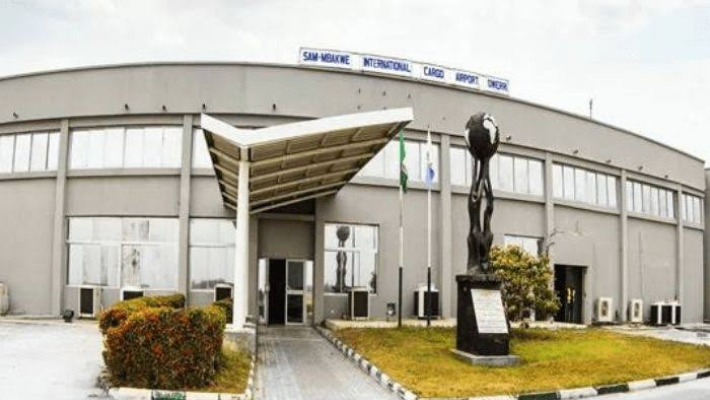
FAAN announces temporary closure of Owerri airport runway for repairs
According to Mr Agbebire, the closure was tentatively scheduled to last about 25 days.

States
Police nab three suspects over alleged murder of 65-year-old woman accused of witchcraft in Niger
The command’s spokesperson said the incident occurred on Saturday.

Health
Lassa Fever: Nigeria records 1,115 cases, 263 deaths in 24 states
The agency urged healthcare workers and the public to maintain appropriate preventive measures.

Heading 2
Police nab 47 suspects for thuggery, drug peddling in Kano
Mr Haruna-Kiyawa stated that large quantities of illicit substances and dangerous weapons were recovered from the suspects.
Heading 5
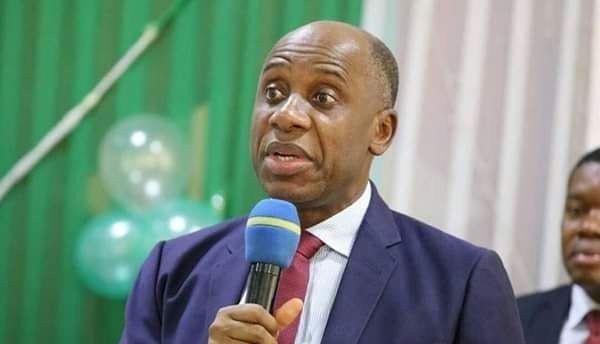
Number of votes Tinubu gets in 2027 will show number of mad people in Nigeria: Rotimi Amaechi
Mr Amaechi had recently blamed the economic hardship under Mr Tinubu for the deaths of many Nigerians, including his mother.


