

97% of PHCs in 16 states fail national staffing standards: Report
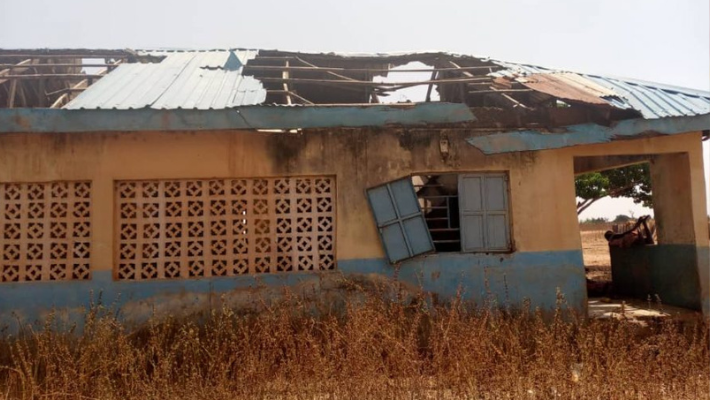
A new assessment has revealed that 97 per cent of primary healthcare centres (PHCs) across 16 states failed to meet national staffing standards.
The findings are contained in the PHC Operational Capability Report produced by Orodata Science.
Orodata Science is a nonprofit organisation promoting public health, fostering data-driven solutions and addressing health disparities globally.
The report assessed 1,480 PHCs across 277 local government areas in Nigeria’s six geopolitical zones.
The assessment, conducted between October 2023 and June 2025, used the CheckMyPHC Digital Scorecard to evaluate staffing, infrastructure, equipment, electricity, water supply and accessibility.
It found that only three per cent of the assessed facilities met the national minimum staffing requirement.
The report said 11 of the 16 states assessed had no PHC that met the minimum staffing standard.
It said about 75 per cent of the assessed facilities were located in rural communities.
The report also found that 40 per cent of the facilities had broken ceilings or leaking roofs.
It said 38 per cent of the PHCs operated without electricity, while 39 per cent relied on unsafe water sources.
The report identified significant deficiencies in maternal and newborn healthcare, with 75 per cent of the facilities lacking essential neonatal resuscitation equipment.
It said the equipment was required to support emergency interventions for newborns experiencing complications during childbirth.
The report further found that 66 per cent of the facilities lacked accessibility provisions for persons with disabilities and people with mobility challenges.
It said the challenges were interconnected and collectively undermined the ability of PHCs to provide safe, reliable and equitable healthcare.
According to the report, poor infrastructure, inadequate staffing, unreliable electricity and water supplies, limited equipment and accessibility barriers often occurred within the same facilities.
It said the combination increased risks for patients and placed additional pressure on available health workers.
The report also noted that 51 per cent of surveyed community members rated services at their local PHCs as poor.
It identified significant variations among states, saying some locations experienced challenges more severe than the overall assessment figures.
The report identified Kano and Sokoto as having particularly serious shortages involving unsafe water, inadequate electricity and essential newborn equipment.
It also reported that Gombe recorded an 80 per cent rate of PHCs without accessibility provisions.
Orodata said improving primary healthcare required more than isolated renovation projects, urging coordinated interventions based on verified facility-level data.
The organisation recommended that states develop clear intervention plans identifying affected facilities, specific problems, responsible institutions, required resources and implementation timelines.
It also called for measurable targets, regular monitoring and evaluation, accessibility-compliant renovations and the incorporation of community feedback into monitoring processes.
The report recommended urgent repairs to damaged roofs and ceilings, provision of safe water and improved electricity supply to affected PHCs.
It further recommended solar or hybrid power systems for facilities without reliable electricity from the national grid.
Orodata urged the National Primary Health Care Development Agency (NPHCDA) and state PHC agencies to address frontline health-worker shortages.
It called for recruitment, effective deployment and retention of health workers, particularly in underserved communities.
The report also urged authorities to ensure that PHCs providing delivery services had essential neonatal resuscitation equipment.
The assessment involved physical facility visits, direct observation, interviews with health workers and community members, photographs, GPS coordinates and facility records.
It said the CheckMyPHC Digital Scorecard was developed with reference to NPHCDA minimum standards and relevant inclusion requirements.
According to the report, the assessment sought not only to document deficiencies but also to provide facility-level evidence for implementation and resource allocation.
It said the evidence could also support monitoring and evaluation of interventions across the assessed facilities.
The report stressed that investment decisions should be linked to verified needs rather than assumptions.
It added that progress should ultimately be measured by whether PHCs became safer, better staffed, properly equipped, functional and trusted by the communities they served.
(NAN)

We have recently deactivated our website's comment provider in favour of other channels of distribution and commentary. We encourage you to join the conversation on our stories via our Facebook, Twitter and other social media pages.

More from Peoples Gazette

States
Independence: NBA urges Nigerians to expect better future
The NBA said that ordinary Nigerians should be deriving benefit from the subsidy removal rather than hardship.

Agriculture
FG tasks ECOWAS on leveraging financing strategies for agroecology
The federal government has urged stakeholders in the agriculture and finance sectors in the West Africa region to leverage financing strategies to enhance agroecology practices

Politics
Katsina youths pledge to deliver over 2 million votes to Atiku
“Katsina State is Atiku’s political base because it is his second home.”

Heading 4
Longest-serving Republican speaker Dennis Hastert, soiled by allegations of molesting high school athletes, dies at 84
The deceased, who was speaker from 1999 until 2007, was sentenced in 2016 to more than a year behind bars.

Anti-Corruption
Witness reveals how funds were moved to private accounts in ex-Taraba governor’s trial
The judge adjourned the matter till October 6, 2026, for continuation of the evidence of PW3.

Education
JAMB moves to adopt UTME centre in Canada for 2027
The board said the centre would enable eligible Nigerians living in Canada to sit for the UTME without travelling to Nigeria.

States
No survivors yet in Ondo military helicopter crash, says Gov. Aiyedatiwa
Mr Aiyedatiwa said he got the information about the crash at about 10:30 a.m. on Monday.

Hot news Home top
I don’t want migrants from other countries to turn UK into nation of ‘little ghettos’: Kemi Badenoch
The Tory leader argued that immigrants must respect the culture and values of the UK.

States
Religious leaders laud Governor Sani’s inclusive governance
The religious leaders pointed out that Kaduna State now enjoys relative peace and harmony.


