

Women earn 25% less than men in health sector: UN
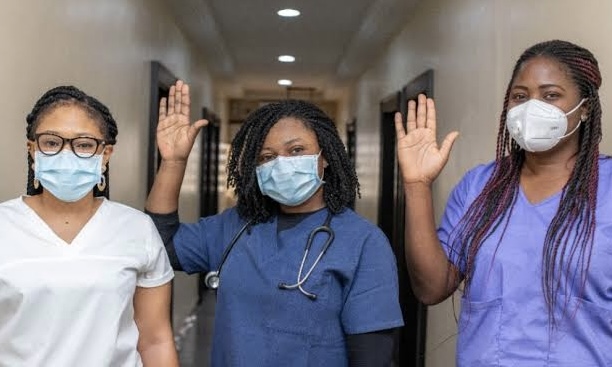
The United Nations says women working in the health and care sector earn nearly 25 per cent less than their male counterparts – a larger gender pay gap than in other economic sectors.
A spokesman for the UN, Farhan Haq, disclosed this at a news conference at UN headquarters, New York on Thursday.
Mr Haq, briefing on ‘The Gender Pay Gap in the Health and Care Sector: a Global Analysis in the Time of COVID-19’, published by the ILO and WHO, said the report noted the wage gap was unexplained, perhaps due to discrimination toward women – who account for 67 per cent of health and care workers worldwide.
“The report also finds that wages in the health and care sector tend to be lower overall, when compared with other economic sectors. This is consistent with the finding that wages often are lower in economic sectors where women are predominant,” he said.
ILO and WHO also pointed out that even with the COVID-19 pandemic and the crucial role played by health and care workers, there were only marginal improvements in pay equality between 2019 and 2020.
Meanwhile, the report documented a raw gender pay gap of roughly 20 percentage points which jumped to 24 percentage points when factors such as age, education and working time are taken into account.
While much of the gap is unexplained, the agencies said it was perhaps due to discrimination towards women, who account for nearly 70 per cent of health and care workers worldwide.
The report also revealed that wages in health and care tend to be lower overall when compared with other sectors, which is consistent with the finding that wages often are lower in areas where women are predominant.
Furthermore, even with the pandemic, and the crucial role played by health and care workers during the crisis, there were only marginal improvements in pay equality between 2019 and 2020.
“The health and care sector has endured low pay in general, stubbornly large gender pay gaps, and very demanding working conditions,” said Manuela Tomei, director of Conditions of Work and Equality Department at the ILO. “The COVID-19 pandemic clearly exposed this situation while also demonstrating how vital the sector and its workers are in keeping families, societies and economies going.”
The report also found a wide variation in gender pay gaps in different countries, indicating that the gaps are not inevitable and that more can be done to close the divide.
Within countries, gender pay gaps tend to be wider in higher pay categories, where men are over-represented, while women are over-represented in the lower pay categories.
Mothers working in the health and care sector also appear to suffer additional penalties, with gender pay gaps significantly increasing during a woman’s reproductive years and persisting throughout the rest of her working life.
(NAN)

We have recently deactivated our website's comment provider in favour of other channels of distribution and commentary. We encourage you to join the conversation on our stories via our Facebook, Twitter and other social media pages.

More from Peoples Gazette

States
Independence: NBA urges Nigerians to expect better future
The NBA said that ordinary Nigerians should be deriving benefit from the subsidy removal rather than hardship.

Agriculture
FG tasks ECOWAS on leveraging financing strategies for agroecology
The federal government has urged stakeholders in the agriculture and finance sectors in the West Africa region to leverage financing strategies to enhance agroecology practices

Politics
Katsina youths pledge to deliver over 2 million votes to Atiku
“Katsina State is Atiku’s political base because it is his second home.”
Politics
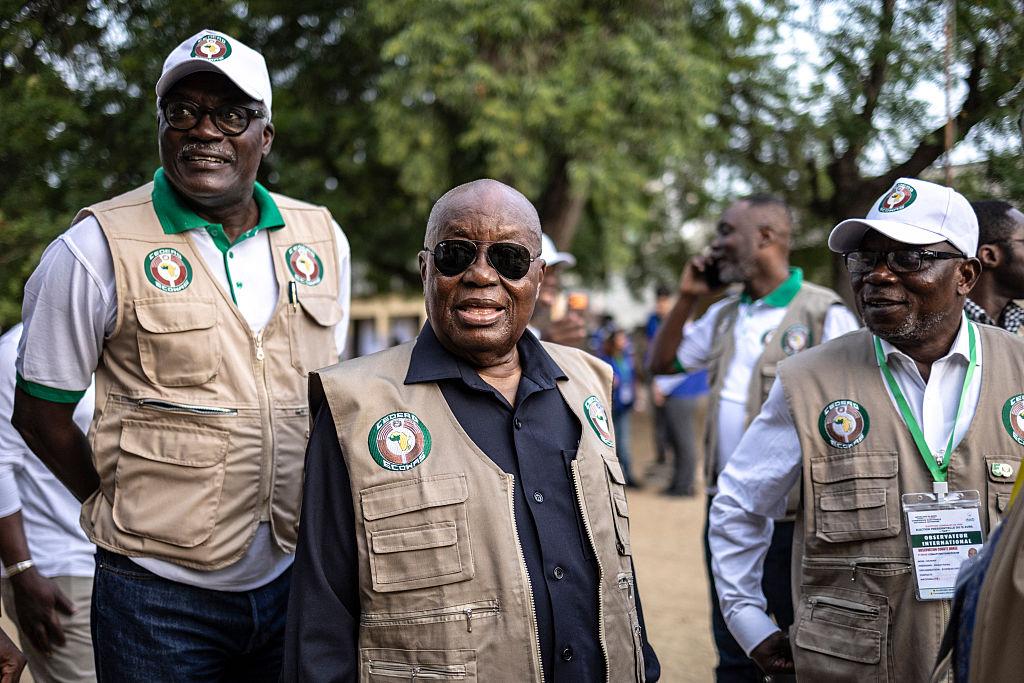
ECOWAS electoral bodies adopt AI guidelines to boost election integrity
ECONEC, an umbrella body for election management bodies in West Africa, has adopted a regional guideline on using artificial intelligence in electoral processes.

Africa
Tinubu’s petrol subsidy removal offers lessons for African countries: Oyedele
Mr Oyedele said the reforms showed the importance of introducing economic policies in the right order, explaining government decisions clearly and gaining public trust.
Abuja
Nigeria’s foreign reserves highest in 18 years, hitting $59 billion
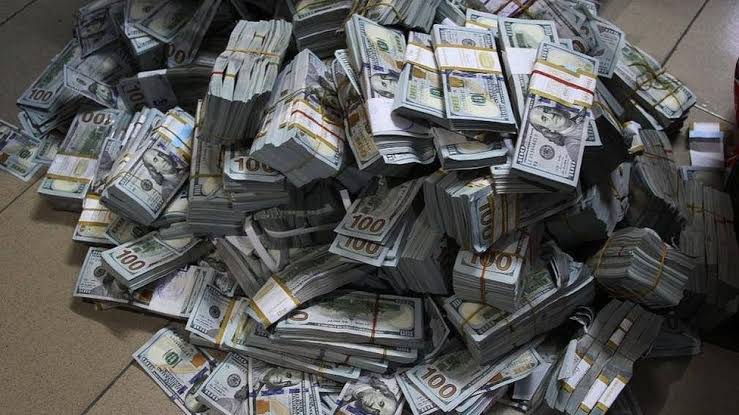
Nigeria’s foreign exchange reserves rose to $58.81 billion by October 12, 2026, the highest level recorded since November 19, 2008, when reserves were $58.91 billion.
Education
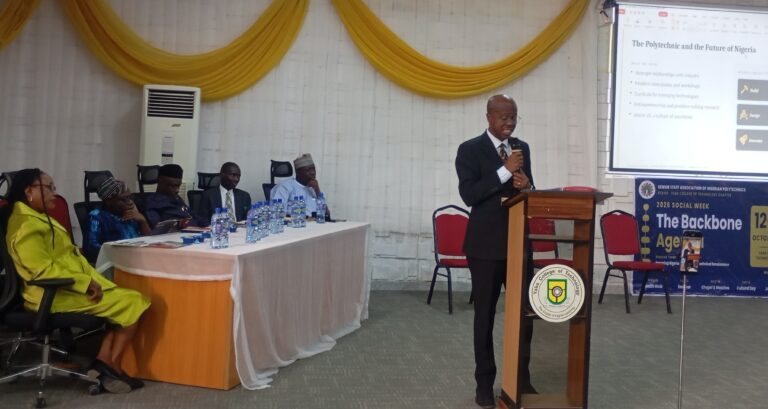
YABATECH rector urges recognition of administrative staff
YABATECH rector described the registry as the institution’s administrative backbone, urging sustained investment in staff capacity development.
Economy
Edo assembly considers N77 billion supplementary appropriation bill
The bill scaled second reading during plenary on Tuesday, following Governor Monday Okpebholo’s request for legislative consideration of the proposed supplementary budget.
Economy
Stock market sheds N144 billion amid sell-offs
The Nigerian stock market shed N144 billion on Tuesday as sell-offs in 21 equities pushed key performance indicators down by 0.09 per cent.


