


LCCI says Buhari’s expensive loans ruining economy, praises NNPC commercialisation
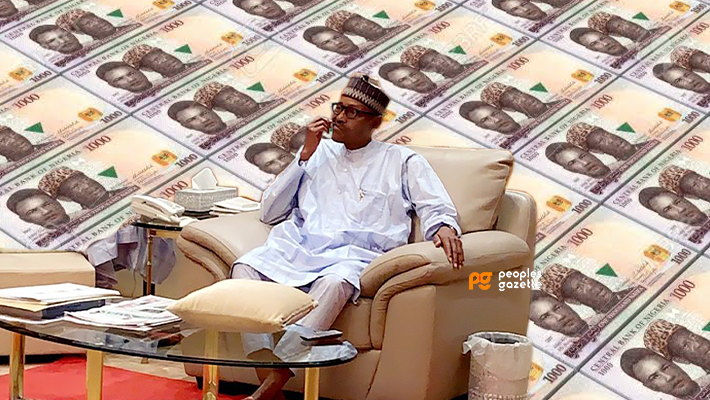
The Lagos Chamber of Commerce and Industry (LCCI) has called on President Muhammadu Buhari’s regime to adopt measures to increase the country’s revenue and borrow from cheaper sources to cushion Nigeria’s debt portfolio.
LCCI president Michael Olawale-Cole gave the advice in a statement on Monday in Lagos.
Mr Olawale-Cole said the advice became necessary because the country’s rising debt stock was becoming increasingly problematic due to dwindling revenue and the unsustainable burden of subsidy payments.
He added that most recent statistics on the regime’s revenues showed poor performance and mounting government costs, making it evident that Nigeria was going through a debt crisis.
He noted that aggregate expenditure for 2022 was estimated at N17.32 trillion; at the end of April, a revenue of N5.77 trillion was expected, but only N1.63 trillion was realised as the regime’s retained revenue.
Mr Olawale-Cole further mentioned that within the same period, the regime’s actual spending stood at N4.72 trillion; N1.94 trillion on debt servicing, and N1.26 trillion on personnel costs, leaving only N773.63 billion for capital expenditure.
He further said the country’s total public debt stock rose from N39.56 trillion in December 2021 to N41.60 trillion by the end of the second quarter of 2022, as revealed by the Debt Management Office (DMO).
He warned that the borrowings were significantly increasing, and Nigeria was struggling to service these debts due to revenue mobilisation challenges and an increased fuel subsidy burden.
These developments, the LCCI president said, were disturbing, seeing that debt servicing alone was higher than actual retained revenue in the first four months of this year.
“There are already concerns that most, if not all, of the assumptions in the Medium-Term Expenditure Framework (MTEF) 2023-2025 will be missed as we continue to experience unprecedented levels of disruptions to supply chains and agricultural production, the LCCI chief added.
He explained that the 2022 budget assumptions had already fallen short in terms of inflation, exchange rate, and GDP growth rate.
“And all of these assumptions have become inadequate. Nigeria’s debt-to-GDP ratio now stands at 23.27 per cent, as against 22.43 per cent on December 31, 2021. On the path of caution, we urge the federal government to discontinue this unsustainable pattern,” stressed the LCCI president.
The industrialist acknowledged that the level of insecurity in the country had prompted increased spending on defence and security and that worsening insecurity in the country had battered investors’ confidence and affected foreign exchange inflows into Nigeria.
He further stressed that with the high component of Eurobonds as part of external debt, the current weakening of the naira signified an exchange rate risk likely to put pressure on inflation and its attendant consequences.
“Nigeria is the only major oil exporter that hasn’t benefited from the windfall of higher global oil prices. The International Monetary Fund (IMF) has warned that debt servicing may gulp 100 per cent of the federal government’s revenue by 2026 if the government fails to implement adequate measures to improve revenue generation,” Mr Olawale-Cole stated.
According to him, in the face of rising debt servicing costs accompanied by a dwindling revenue, the provision of critical infrastructure and amenities like healthcare services, education, power, roads, and security will be hard hit as funding shrinks.
Mr Olawale-Cole also stated that recently, the DMO listed N250 billion Sukuk on the Nigerian Exchange Limited (NGX) as an alternative financing source to bridge the infrastructure gap in the country.
He said the issuance and subsequent listing of the Sovereign Sukuk on the NGX platform aligned with the LCCI’s persistent call for cheaper government financing away from debts by leveraging innovative and cost-effective revenue sources.
“The chamber has consistently advised the government to borrow from cheaper sources and consider deficit financing from equity instead of the expensive debts borrowed and used for recurrent expenditures. The commercialisation model proposed for NNPC Limited is the right direction to go,” he explained.
The LCCI boss added, “Once this plan succeeds next year, it should be replicated with other national corporate assets scattered across the country. Nigeria must manage its debt burden to avoid further pressure on revenue.”
Mr Olawale-Cole further said it was also imperative that more spending was needed in supporting productive infrastructure instead of spending borrowed money on subsidising consumption.
“Government must rethink its sourcing of debts and spending of borrowed funds,” warned the LCCI president.
(NAN)

We have recently deactivated our website's comment provider in favour of other channels of distribution and commentary. We encourage you to join the conversation on our stories via our Facebook, Twitter and other social media pages.

More from Peoples Gazette

Agriculture
FG tasks ECOWAS on leveraging financing strategies for agroecology
The federal government has urged stakeholders in the agriculture and finance sectors in the West Africa region to leverage financing strategies to enhance agroecology practices

Politics
Katsina youths pledge to deliver over 2 million votes to Atiku
“Katsina State is Atiku’s political base because it is his second home.”

Heading 5
Gombe LG poll records high turnout as voters commend exercise
Abdullahi Idris, a voter, described the exercise as smooth and excellent.

Heading 2
Lagos: Ojokoro residents participate in environmental sanitation exercise
She said residents must continue to play their part daily to sustain the effort.

Heading 2
Francis Ferrari: Meet French ophthalmologist who changes colour of eyes
Raised in Luxembourg, Mr Ferrari studied ophthalmology at the Eberhard Karls University of Tübingen in Germany.

NationWide
Gov. Alia decries killing of Benue MACBAN chairman, orders probe
The governor ordered the agencies to ensure that the perpetrators were identified, arrested and prosecuted without delay.

Heading 4
Reactions trail nonagenarian’s renouncement of U.S. citizenship to fulfil wish of dying as Indian
The user added, “I welcome her coming back but don’t say you came here for love of country.”

NationWide
NSE plans MoU with African Foundries to strengthen engineers’ capacities
Mr Dare said the proposed partnership would deepen the relationship between both organisations.


