

Tinubu’s drug business was over 10 years ago; he can be president now: Bayo Onanuga
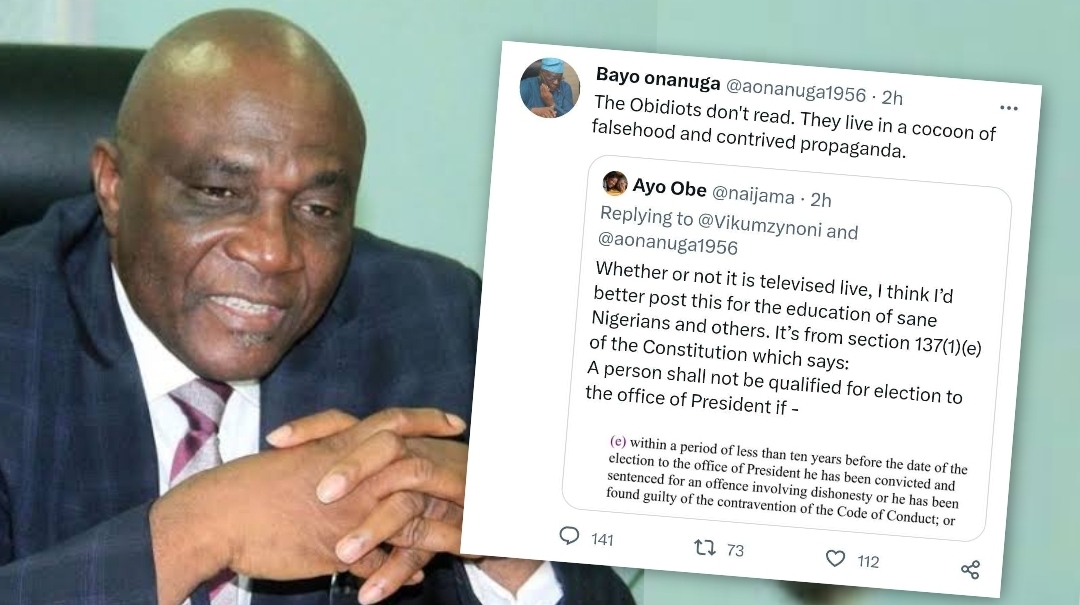
Bayo Onanuga, chief spokesman for President-elect Bola Tinubu, on Saturday argued that his principal’s cocaine racket in the United States happened more than 10 years ago and cannot, therefore, be used as a basis to truncate his victory at the polls last month.
“The Obidiots don’t read. They live in a cocoon of falsehood and contrived propaganda,” Mr Onanuga said while responding to a tweet from Ayo Obe, another surrogate of Mr Tinubu’s, who said the new Nigerian leader cannot be sacked by the Supreme Court because his established drug trafficking case in Chicago was already statute-barred.
Mrs Obe cited Section 137 (1)e) of the Constitution that said a Nigerian cannot be elected president within 10 years of a conviction for offences brought by the Code of Conduct Bureau.
“A person shall not be qualified for election to the office of President if within a period of less than ten years before the date of the election to the office of President he has been convicted and sentenced for an offence involving dishonesty or he has been found guilty of the contravention of the Code of Conduct,” the section said.
Mrs Obe, however, left out the preceding section of the Constitution, Section 137 (1)(d), that disqualified anyone who had been fined for any offences in the past from becoming president. That section, which applies to Mr Tinubu’s forfeiture of over $460,000 due to drug crimes in Chicago in 1993, did not give any timeline under which a convict can be released to run for Nigeria’s presidency.
It only said: “A person shall not be qualified for election to the office of President if he is under a sentence of death imposed by any competent court of law or tribunal in Nigeria or a sentence of imprisonment or fine for any offence involving dishonesty or fraud (by whatever name called) or for any other offence, imposed on him by any court or tribunal or substituted by a competent authority for any other sentence imposed on him by such a court or tribunal.”
In 2014, the Supreme Court defined forfeiture as punishment for an offence under Nigerian criminal statutes.
“The word “forfeiture” means – “the divestiture of property without compensation. The loss of a right, privilege, or property because of a crime, breach of obligation, or neglect of duty,” the court ruled on January 17, 2014, in Mohammed Abacha and the Federal Republic of Nigeria.
“A person who has forfeited property on the basis of a crime cannot be entitled to indemnity. Forfeiture is a form of punishment. There is no indemnity in our criminal procedure,” the court further stated in a majority decision delivered by now-Chief Justice Olukayode Ariwoola.
Mr Tinubu’s drug case is among the key grounds for Mr Tinubu’s disqualification in the election petition filed by Labour Party’s presidential candidate Peter Obi against the declaration of Mr Tinubu as president-elect in the February 25 presidential election.
Mr Onanuga’s aggression on Mr Obi’s supporters comes as Nigerian security agencies are warning citizens to tone down confrontation on social media.

We have recently deactivated our website's comment provider in favour of other channels of distribution and commentary. We encourage you to join the conversation on our stories via our Facebook, Twitter and other social media pages.

More from Peoples Gazette

States
Independence: NBA urges Nigerians to expect better future
The NBA said that ordinary Nigerians should be deriving benefit from the subsidy removal rather than hardship.

Agriculture
FG tasks ECOWAS on leveraging financing strategies for agroecology
The federal government has urged stakeholders in the agriculture and finance sectors in the West Africa region to leverage financing strategies to enhance agroecology practices

Politics
Katsina youths pledge to deliver over 2 million votes to Atiku
“Katsina State is Atiku’s political base because it is his second home.”
Politics
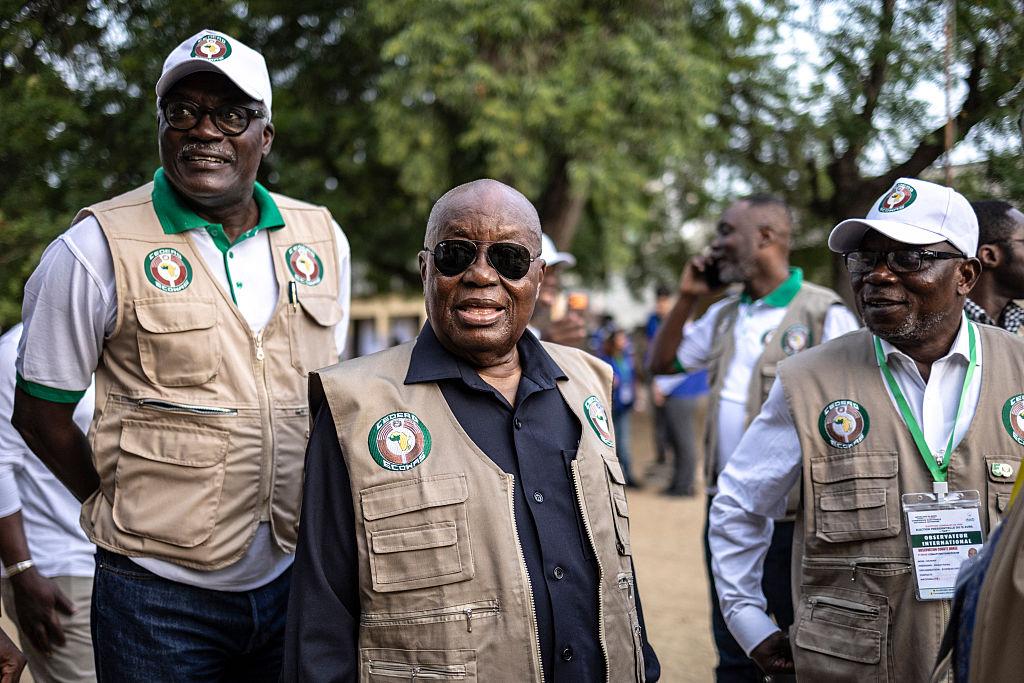
ECOWAS electoral bodies adopt AI guidelines to boost election integrity
ECONEC, an umbrella body for election management bodies in West Africa, has adopted a regional guideline on using artificial intelligence in electoral processes.
Africa
Tinubu’s petrol subsidy removal offers lessons for African countries: Oyedele
Mr Oyedele said the reforms showed the importance of introducing economic policies in the right order, explaining government decisions clearly and gaining public trust.
Abuja
Nigeria’s foreign reserves highest in 18 years, hitting $59 billion
Nigeria’s foreign exchange reserves rose to $58.81 billion by October 12, 2026, the highest level recorded since November 19, 2008, when reserves were $58.91 billion.
Education
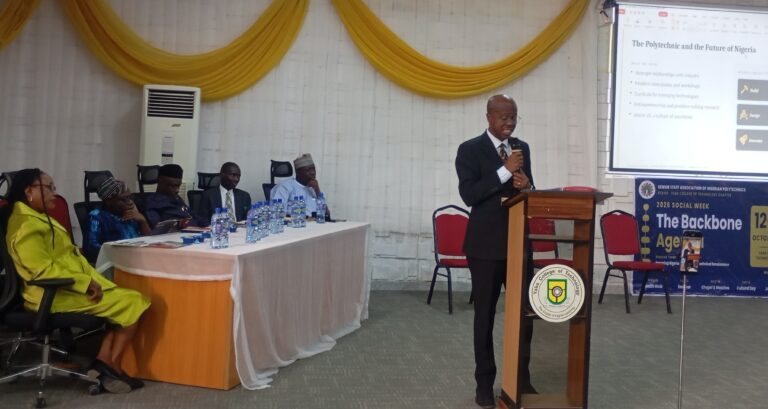
YABATECH rector urges recognition of administrative staff
YABATECH rector described the registry as the institution’s administrative backbone, urging sustained investment in staff capacity development.
Economy
Edo assembly considers N77 billion supplementary appropriation bill
The bill scaled second reading during plenary on Tuesday, following Governor Monday Okpebholo’s request for legislative consideration of the proposed supplementary budget.
Economy
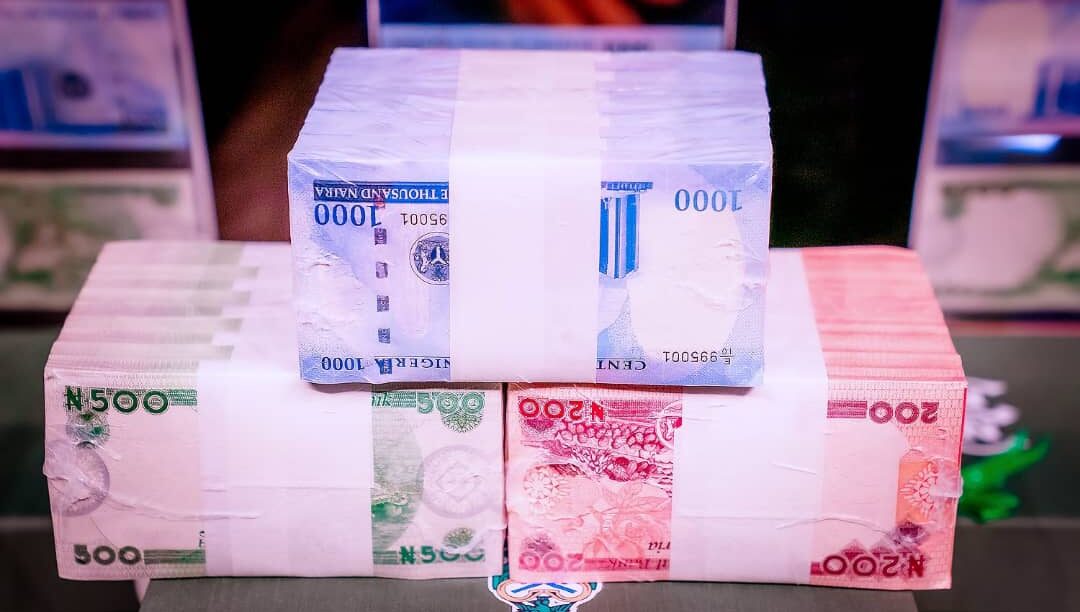
Stock market sheds N144 billion amid sell-offs
The Nigerian stock market shed N144 billion on Tuesday as sell-offs in 21 equities pushed key performance indicators down by 0.09 per cent.


