

FG removes tax on sanitary towels, partners stakeholders to promote menstrual health

The Federal Government and stakeholders have validated and adopted the first-ever National Policy on Menstrual Health and Hygiene Management to tackle challenges affecting women and girls.
Minister of Women Affairs and Social Development, Hajiya Imaan Sulaiman-Ibrahim, at the validation meeting on Friday in Abuja, described the policy as a step towards ensuring menstruation does not limit any woman or girl-child.
Ms Sulaiman-Ibrahim, represented by Dr Maryam Keshinro, noted that the recent waivers on sanitary towels by President Bola Tinubu, showed his deep sensitivity to gender and public health matters.
She noted that women aged 15 to 49 constitute about 25 to 30 per cent of the country’s population, meaning tens of millions of Nigerians manage menstruation monthly.
She stated, “Alarmingly, 15 per cent of girls aged 15 to 19 are already mothers or pregnant, and over 7.3 million adolescent girls and women suffer from undernutrition. With 55 per cent affected by anaemia; conditions that can be exacerbated by poor menstrual hygiene and lack of affordable sanitary products.’’
She explained that the realities further justify the urgency of the national policy validation, adding that menstrual health is not just a women’s issue, but a family, community, and national development issue.
She added, “Every month, from bustling cities such as Lagos, Abuja, Port Harcourt, and Kano, to remote villages in Borno, Benue, Cross River, and Sokoto states, as well as IDP camps in Maiduguri, Zamfara, and Adamawa states, millions of women and girls experience menstruation. It is a normal biological process that should never be a source of shame, stigma, or economic hardship.’’
The minister noted inadequate access to sanitary products, poor WASH infrastructure, lack of accurate information, and persistent cultural taboos as factors that contributed to exclusion, absenteeism from school, and preventable health challenges.
She added that the development of the policy would address the realities; break the silence, eliminate stigma, and embed MHHM into the national development agenda across health, education, water, sanitation, and gender sectors.
According to her, the policy will set a clear vision by 2030 which includes that no girl in Nigeria should have to choose between managing her menstruation and pursuing her education.
She stated, “No woman should be hindered in her personal or professional development because of menstruation; and no community should sustain stigma or exclusion linked to it. Implementation will require strong collaboration across sectors, political will, and active participation from states, communities, and development partners.’’
The minister, therefore, expressed appreciation to partners; particularly Population Services International and WaterAid Nigeria for their support in addressing menstrual health and hygiene challenges.
Also, Acting Country Representative, Population Services International (PSI) Nigeria, Fifi Ogbondeminu said the event marks a milestone towards ensuring that menstruation was no longer a silent burden, but an issue addressed with dignity, empathy, and urgency
Mrs Ogbondeminu, represented by the Team Lead for Menstrual Health Initiatives at PSI Nigeria, Abdulhameed Adediran, said that menstrual health was a human right, gender equality and a development issue.
She noted that through PSI’s Menstrual Health No Wahala (MH-NoW) programme, the organisation provided women and girls with affordable menstrual products, age-appropriate education and enabling environments that break stigma.
She emphasised the need to ensure the availability of low-cost menstrual products across rural and urban areas, integrating menstrual health into school and community programmes, and empowering girls to stay in education without shame or interruption.
Also, Country Director, WaterAid Nigeria, Evelyn Mere, noted that the policy would also improve access to essential infrastructure including clean water, sanitation facilities, waste disposal systems and hygiene education.
Ms Mere, represented by the Policy and Advocacy Manager, Dr Theodora Ngozika-Igboaneka said that the policy was a powerful signal of commitment to human rights, health, dignity and empowerment of girls and women across the country.
She stated, “At WaterAid Nigeria, we have seen firsthand what changes when communities address menstrual health properly. Schools where girls no longer miss classes. Workplaces where women participate fully. Communities where the silence and shame around menstruation give way to open, practical support.’’
Also, Consultant on the Development of the National Policy on MHHM, Mabel Adinya-Ade, stressed that its objective was to provide a comprehensive framework to improve access to safe menstruation for vulnerable women and girls.
(NAN)

We have recently deactivated our website's comment provider in favour of other channels of distribution and commentary. We encourage you to join the conversation on our stories via our Facebook, Twitter and other social media pages.

More from Peoples Gazette

States
Independence: NBA urges Nigerians to expect better future
The NBA said that ordinary Nigerians should be deriving benefit from the subsidy removal rather than hardship.

Agriculture
FG tasks ECOWAS on leveraging financing strategies for agroecology
The federal government has urged stakeholders in the agriculture and finance sectors in the West Africa region to leverage financing strategies to enhance agroecology practices

Politics
Katsina youths pledge to deliver over 2 million votes to Atiku
“Katsina State is Atiku’s political base because it is his second home.”
Politics
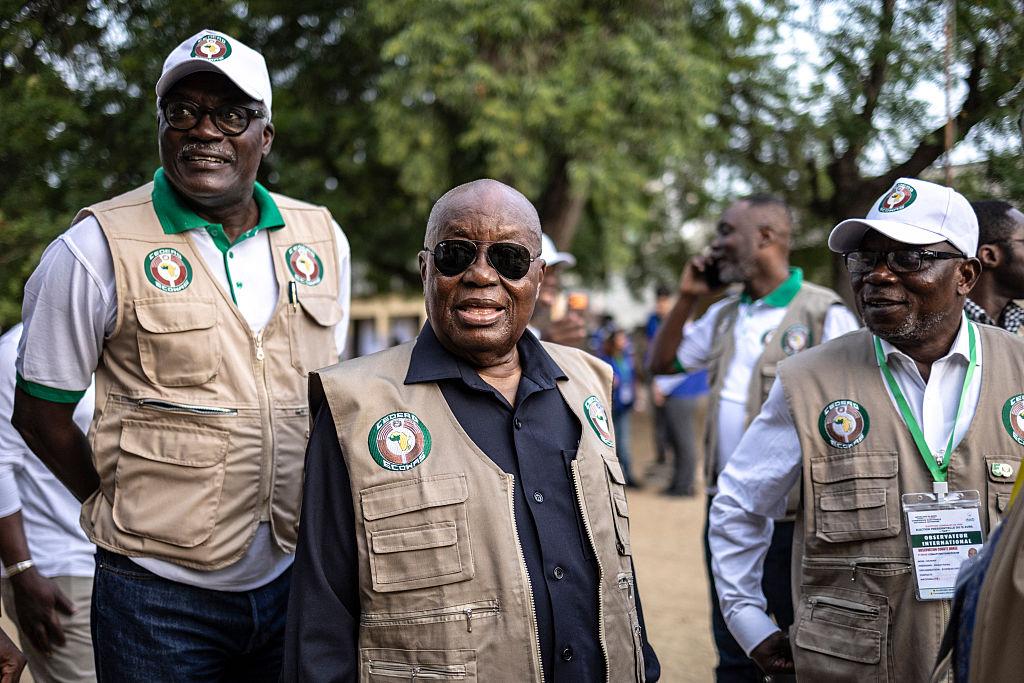
ECOWAS electoral bodies adopt AI guidelines to boost election integrity
ECONEC, an umbrella body for election management bodies in West Africa, has adopted a regional guideline on using artificial intelligence in electoral processes.
Africa
Tinubu’s petrol subsidy removal offers lessons for African countries: Oyedele
Mr Oyedele said the reforms showed the importance of introducing economic policies in the right order, explaining government decisions clearly and gaining public trust.

Abuja
Nigeria’s foreign reserves highest in 18 years, hitting $59 billion
Nigeria’s foreign exchange reserves rose to $58.81 billion by October 12, 2026, the highest level recorded since November 19, 2008, when reserves were $58.91 billion.
Education
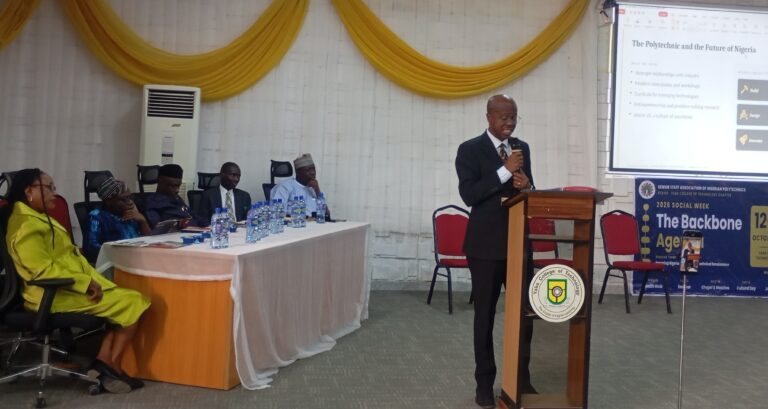
YABATECH rector urges recognition of administrative staff
YABATECH rector described the registry as the institution’s administrative backbone, urging sustained investment in staff capacity development.
Economy
Edo assembly considers N77 billion supplementary appropriation bill
The bill scaled second reading during plenary on Tuesday, following Governor Monday Okpebholo’s request for legislative consideration of the proposed supplementary budget.

Economy
Stock market sheds N144 billion amid sell-offs
The Nigerian stock market shed N144 billion on Tuesday as sell-offs in 21 equities pushed key performance indicators down by 0.09 per cent.


