

Sadisu Buba Mahmud, Nigeria’s scourge of underage voting comes full circle
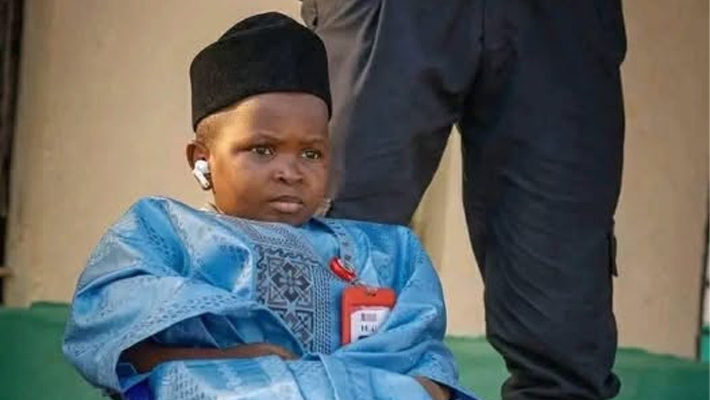
The disturbing report by Peoples Gazette of Sadisu Buba Mahmud, a 15-year-old diminutive boy, who presented himself as a 30-year-old aspirant for Nigeria’s 2027 House of Representatives election, might alarm some Nigerians who feel concerned about the direction of the country’s politics and the future that we’re leaving behind for the Nigerian child.
But not me.
The culture in some sections of the north, encouraging and tolerating underage voting to rig elections and inflate the region’s votes, has come full circle, with 15-year-old Mahmud falsifying his age records so as to contest the House of Representatives seat for the Sabon Gari Federal Constituency in Kaduna in the upcoming 2027 national elections.
This incident is not simply about one teenager somewhere in Kaduna. It is about the culture of political criminality that Nigerians have allowed to flourish for decades in parts of the north, where children are too often introduced early to electoral fraud, political thuggery, and identity falsification, and elders use them to rig their candidates into office.
When the story of Mahmud was reported, my first question was how a 15-year-old boy could come up with such an elaborate scheme of deceit and manipulation. It was immediately clear that this might not be his first foray into political criminality, and he had probably participated in past elections as an underage voter. Also, he most definitely had the help of an adult or several adults in the process.
A 15-year-old does not suddenly wake up and independently construct a political deception of this scale. This crime has the handwriting of an adult, or several adults, all over it. It was one or more adults who helped prepare the false documents that he presented to the All Progressives Congress (APC), and an adult sponsored his ambition and helped mobilise support.
When it comes to politics, many elders in the North have historically treated children as electoral assets rather than innocent minors deserving of protection. Instead of protecting children from manipulation, the elders would rather invest in political mobilisation and teach them how to survive politically by any means necessary.
This culture of criminality has devastating long-term consequences for a region already struggling with having the highest rates of out-of-school children in the world, widespread poverty, youth unemployment, and a proliferation of extremist groups and criminal gangs that thrive partly because generations of young people have grown up in environments where institutions are weak and accountability is selective.
For years, we’ve witnessed underage children being drawn into politics in ways that should outrage any responsible society. In some Northern states, children who should be in classrooms are instead mobilised during campaigns, transported to rallies, used as political foot soldiers, and exposed early to a worldview where power matters more than integrity. We criticise this, yet do nothing to tame it.
Nigerians, especially people in the north, should not be surprised by the young Mahmud’s story. If underage children are encouraged to vote, it is only natural that one day, these same children who are used for this criminality would ponder: ‘If, as a minor, my elders use me to illegally vote during elections, then it’s probably okay if I decide to falsify my age to contest for a political office myself.’
This is the danger of encouraging criminality among children. From being ignorant tools in rigging elections, they’re most likely to one day end up like young Mahmud falsifying age records.
Also, when politicians use children to rig the votes and face no legal consequences, what exactly do we expect those children witnessing this crime to become when they grow up? A society cannot repeatedly train children to be dishonest and later expect them to become ethical leaders. This is why corruption continues to thrive and will always lead to more insecurity.
Children who grow up watching corrupt political behaviour eventually internalise it as normal behaviour. Societies eventually become what they repeatedly teach their children. If northern children are continually taught that crime opens political doors faster than honesty, then nobody should be surprised if the next generation of leaders from the region grows up to be like young Mahmud.
In more advanced democracies, young Mahmud’s story would have forced an uncomfortable national conversation about the dire culture of normalising political criminality among children. Instead, we’ve all moved on like it was nothing. Nobody has been forced to take responsibility for this criminal behaviour.
Law enforcement investigators should be asking who prepared the documents for young Mahmud, sponsored his ambition, and who within the APC political structure enabled the process? If adults knowingly participated in falsifying the identity of a minor for political purposes, then they’re the ones who have committed a crime and must be made to face the law.
It is said that the adults responsible for this culture of crime still present themselves publicly as defenders of morality, religion and Northern values. That contradiction is one of the greatest betrayals of the region. Northerners must decide what kind of future they truly want for their region and children. Do they want a generation raised on democratic values, or one trained from childhood to see deception, manipulation and corruption as legitimate political tools?
Maduekwe is a communications professional. Write him: mrmaduekwe@gmail.com

We have recently deactivated our website's comment provider in favour of other channels of distribution and commentary. We encourage you to join the conversation on our stories via our Facebook, Twitter and other social media pages.

More from Peoples Gazette

Agriculture
FG tasks ECOWAS on leveraging financing strategies for agroecology
The federal government has urged stakeholders in the agriculture and finance sectors in the West Africa region to leverage financing strategies to enhance agroecology practices

Politics
Katsina youths pledge to deliver over 2 million votes to Atiku
“Katsina State is Atiku’s political base because it is his second home.”
NationWide
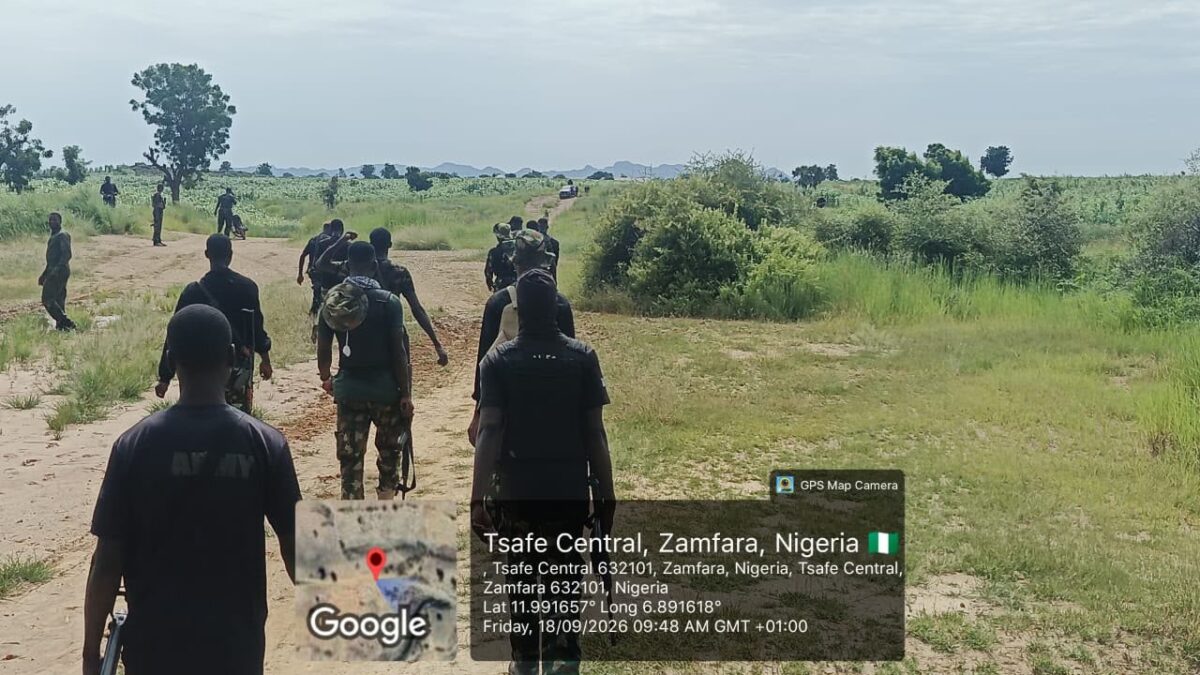
Troops rescue kidnap victims, arrest 47 suspects
Troops of the Nigerian Army arrested 47 suspected criminals and rescued several kidnapped victims in nationwide operations.
States
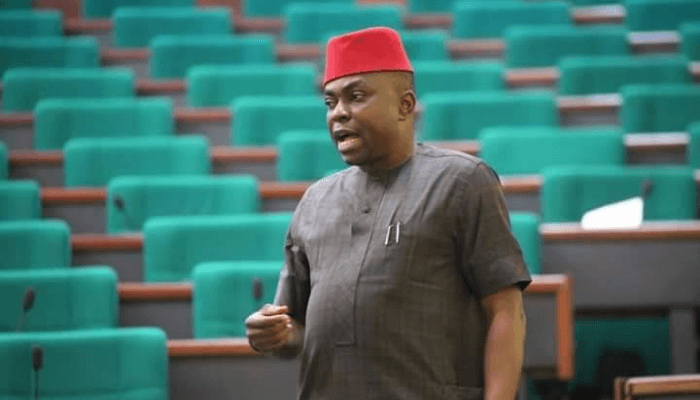
INEC has no excuse to fail in 2027, says ex-Abia lawmaker
Mr Nkole warned that Nigerians were not ready to accept anything short of free, fair and credible elections.
Economy
Delta govt seeks World Bank support for urban development projects
Commissioner for Economic Planning, Sonny Ekedayen, said the support would help the state review and strengthen urban planning laws and master plans.
Economy
Gov Aiyedatiwa unveils solar power initiative for 1,000 businesses in Ondo
Mr Aiyedatiwa said the initiative, which would cover the state’s 18 local government areas, was designed to reduce energy costs for small businesses.

Hot news Home top
Blood Transfusion: Jehovah’s Witnesses revise medical guidelines
Jehovah’s Witnesses revised its blood transfusion policy to allow members to receive or donate four blood components, based on their conscience.
Heading 4
OK Movement: NDC moves to sanction John Ugulu for unauthorised Obi campaign
The NDC said the presidential campaign council list for Messrs Obi and Kwankwaso announced by John Ugulu, “did not emanate from the party.”


