

How effective is Femi Fani-Kayode’s cowboy diplomacy?
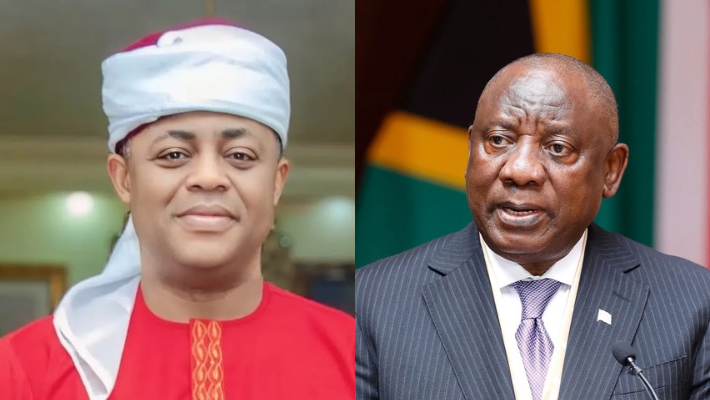
There is a reasonable argument that South Africa needs to encounter a more assertive Nigerian diplomacy, particularly given the history of xenophobic attacks against Nigerians, harassment of our nationals and recurring tensions between the two countries.
For many Nigerians who have grown tired of these incidents and what they consider the Nigerian government’s inadequate response, a high commissioner who is prepared to confront South African authorities publicly might be exactly what the country needs. Perhaps, they would argue, a little confrontation is necessary to make South Africa take Nigeria seriously.
But there is a difference between assertive diplomacy and the approach Nigeria’s High Commissioner, Femi Fani-Kayode, adopted following the omission of his presentation of letters of credence to South African President Cyril Ramaphosa from a livestream of the ceremony. It is an approach I would describe as cowboy diplomacy.
The question is not whether Nigeria should challenge the mistreatment of its citizens. Of course, it should. The more important question is whether it needs a diplomat to publicly confront South Africa at every perceived slight, or one who can make the South African authorities understand that the mistreatment of Nigerians could carry diplomatic, economic and, where necessary, political consequences. These are not necessarily the same thing.
Fani-Kayode spent many years as a politician and government spokesperson, roles in which confrontational public statements are often deployed to rally supporters, dominate the news and put the opposition on the defensive. In domestic politics, such an approach can be effective, particularly when the objective is to win public sympathy or control the narrative.
Diplomacy, however, operates differently. The same confrontational approach can complicate negotiations, harden positions and create difficulties for the government a diplomat represents. Unlike a spokesperson, whose success may be measured partly by how fiercely he defends his principal in public, a diplomat is judged by the outcomes he secures for his country.
This distinction is particularly important in South Africa, where Nigeria has substantial diplomatic, economic and consular interests. The treatment of Nigerians living and working there, migration-related tensions, disputes involving Nigerian businesses and bilateral cooperation are matters of far greater consequence than a missing segment of a livestream.
That is not to suggest that the omission should have been ignored. If the presentations of other diplomatic representatives were broadcast while Nigeria’s was excluded, Fani-Kayode had every reason to seek an explanation. But an omission, however suspicious it might appear, is not necessarily evidence of deliberate discrimination.
The first responsibility of a diplomat in such circumstances is to establish what happened, identify who was responsible and seek an appropriate remedy. If the omission was accidental, a request for clarification and the publication of the complete recording would have resolved the matter. If it was deliberate, Nigeria would have been in a stronger position to protest after establishing the facts.
There is also an important distinction between defending national dignity and personalising a diplomatic disagreement. A high commissioner represents a sovereign state, and his public statements and conduct carry institutional weight. While there is nothing inherently wrong with diplomats communicating through personal social media accounts, established diplomatic channels exist for handling official disagreements and must be adhered to.
The Vienna Convention on Diplomatic Relations recognises the importance of conducting official business with a receiving state through its foreign ministry or other agreed channels. This does not prohibit public criticism, but it places a responsibility on diplomats to exercise judgment in how they communicate with their host governments.
Yet it would be unfair to dismiss Fani-Kayode’s approach entirely. His public protest may have achieved something that a quiet diplomatic note might not have achieved as quickly. It attracted attention, prompted a response and made the omission a matter of public discussion. The South African presidency subsequently released a separate recording of his speech, although this does not establish that his public confrontation was necessary to secure its release.
There is, however, a potential cost to this approach. On Tuesday, South Africa’s foreign ministry raised concerns about Fani-Kayode’s social media remarks and reminded him of the Vienna Convention’s provisions on diplomatic communication. The Nigerian High Commission disputed reports that he had been reprimanded, describing the meeting as constructive.
Whatever interpretation one gives to that meeting, the controversy raises an uncomfortable question: has Fani-Kayode’s public confrontation strengthened Nigeria’s ability to protect its citizens in South Africa, or has it merely shifted attention from their problems to his conduct?
This is where we must distinguish between diplomatic visibility and effectiveness. A diplomat can be loud without being effective. He can also be impeccably courteous while achieving very little. What ultimately matters is whether his actions improve the protection of Nigerian citizens, secure commitments from South African authorities and strengthen Nigeria’s negotiating position. And there is much that a more assertive Nigerian diplomacy could accomplish.
On the recurring attacks against Nigerians, for instance, Nigeria could demand regular reporting from the South African government on incidents involving its nationals, insist on transparent investigations and prosecutions, establish measurable bilateral commitments on consular protection and publicly assess South Africa’s progress in fulfilling those commitments.
Where such commitments are repeatedly ignored, Nigeria could consider proportionate diplomatic measures consistent with international law. These would demonstrate firmness while ensuring that public pressure serves a defined diplomatic objective rather than becoming an end in itself.
But Fani-Kayode must also recognise that the problems Nigerians encounter in South Africa cannot all be treated as manifestations of one hostile government policy. Xenophobic violence, criminal attacks, immigration enforcement, official misconduct and disputes involving Nigerian businesses are different problems requiring different responses.
Treating every incident as deliberate hostility by the South African government risks weakening Nigeria’s arguments, particularly where the facts do not support such a conclusion. It could also make it more difficult to secure cooperation from the very institutions whose assistance Nigeria needs to protect its citizens from xenophobic and indiscriminate attacks.
None of this means that diplomacy must always be conducted quietly or that public confrontation has no place in international relations. There are circumstances in which public pressure becomes necessary, especially when private engagement has failed or when a host government persistently refuses to address legitimate grievances.
But effective public diplomacy requires evidence, clear objectives and an understanding of the consequences of escalation. The purpose should be to secure a response or change in conduct, not simply to demonstrate that one is capable of making the loudest protest.
My concern is that Fani-Kayode may be bringing into diplomacy the combative political style for which he has long been known. His years in partisan politics have been characterised by confrontational rhetoric, a style that may serve political battles but could prove counterproductive when applied indiscriminately to foreign relations.
He must understand that diplomacy requires more than the ability to respond forcefully to perceived disrespect. It demands patience, restraint, strategic judgment and, sometimes, the discipline to allow an apparent slight to be resolved without turning it into a public confrontation.
This is especially important because Nigeria’s relationship with South Africa is bigger than either country’s political officials. Both countries have shared economic interests, historical ties and responsibilities to their citizens that should not be overshadowed by avoidable diplomatic disagreements.
It is still too early to determine whether Fani-Kayode’s cowboy diplomacy will ultimately strengthen Nigeria’s standing in South Africa or complicate his assignment. His tenure has only just begun, and one controversy is insufficient to judge the effectiveness of his entire diplomatic approach. But the early lesson is worth considering.
Nigeria does not need a high commissioner who mistakes diplomatic restraint for weakness, any more than it needs one who mistakes public confrontation for strength.
What Nigeria needs in a diplomat to counter South Africa is one who knows when to speak, when to protest, when to negotiate and how to make South Africa respond meaningfully to the country’s concerns. After all, the measure of effective diplomacy is not how much noise a diplomat makes in defending his country, but what his country gains from the noise.
Maduekwe is a communications professional. Write him: mrmaduekwe@gmail.com

We have recently deactivated our website's comment provider in favour of other channels of distribution and commentary. We encourage you to join the conversation on our stories via our Facebook, Twitter and other social media pages.

More from Peoples Gazette

States
Independence: NBA urges Nigerians to expect better future
The NBA said that ordinary Nigerians should be deriving benefit from the subsidy removal rather than hardship.

Agriculture
FG tasks ECOWAS on leveraging financing strategies for agroecology
The federal government has urged stakeholders in the agriculture and finance sectors in the West Africa region to leverage financing strategies to enhance agroecology practices

Politics
Katsina youths pledge to deliver over 2 million votes to Atiku
“Katsina State is Atiku’s political base because it is his second home.”
Politics
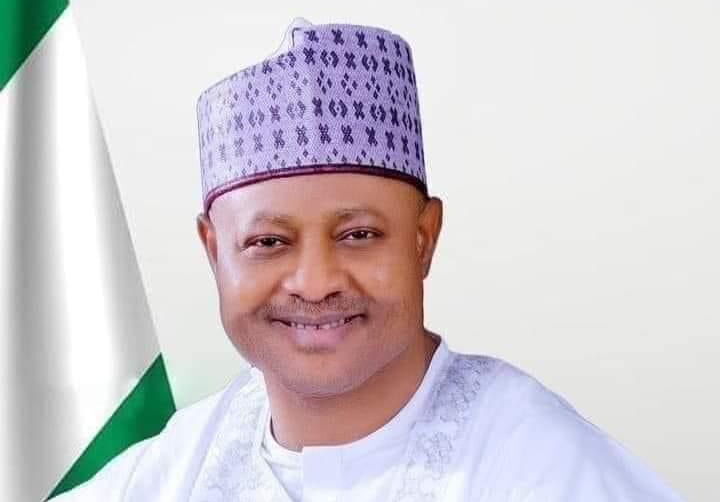
‘Let’s develop collective agenda,’ Uba Sani advises northern leaders
Governor Uba Sani has said the late Premier of Northern Nigeria, Sir Ahmadu Bello, wanted to build a more united, peaceful and self-sufficient region.
Opinion
How effective is Femi Fani-Kayode’s cowboy diplomacy?
After all, the measure of effective diplomacy is not how much noise a diplomat makes in defending his country, but what his country gains from the noise.
Economy
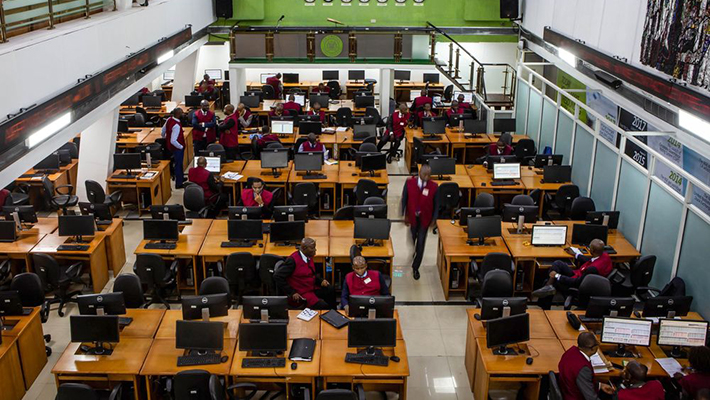
NGX investors lose N2.9 trillion in two days as stocks decline
Investors on the Nigerian Exchange lost about N2.9 trillion in two trading sessions as sharp declines in major listed companies’ share prices dragged down the market.
States
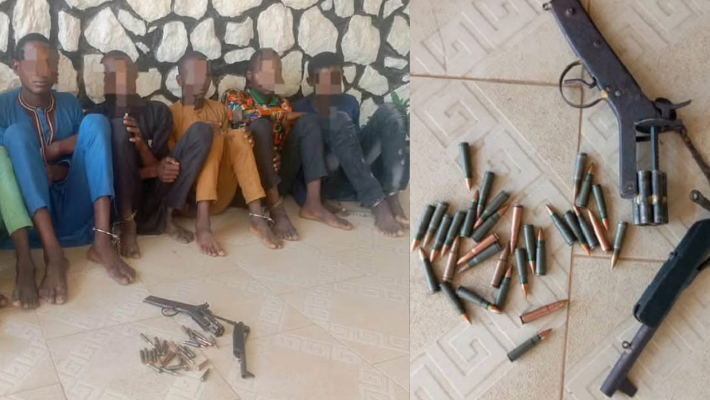
Police arrest seven suspects for plotting to kidnap Kwara businessman
The police command in Kwara says it has arrested seven suspects over an alleged plot to kidnap a businessman in Bode Saadu.

Economy
Afreximbank launches free training for African creatives
Afreximbank launched a capacity-building programme to equip African creative professionals and entrepreneurs.

Economy
FG, states, LGs share N2.44 trillion as oil, tax revenues decline
FAAC shared N2.441 trillion among the federal, state and local governments as revenue generated in October, amid a decline in oil earnings and major tax receipts.


