

Stakeholders oppose FG’s plan to phase out ‘non-market-relevant’ university courses
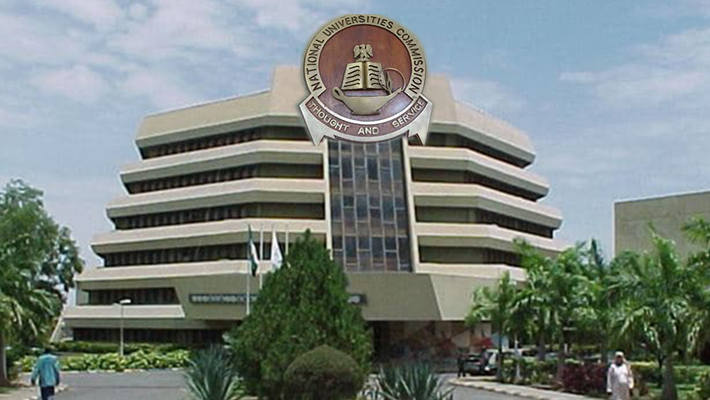
Stakeholders in the education sector have opposed the proposed phase out of courses considered “non-market-relevant” in Nigerian universities, urging the federal government to instead modernise and strengthen existing curricula.
The stakeholders, who spoke in separate interviews on Monday in Abuja, said humanities and social science courses remained critical to national development and should not be abolished.
They explained that universities were not only established to produce employable graduates but also to promote research, innovation, civic education and cultural development.
Francis Adun, a civil servant and parent, said every course had its importance and contribution to societal growth.
Mr Adun said that while science and technology were important for development, humanities and social science disciplines such as philosophy, political science, economics and theatre arts also played vital roles in nation-building.
According to him, the government should focus on revising university curricula to include more practical and technology-driven components rather than eliminating some courses.
He added that students should be equipped with employable and entrepreneurial skills capable of making them self-reliant after graduation.
Mr Adun noted that in many developed countries, humanities and social science courses were structured in ways that made graduates relevant in different sectors of the economy.
He also advocated broader elective systems that would allow students to take courses outside their core disciplines to expand their knowledge and skills.
Another stakeholder, Nicholas Awenke, urged the government to study educational models in technologically advanced countries such as Germany and China before implementing such policies.
He said Nigeria should not isolate itself from global best practices in education and curriculum development.
According to him, even countries known for technological advancement still recognised the importance of humanities and social science courses.
“If you scrap courses like English Language or economics, how do you run society effectively without those areas of knowledge?” he asked.
Mr Awenke also stressed the need for adequate investment in science education, teacher training and technological facilities before introducing major curriculum reforms.
He warned that introducing technology-oriented education without trained personnel and proper infrastructure could lead to failure of the policy.
Also speaking, an education analyst, Nathaniel Adamu, said the objective of improving graduate employability was commendable but cautioned against judging the relevance of academic disciplines solely by immediate job market outcomes.
According to him, universities play broader roles beyond workforce development, including advancing research, critical thinking and national development.
“The intention behind the proposal is understandable because government wants universities to produce graduates with skills that are relevant to today’s labour market.
“However, we must be careful not to judge the value of a course solely by immediate employment opportunities.
“Many of the world’s innovators, policymakers and business leaders have backgrounds in social sciences and humanities.
“The issue is not necessarily the courses but how they are taught and linked to emerging opportunities,” he said.
Mr Adamu advocated curriculum modernisation rather than the elimination of academic programmes.
“Rather than phasing out courses completely, I would recommend curriculum reform.
“Universities should integrate digital skills, entrepreneurship, artificial intelligence awareness and practical training into existing programmes.
“That approach will make graduates more employable without eliminating important fields of study,” he said.
Simiarly, Prof. Richard Gbileka of Benue State University said periodic reviews of university curricula were necessary but cautioned against categorising disciplines as irrelevant.
“No course is completely irrelevant. What universities need is curriculum reform that aligns programmes with current realities and industry demands,” he said.
According to him, every society requires professionals from diverse academic backgrounds to address complex social, economic and cultural challenges.
“I support periodic reviews of university programmes, but I do not support a blanket classification of courses as irrelevant.
“Universities are not only expected to produce workers; they are also centres for knowledge creation, civic education, cultural preservation and research.
“A country that neglects the humanities and social sciences may produce skilled workers but could weaken its intellectual and democratic foundations,” he said.
(NAN)

We have recently deactivated our website's comment provider in favour of other channels of distribution and commentary. We encourage you to join the conversation on our stories via our Facebook, Twitter and other social media pages.

More from Peoples Gazette

States
Independence: NBA urges Nigerians to expect better future
The NBA said that ordinary Nigerians should be deriving benefit from the subsidy removal rather than hardship.

Agriculture
FG tasks ECOWAS on leveraging financing strategies for agroecology
The federal government has urged stakeholders in the agriculture and finance sectors in the West Africa region to leverage financing strategies to enhance agroecology practices

Politics
Katsina youths pledge to deliver over 2 million votes to Atiku
“Katsina State is Atiku’s political base because it is his second home.”

Education
NOUN matriculates 70 inmates in Enugu custodial centre
Mr Nwakuche said the NCoS was committed to using education as an instrument for reformation.
Agriculture
Gombe inaugurates state-wide livestock vaccination campaign
Mr Yahaya said the exercise was aimed at protecting animal health.
NationWide
Asaba Massacre: Obasanjo urges forgiveness, reconciliation
He described the massacre as one of the most painful and terrible aspects of the Nigerian Civil War.

World
FBI nabs ISIS supporter Sheikhdoon Mohamud plotting mass murder of ‘kuffar’ at Mall of America
He was arrested after buying an AK-47-style rifle, magazines and ammunition from an undercover FBI agent.
Lagos
Customer Service Week: Lagos CP urges residents to give police feedback
The CP pledged improved service delivery by the command.

States
Suspected fake medical practitioner arrested in Ibadan
The command’s spokesperson, said the suspect was arrested on Friday at about 3:00 p.m.


