

5% of children battling adenoiditis worldwide, says paediatrician

A paediatrician, Leo Odudu, has said adenoiditis affects approximately one to five per cent of children globally and commonly seen in children between aged two and six.
Mr Odudu, the medical director of Emel Hospital, FESTAC, Lagos, disclosed this in Lagos on Thursday.
Mr Odudu said that adenoiditis comprises two conditions: adenoidal hypertrophy, which is the enlargement of the adenoids, and adenotonsillitis, an inflammation or infection of the adenoids and the tonsils.
He described the adenoids as part of the lymphoid tissue regarded as the body’s defence mechanism, which protects the throat and upper airway.
The paediatrician said that enlargement of the adenoids could lead to airway obstruction, causing difficulty in breathing.
According to him, adenotonsillitis is caused by a bacterial or viral infection inhaled from the environment.
Adenoidal hypertrophy, on the other hand, is a consequence of the adenoids responding to repeated irritation of the upper airway and is common in children with allergic rhinitis.
“Clinical manifestations of adenoiditis include catarrh, cough, fever and noisy breathing. However, if the adenoids are enlarged, they can cause difficulty in breathing, mouth breathing and snoring.
“The symptoms are usually worse at night and early in the morning. Diagnosis is primarily clinical. Blood tests can help determine whether the condition is viral or bacterial in origin.
“An X-ray of the postnasal space will reveal airway obstruction in cases of adenoidal hypertrophy,” he said.
The paediatrician warned that untreated adenotonsillitis could lead to chronic sinusitis, bad breath and, in severe cases, spread to the brain in vulnerable children.
He said antibiotics are used to treat bacterial infections, while supportive care is recommended for viral causes.
Mr Odudu added that antihistamines and mild steroids could help reduce enlarged adenoids in affected children.
He advised parents to maintain good hygiene, ensure proper nutrition and identify environmental irritants that may trigger allergic reactions.
The doctor recommended surgery for recurrent cases that significantly affect a child’s health and quality of life.
(NAN)

We have recently deactivated our website's comment provider in favour of other channels of distribution and commentary. We encourage you to join the conversation on our stories via our Facebook, Twitter and other social media pages.

More from Peoples Gazette

States
Independence: NBA urges Nigerians to expect better future
The NBA said that ordinary Nigerians should be deriving benefit from the subsidy removal rather than hardship.

Agriculture
FG tasks ECOWAS on leveraging financing strategies for agroecology
The federal government has urged stakeholders in the agriculture and finance sectors in the West Africa region to leverage financing strategies to enhance agroecology practices

Politics
Katsina youths pledge to deliver over 2 million votes to Atiku
“Katsina State is Atiku’s political base because it is his second home.”
Anti-Corruption
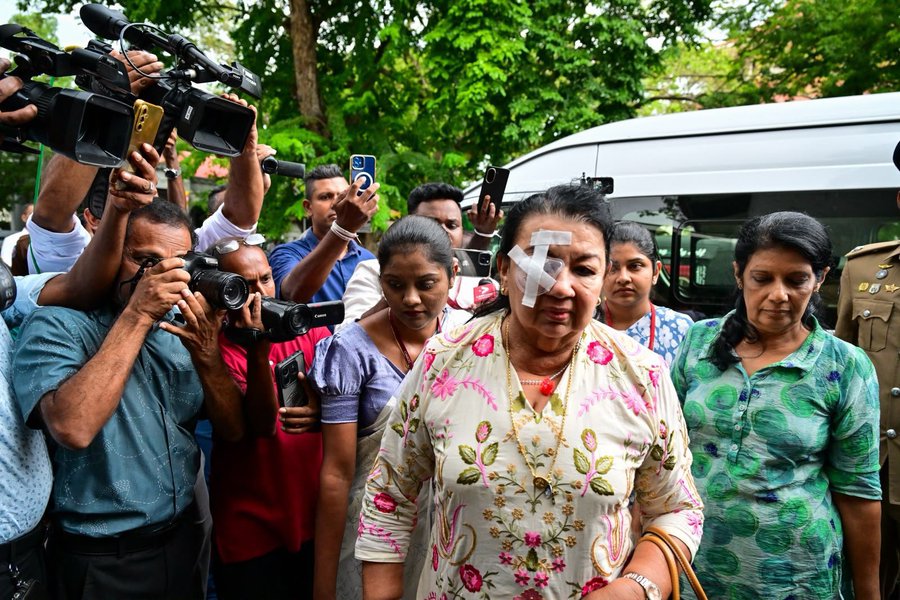
Sri Lanka’s ex-first lady Shiranthi Rajapaksa arrested for fraud
Ms Rajapaksa was grilled for about two hours on Wednesday over 10 million rupees, equivalent to $30,300, in donations collected by the Siriliya Saviya charity.

States
Mikati supporters reject Ashiru’s ADC certificate of return
A coalition of Idris Mikati supporters rejected the certificate of return issued to Isa Ashiru as the African Democratic Congress governorship candidate in Kaduna.

States
Ododo backs unity of Kogi indigenes, seeks lasting peace
Mr Ododo said the responsibility for building peace and unity should not be left to politicians.

NationWide
Amnesty International urges Madonna University to recall final year nursing student expelled over TikTok challenge
The rights group on Wednesday argued that the sanction was an overkill and consequently, disproportionate to the offence.

Heading 4
Veteran communication scholar Idowu Sobowale dies at 85
The family noted that arrangements for the deceased’s burial would be announced later.

Heading 5
FBI raids fraudsters’ hideout in Ghana, arrests suspected scammers
Mr Patel said the raid, codenamed “Operation Blackout”, was carried out on Thursday.


