

Nigerians ‘won’t be missing’ Uber as drivers, passengers share ride-hailing experiences
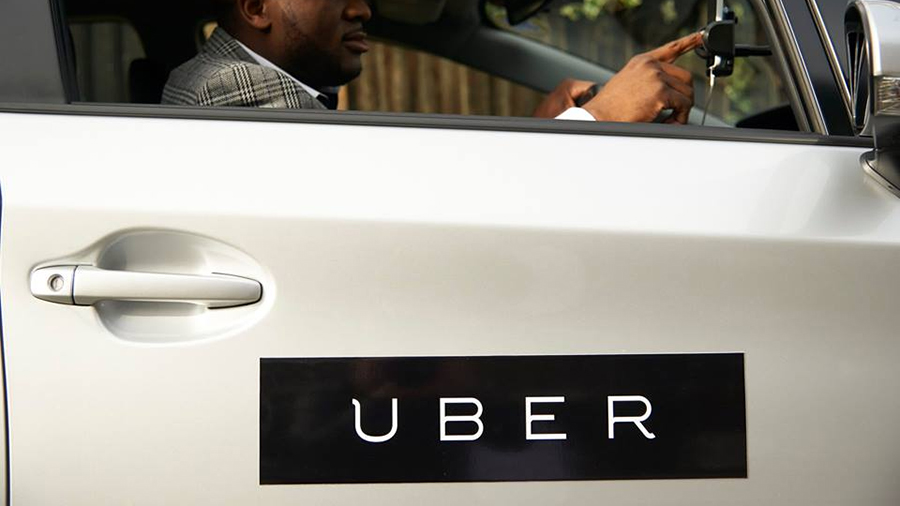
When Uber announced on Wednesday that it was ending its operations in Nigeria after 12 years, Daniel Ziniyet was not particularly worried.
Mr Ziniyet, an Abuja ride-hailing driver who serves on the Gwagwalada branch task force of the Amalgamated Union of App-based Transporters of Nigeria (AUATON), had used Uber alongside other ride-hailing apps.
“For me, it won’t affect me. I use the app, but there are alternatives,” he said.
Long before Uber announced its exit, Mr Ziniyet had already reduced the time he spent on the app because picking up passengers from some locations became a loss at first sight. In some cases it could mean driving several kilometres before the actual trip began.
He recalled receiving requests from passengers who were five, seven and sometimes seven kilometres away.
“I mean seven, 10 kilometres just to go and pick the passenger,” he said.
Going that far to pick up a single passenger does not make business sense. He may end up using almost as much fuel to reach the passenger as he would to complete the trip.
Uber had an advantage, though. Its commission was lower.
According to him, Uber charged drivers a 25 per cent commission, compared with 35 per cent on Bolt.
But Mr Ziniyet said the lower commission did not always make up for the difficulty of finding nearby passengers.
“You get paid better when you work with them, only that people are not much using it,” he said.
However, other alternatives, especially Bolt, are widely used, so finding a ride nearby is usually not a problem.
That is one example of how much Nigeria’s ride-hailing market has changed since Uber arrived in Lagos in 2014.
At the time, Uber was one of the companies introducing Nigerians to a new way of getting around: open an app, request a car and watch a driver arrive, which was quite different from the conventional going to the roadside and getting a taxi.
Today, passengers can have Bolt, inDrive, Rida, and other alternatives on the same phone. Many drivers are also registered with several ride-hailing firms.
So when Uber switched off its Nigerian ride-hailing service on Wednesday, affected drivers moved on without blinking.
‘The market is still here’
Sinachi Nnadozie is one of those drivers, although his experience with Uber was different from Mr Ziniyet’s.
The Abuja driver is registered on several platforms and said Uber was, in fact, one of the apps from which he received more requests.
“I am registered on most of the apps, but I get more rides on Uber than on some of the others,” he said.
Mr Nnadozie also liked the class of passengers he met through Uber.
He said he had encountered more difficult passengers on some competing platforms, including riders who left his car dirty.
Yet, despite preferring Uber in some respects, he noted its departure would not put him out of work.
“I wouldn’t say I will feel it much because the market is still here in Nigeria and I am signed up to other apps. They are basically the same people using different apps,” he said.
Bolt and inDrive have already said they intend to remain in Nigeria, leaving Uber’s former drivers with platforms to move to. Rida is another option available to drivers and passengers.
The fact that drivers can easily switch apps does not necessarily mean Uber’s exit comes without a cost.
What drivers will lose
Stanley Nlemm, another Abuja ride-hailing driver, highlighted two things some drivers valued: a lower commission and, in his experience, customers who were more willing to spend.
Mr Nlemm said some Uber passengers tipped drivers when they were happy with the car and service.
“They tipped a lot,” he said.
A passenger could add N2,000 or N3,000 to the fare, he said. Some also went on to hire drivers privately after meeting them through the platform.
The 25 per cent Uber commission was another attraction.
For instance, if a driver makes N100,000 in fares for the day, a 25 per cent commission would cost N25,000, while 35 per cent would take N35,000, a difference of N10,000, which is not something a businessperson in Nigeria will want to let go of.
Petrol prices rose sharply after the federal government removed the fuel subsidy in 2023. The cost of tyres, spare parts, engine oil and vehicle repairs has also more than doubled.
Ride-hailing drivers have repeatedly complained that fares did not rise enough to match the cost of keeping their cars on the road.
Uber increased UberX fares by 13 per cent in September 2024 following another rise in petrol prices, but drivers continued to complain about their earnings.
Mr Nlemm said the pressure was one reason some drivers on competing platforms tried to renegotiate fares, particularly for longer journeys.
“The money you realise, after they remove their commission, the cost of fuelling and maintenance, it doesn’t compensate,” he said.
As for the impact the exit will have on drivers, he said it would vary.
From his experience, many Uber drivers relied on other ventures and ride-hailing platforms, with some driving only part-time.
“I have seen people using SUVs for Uber. Some are interested in meeting customers who could eventually become private clients. For those drivers, I don’t think the exit will affect them as much because they already have their cars and other things they do. Some only drive when they are off work or during weekends,” he said.
The Uber service Gbemi will miss
Gbemi Jegede did not depend on Uber to get around Abuja.
She depended on it to move her goods.
Ms Jegede, who runs a home essentials business from her home, said Uber was rarely her first choice when she needed a personal ride. For her business deliveries, it was different.
“For my personal trips, Uber is not my go-to,” she said. “But for my deliveries, Uber helps my business.”
Uber’s courier service allowed individuals and businesses to request local deliveries and track packages through the app.
For Ms Jegede, that tracking was important.
“I will really miss Uber’s delivery service because it helps my business. It is efficient. I can track the rider properly and, when there is an issue, their customer care actually listens,” she said.
She will now have to use an alternative delivery service.
Employees also affected
Uber ended its Nigerian operations the same day it withdrew from Uganda.
The company said the decision followed a review of its “evolving business priorities and investment focus” in Africa. It has not provided more detail on why it chose to leave the two countries.
The exit affected Uber’s local employees.
The company has not disclosed how many people it employed in Nigeria or how many jobs will be lost as a result of the shutdown. It said it was communicating directly with affected employees about arrangements for their transition.
Uber exited Nigeria on the same day it announced a major restructuring of its global workforce.
The company is cutting about 3,300 corporate jobs globally, around 10 per cent of its workforce, in its biggest round of layoffs since the COVID-19 pandemic in 2020.
Uber said the global restructuring was intended to reduce management layers and simplify the company.
No link has been established between those global layoffs and its withdrawal from Nigeria and Uganda.
The Federal Airports Authority of Nigeria recently disputed ride-hailing operations at airports. FAAN had restricted the commercial operations of ride-hailing companies at airports it manages over licensing issues. Aviation minister Festus Keyamo later intervened, and Bolt was cleared to resume operations.
On Friday, FAAN managing director Olubunmi Kuku said she could not speak to Uber’s exit from Nigeria, adding that the company likely had its own economic and regulatory considerations for the decision.
‘I won’t miss them’
While Uber no longer operates in Nigeria, Bettie John has little adjusting to do. The Abuja banker regularly uses ride-hailing services, but Uber has never been an option for her. She usually tries other apps first.
“To me, Uber is a bit pricey,” she said.
Ms John admitted that the alternatives have their own problems. Bolt drivers, she said, sometimes accept a trip and then try to negotiate a higher fare. Still, she did not think that justified what she considered Uber’s higher prices.
“Bolt drivers will always want to negotiate a higher fare after they pick you up, but Uber is unnecessarily pricey,” she said. “And the fact that it’s the same car or driver that is signed to the alternatives that are signed to Uber, I see no difference in the price. Honestly, I won’t even miss them.”
She believes other passengers will quickly adjust too, saying, “I am sure Nigerians will soon forget they ever existed.”
When Uber was the new way to move
Uber launched in Lagos in 2014, making Nigeria its first West African market. The company arrived when app-based ride-hailing was still uncommon in Nigeria. A passenger could request a ride without standing by the roadside, see information about the driver and vehicle before getting in, and follow the journey on a map.
In March 2016, Uber expanded to Abuja, which became its 400th city globally.
Over time, the company expanded to other Nigerian cities and introduced other products, including cheaper ride options and package delivery.
Bolt, then known as Taxify, entered Nigeria and expanded rapidly. inDrive later introduced a model that allowed passengers and drivers to negotiate fares. Other local and international operators followed.
It brought healthy competition, and passengers could easily switch apps to compare prices and wait times and choose whichever worked best at the moment.
Drivers, in some ways, did the same from the other side, signing up to several platforms and going where the requests were.
Uber’s shrinking African map
Nigeria and Uganda are not Uber’s first African exits. The company stopped operating in Côte d’Ivoire in 2025 and left Tanzania earlier this year. However, Uber has rejected the suggestion that it is abandoning Africa.
Uber continues to operate in African markets including South Africa, Kenya, Ghana and Egypt and says it remains committed to the continent.
The company said it was concentrating investment in markets where it believes it can create earning opportunities for drivers at scale and provide reliable services for passengers.
Uber may have ended its Nigerian journey as a pioneer, but Mr Nnadozie sees it in much simpler terms.
“The market is still here in Nigeria,” he said.

We have recently deactivated our website's comment provider in favour of other channels of distribution and commentary. We encourage you to join the conversation on our stories via our Facebook, Twitter and other social media pages.

More from Peoples Gazette

States
Independence: NBA urges Nigerians to expect better future
The NBA said that ordinary Nigerians should be deriving benefit from the subsidy removal rather than hardship.

Agriculture
FG tasks ECOWAS on leveraging financing strategies for agroecology
The federal government has urged stakeholders in the agriculture and finance sectors in the West Africa region to leverage financing strategies to enhance agroecology practices

Politics
Katsina youths pledge to deliver over 2 million votes to Atiku
“Katsina State is Atiku’s political base because it is his second home.”
States
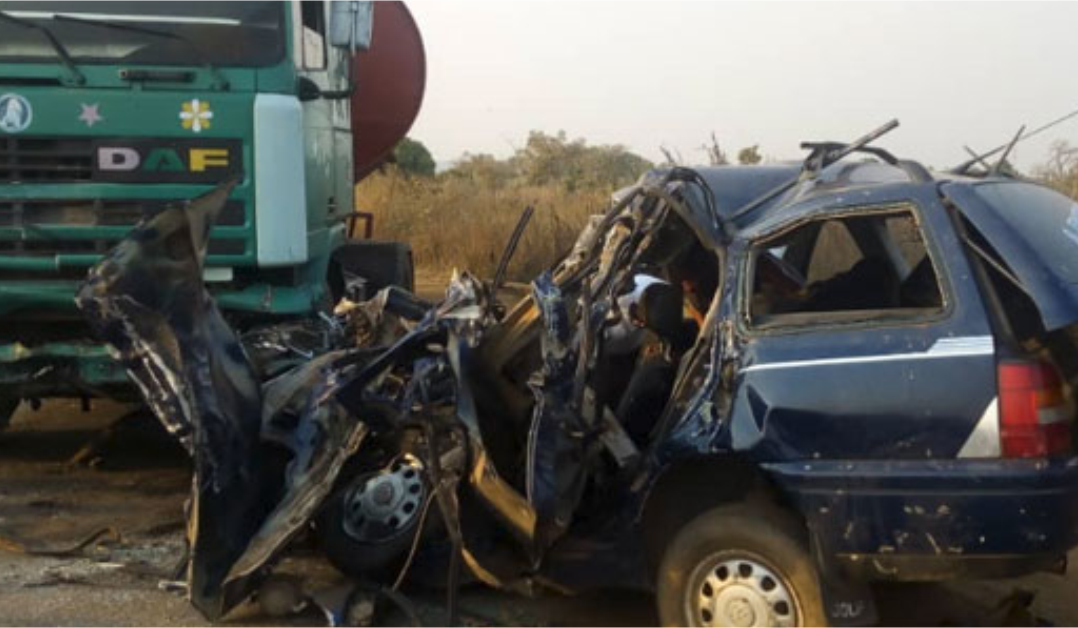
Brake Failure: Trailer kills seven in Gombe multiple-vehicle crash
The Gombe sector commander of the FRSC, Samson Kaura, confirmed seven people were killed in a multiple-vehicle crash.

Health
NAFDAC uncovers illegal herbal products factory in Lagos
NAFDAC has uncovered an illegal herbal products factory in Agege, Lagos, where unregistered products were manufactured under unhygienic conditions.

Health
Seven things to know about Shamonda virus first detected in Nigeria
France reported the first-ever human case of the Shamonda virus, typically found in livestock, after a patient in their 60s with a weakened immune system died in the hospital.
Sport
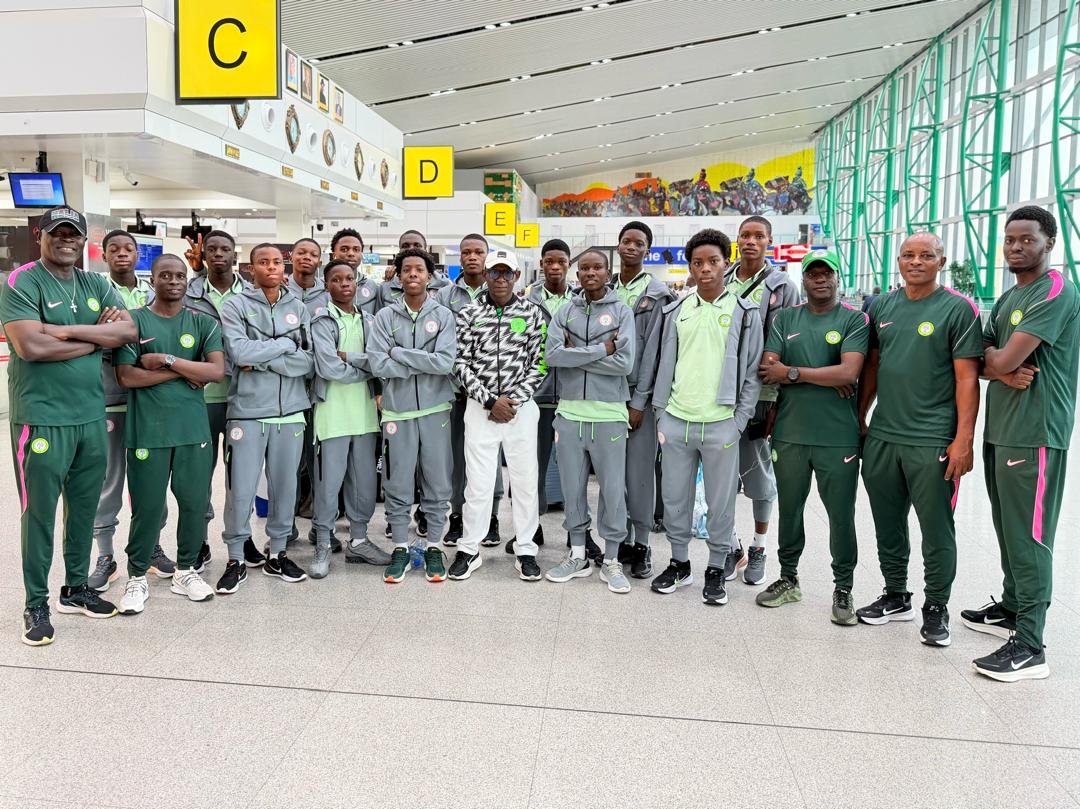
Nigeria’s Future Eagles arrive in Azerbaijan for inaugural FIFA U-15 World Cup
Nigeria’s Future Eagles arrived in Azerbaijan on Thursday, ahead of the first edition of the FIFA Under-15 World Cup and Festival, holding from October 22 to 31.
Economy
Businesses seek easier Nigeria-China payments as Cardoso meets investors
Business leaders operating between Nigeria and China have called for more efficient cross-border payments and stronger banking ties.

Rights
EU’s Sakharov Prize awarded to International Criminal Court
The European Union has awarded its 2026 Sakharov Prize for Freedom of Thought to the International Criminal Court (ICC).


