

South-South residents seek revamping of moribund state-owned industries
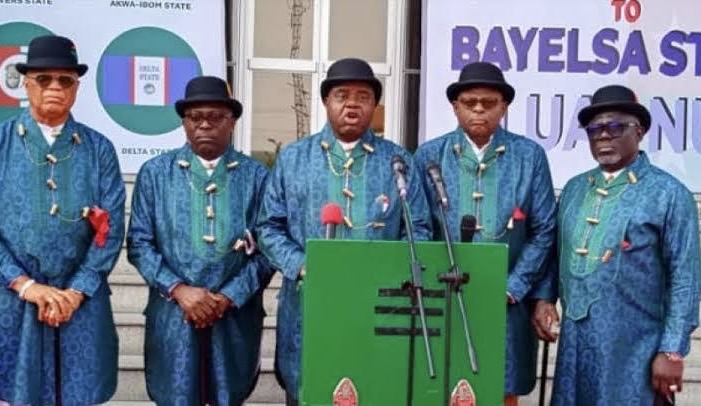
Some residents of the South-South region have urged the governments of Rivers, Akwa Ibom and Cross River to take deliberate steps towards revamping moribund public industries in their states.
The residents, mainly stakeholders, experts and professionals, made the call in a survey conducted on Monday across the three states.
The residents expressed hope that reviving moribund industries would create massive employment opportunities and trigger economic development in the three states.
It will be recalled that the governments of the three states had, at different times, separately established local industries that eventually went aground due to poor management, corruption, and petty politics.
In the past, Rivers boasted of the West African Glass Industry, Rivers State Vegetable Oil Company, Delta Rubber Company, PABOD Breweries, Songhai Farm, among others.
Records also show that Cross River owned companies such as Cross River Estate Limited, UNICEM, Metropolitan Hotel, and more. Akwa Ibom owned the Qua Steal Products Company, Quality Ceramics Limited, Sunshine Battery Industry, and Abestonit Industry Limited.
According to the residents, the eventual death of local industries in the three states has not only kept many people jobless but left many families poor and hungry.
Chidi Nwankwo, an official of Pipe Coaters Nigeria Limited based in Port Harcourt, said the government should audit existing industries to identify those needing urgent intervention.
Mr Nwankwo advised the government to provide incentives, affordable financing, reliable electricity and improved infrastructure to encourage industries to resume full-scale production.
“The Rivers State government should identify industries that can still be economically viable and partner with private sector investors to revive them.
“Industries require electricity, access to finance, markets, skilled manpower and supportive policies to stay afloat and meet competition,” he said.
Mr Nwankwo further urged the Rivers government to ensure industrial policies are sustained beyond administrations to encourage long-term investment.
He said that reviving moribund industries or establishing new ones would provide employment opportunities, increase internally generated revenue and reduce dependence on the oil sector.
Amaka Briggs, the founder of The Banks Clothing Line, located at the Trans Amadi Industrial Layout, argued that although physical infrastructure was important, it should complement industrialisation and job creation.
Ms Briggs urged the government to establish industries that can employ a large number of youths rather than relying mainly on public-sector employment.
“We need industries that can absorb our unemployed youths. Roads and flyovers are useful, but people also need jobs and sustainable sources of income,” she said.
Another resident, Promise George, called for greater collaboration between government and private investors to revive abandoned industrial facilities effectively.
Mr George suggested forging public-private partnerships to revive moribund government-owned companies that require substantial capital, modern equipment and professional management.
He also urged the government to offer tax incentives and other concessions to investors that were interested in establishing labour-intensive industries in the state.
Mr George also urged the government to strike a balance between infrastructure development and industrialisation, especially given the state’s high unemployment rate.
Ebiye Tamuno, an economist at Rivers State University, said the state could leverage its oil and gas resources to develop manufacturing and service industries related to the energy sector.
Mr Tamuno also advised the government to promote agro-processing, fisheries, construction materials, petrochemicals and marine-related industries to diversify the state’s economy. According to him, vocational and technical training should be integrated into the industrialisation programme to ensure young people have the skills emerging industries require.
“A stronger industrial base would definitely create jobs, stimulate local production, increase government revenue and improve the standard of living of residents,” he said.
When contacted, a high-ranking Rivers government official, who preferred anonymity, said the state government recognised industrialisation as essential to creating employment and strengthening the economy.
The official said that the current administration in Rivers was working to improve the business environment and attract investors while exploring opportunities to revive existing state-owned enterprises.
In Akwa Ibom, Assam Abia, a journalist, said that it would serve the people better if the state government gave priority attention to revamping ailing local industries.
Mr Abia urged the Umo Eno-led government to focus more on policies and programmes that would create jobs and enliven the economy, instead of seeking temporary applause from the people.
The journalist urged the government to intentionally tap opportunities in the Dakkada Global Oil Palm Plantation, Esit Eket, saying that the facility could create massive jobs and drive economic growth.
“The economy cannot grow without local industries, while job opportunities will remain scarce. Government should take the right steps to improve the living conditions of the people,” he said.
Another resident, Godwin Edoho, said the Akwa Ibom government should stop paying lip service to local industries and be proactive and sincere with the people.
Mr Edoho said that the state government had not added any visible value to the Dakkada Global Oil Palm Plantation since it took over the establishment.
“The government promised to revitalise the plantation and enhance its productivity. We got promises of making it a critical facility in the oil palm sector, but nothing visible has happened. We want to see the expansion of the facility, we want to see new seedlings being planted, the farm cannot remain docile and be expected to grow on its own,” he said.
Anietie Matthew, a resident of Esit Eket, urged the government to revive the Qua Steel Products Company and Qua Ceramics Limited.
According to him, the two companies have the capacity to generate massive employment and revive the local economies of their host communities.
“When these companies were operating, there were jobs, families had food to eat, and local businesses thrived. This is what local industries can bring,” he said.
Aniekan Umana, the information commissioner in Akwa Ibom, expressed the government’s commitment to provide an enabling environment for local industries to thrive.
Mr Umana said that the government would continue to provide the environment for industrial concerns to take advantage of, saying, “To create generational wealth, there must be investment in agriculture, housing, infrastructure, among others.”
Mr Umana said some state-owned companies, such as the Ibom Paint Industry, were fully operational and serving the people of Akwa Ibom and the neighbouring states.
“The Ibom hospitality assets, hotels and recreational facilities are being rebranded, while the industrial park is also being redeveloped to provide the infrastructure and opportunities needed for industries to thrive,” he said.
Meanwhile, the Cross River government says it has begun reviewing moribund industries and assets to stimulate economic activity, create jobs, and empower youths across the state.
Ekpenyong Cobham, the information commissioner, said industrialisation needed to align with the state’s economic needs. Mr Cobham said the Governor Bassey Otu-led government had prioritised skills acquisition, recently graduating 4,500 youths trained in drone technology, filmmaking, and other specialised skills.
Cobham said the beneficiaries also received assistance with business-name registration to strengthen their capacity to participate meaningfully in Cross River’s emerging economic ecosystem. He said that the government had revived the garment factory, which had already commenced mass production of mosquito nets.
“As a government, we are assessing other industries for possible rehabilitation. This administration is investing in agriculture, particularly cocoa and coffee, to provide sustainable opportunities for youths,” he said.
Castro Ezama, the special adviser to the governor on education, said that Cross River had lost several government-owned assets through sales and privatisation by previous administrations. Mr Ezama said that as part of the industrialisation plan, the state government had reclaimed Cross River Estate Limited and Tinapa to restore the state’s industrial capacity.
He said that Mr Otu intended to move Cross River beyond its civil-service orientation through effective investments in mineral deposits and agriculture.
(NAN)

We have recently deactivated our website's comment provider in favour of other channels of distribution and commentary. We encourage you to join the conversation on our stories via our Facebook, Twitter and other social media pages.

More from Peoples Gazette

States
Independence: NBA urges Nigerians to expect better future
The NBA said that ordinary Nigerians should be deriving benefit from the subsidy removal rather than hardship.

Agriculture
FG tasks ECOWAS on leveraging financing strategies for agroecology
The federal government has urged stakeholders in the agriculture and finance sectors in the West Africa region to leverage financing strategies to enhance agroecology practices

Politics
Katsina youths pledge to deliver over 2 million votes to Atiku
“Katsina State is Atiku’s political base because it is his second home.”

Anti-Corruption
Nine suspects arrested in FBI’s latest operation against Yahoo Boys in Nigeria
The FBI boss made the disclosure on Sunday.

NationWide
Nigeria edge Uganda by 1 run to win Cricket World Cup Africa qualifier
Nigeria scored 148 runs in 19.4 overs before restricting Uganda to 147 for nine in 20 overs at the Nigeria Cricket Federation (NCF) Oval 1 on Sunday.

Heading 1
NiMet predicts three-day dust haze, thunderstorms nationwide from Monday
For Wednesday, the agency forecast sunny and hazy conditions across the northern region throughout the day.
Health
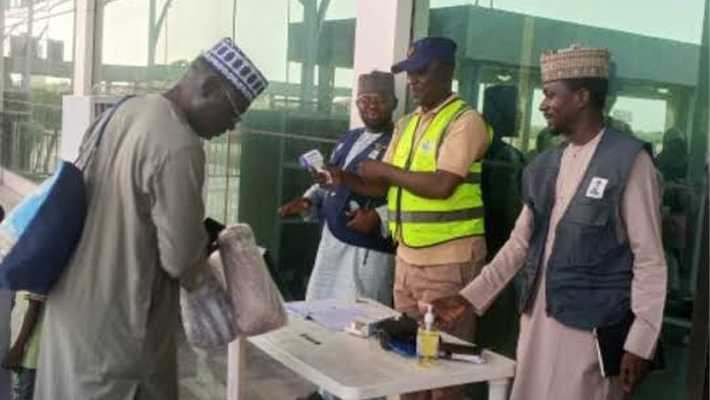
Ebola: Kebbi intensifies surveillance at airport, border
Mr Abubakar stressed the state government’s commitment to protecting residents through proactive disease surveillance.

NationWide
Osoba celebrates veteran journalist Bonuola at 80
Mr Osoba described Mr Bonuola as a serious minded intellectual.

NationWide
SDP presidential candidate seeks balanced media coverage of political parties
Mr Adebayo urged political parties to present clear policy proposals to address the country’s challenges.


