

Economic growth in Nigeria, other Sub-Saharan Africa countries gaining momentum despite global uncertainty: World Bank
Sub-Saharan Africa’s economy remains resilient despite geopolitical tensions, climate shocks, declining development assistance, and fiscal pressures. Growth in the region is projected to rise from 4.1% in 2025 to 4.3% in 2026, 0.3 percentage points above the April 2026 forecast, according to the latest edition of the Africa Economic Update, the World Bank Group’s biannual economic report for the region.
The outlook is supported by improved macroeconomic resilience, stronger domestic demand, and investments linked to the global energy transition and digital technologies. However, conflict in the Middle East, trade policy uncertainty, tighter financial conditions, natural disasters, disease outbreaks, and insecurity continue to affect economic activity across several countries. Growth also remains insufficient to substantially reduce extreme poverty or create enough jobs for the region’s rapidly growing labour force.
Despite a challenging global environment, economic activity in Sub-Saharan Africa continues to demonstrate remarkable resilience, with growth forecasts upgraded for nearly three-quarters of countries in the region, including Angola, Ethiopia, Nigeria, and Zambia.
“These gains reflect years of reforms and improved economic management. The next challenge is turning growth into more jobs and better opportunities. By investing in the foundations of an AI-ready economy, African countries can unlock productivity gains, spur innovation, and accelerate the structural transformation needed to raise living standards and reduce poverty,” said Andrew Dabalen, World Bank Chief Economist for the Africa Region
The report projects median inflation in Sub-Saharan Africa to rise from 3.7% in 2025 to 5.5% in 2026, as higher global fuel, fertiliser, and food prices reverse some recent gains. Public debt has broadly stabilised at around 57% of GDP, but high debt-service costs continue to limit spending on health, education, and infrastructure. With development assistance declining, countries face growing pressure to mobilise domestic resources, deepen local capital markets, and secure more sustainable financing.
Risks remain tilted to the downside. Further geopolitical tensions could trigger additional increases in commodity prices, intensify inflation, and weaken external and fiscal balances. Climate-related shocks, including the effects of a potential El Niño event, could disrupt agricultural production and worsen food insecurity, while tighter financing conditions would further constrain fiscal space.
This edition’s special focus examines how artificial intelligence can boost productivity, improve services, and create jobs, according to a World Bank statement. Most countries are still in the early stages of AI adoption, with activity concentrated in a small number of economies, notably Kenya, Nigeria, and South Africa. The region’s greatest opportunity lies in affordable, locally adapted small AI applications, meaning low-bandwidth tools for education, agriculture, health, finance, logistics, and public administration, rather than frontier AI systems.
Realising these benefits will require investments in reliable electricity, affordable connectivity, digital skills, quality data, compute infrastructure, and effective governance. Strong institutions, technical capacity, implementation, and regional cooperation, including through the African Union’s Continental AI Strategy and the African Continental Free Trade Area, can help scale AI-enabled solutions and support more and better jobs.

We have recently deactivated our website's comment provider in favour of other channels of distribution and commentary. We encourage you to join the conversation on our stories via our Facebook, Twitter and other social media pages.

More from Peoples Gazette

States
Independence: NBA urges Nigerians to expect better future
The NBA said that ordinary Nigerians should be deriving benefit from the subsidy removal rather than hardship.

Agriculture
FG tasks ECOWAS on leveraging financing strategies for agroecology
The federal government has urged stakeholders in the agriculture and finance sectors in the West Africa region to leverage financing strategies to enhance agroecology practices

Politics
Katsina youths pledge to deliver over 2 million votes to Atiku
“Katsina State is Atiku’s political base because it is his second home.”

Health
Tackling DR Congo Ebola outbreak is like battling ‘megafire,’ says MSF as cases surge in North Kivu
The MSF acknowledged that it cannot respond to the crisis alone.
Africa
81% African businesses expect rise in economic activities despite AfCFTA hurdles: PAFTRAC
PAFTRAC said access to finance remains a key challenge for African countries.
Hot news Home top
2027: Lagos leads with 7,488,633 registered voters as INEC names top 10 states
The INEC chairman said Ekiti State has 1,055,708 registered voters, while Bayelsa State has 1,200,691.

NationWide
Shettima departs Abuja for Addis Ababa to attend nutrition forum
Mr Nkwocha said said the VP delegation would tour key establishments dedicated to boosting nutrition delivery across the country.
Health
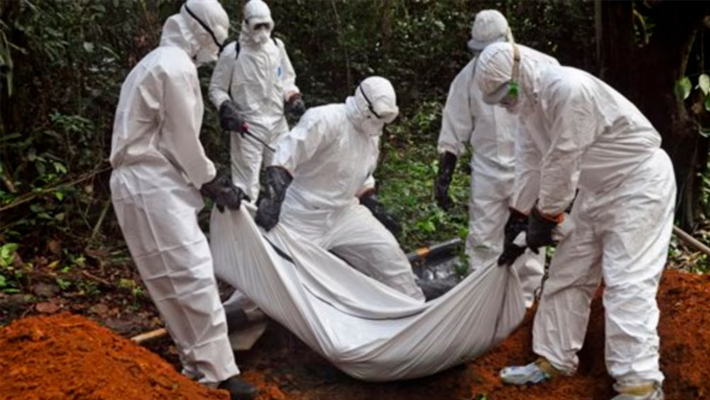
Ebola killing people African children depend on, UNICEF warns
The Ebola outbreak in the eastern Democratic Republic of the Congo (DRC) is robbing children of their loved ones, with some succumbing to the deadly disease themselves.

States
Man remanded for alleged drug peddling in Oyo
The defendant pleaded guilty to the two-count charge preferred against him.


