

Rudolf Okonkwo: What if President Tinubu comes third in the 2027 election?
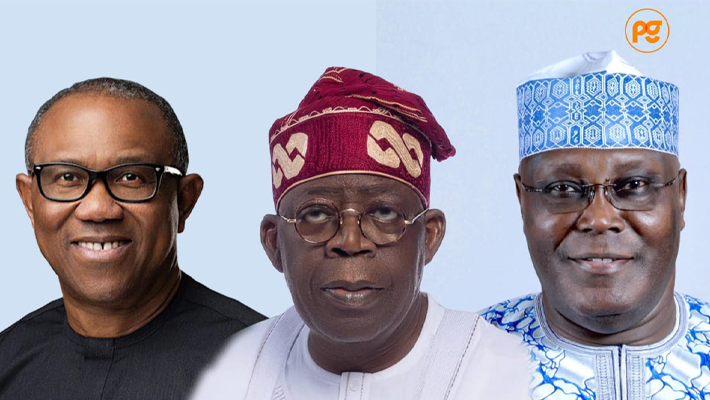
I know. It sounds outrageous. Almost unthinkable. But before you dismiss the possibility, consider what we know about Nigerian elections, what we think we know, and what we may be getting completely wrong.
A few weeks ago, The Economist magazine in London reported that Nigerians dislike President Bola Tinubu but may re-elect him anyway.
The magazine offered familiar reasons for its conclusion: religion, ethnic divisions, political cynicism, the advantages of incumbency, and disunity among the opposition.
It was a projection based largely on conventional wisdom. And conventional wisdom can become dangerous when people mistake it for prophecy.
The thinking goes something like this: Nigerian elections are flawed and will remain so. Those flaws like rigging, voter suppression, and intimidation favour incumbents. Nigerian voters are so disillusioned that most will not bother to vote. Those who turn out will vote along familiar ethnic and religious lines, while others will be persuaded by whatever crumbs politicians throw their way.
In 2023, only about 27 per cent of registered Nigerian voters who bothered to collect their permanent voter card were accredited to vote. Today’s conventional wisdom expects another low turnout in 2027. With the opposition divided and the incumbent controlling the machinery of government, some analysts have written their results and filed them away under the headline, “Tinubu returns to Aso Rock.”
Case closed. Folks, move on to 2031.
But what if the case is not closed?
What if the assumptions on which that conclusion rests are beginning to collapse?
The people sitting in the swanky offices of London may understand the mathematics of Nigerian elections. But do they fully understand what is happening to the people living under bridges and struggling to survive in Lagos, Kano, Otuoke, and Abakaliki?
For years, observers have watched Nigerians cry, Ebi n pa wa! (we are hungry) and concluded that their anger would amount to nothing. They have watched people complain about corruption, insecurity, unemployment, and the rising cost of living, only to return to the polling booths and reproduce the same political arrangements.
They have come to regard the anger of ordinary Nigerians as an unorganised force, incapable of translating itself into electoral change.
And, to be fair, Nigerian voters have repeatedly given them reasons to think so.
But there is something conventional wisdom may be missing.
A wall that bends when people are pushed against it may eventually harden after years of sustained pressure. And a population that has endured hardship for too long may reach a point where the old political calculations no longer apply.
The question is whether Nigeria has reached that point.
Consider what has happened since 2023.
When Tinubu campaigned for president, he was not yet responsible for the economic conditions Nigerians were living in. He could blame President Muhammadu Buhari, promise a better tomorrow, and invite voters to trust his experience.
Some Nigerians genuinely believed him. They believed that the man who had helped build the political machinery that brought Buhari to power could somehow rescue the country from the economic disaster of Buhari’s eight years.
Then Tinubu became president. And as he promised, he continued where Buhari stopped.
And Nigerians began to see shege squared.
Not the ordinary shege that Jesus may have anticipated when he observed that the poor would always be with us. This is the kind of shege that makes ordinary people stand by the roadside and shout at the president’s convoy in Lagos, his political home town.
In reported roadside confrontations, Nigerians have cried, “We are hungry!” and “Ole! Ole!”
And in Kaduna, the cry of “Ba ma yi” (we don’t want it again) has entered the political conversation.
I do not know what they will do next. But I suspect that whatever they say will be accompanied by a generous gesture of waka.
And yet, conventional wisdom says these same people may still troop out in January and vote for Tinubu.
That is the Nigerian electoral paradox.
People can be angry with a government and still vote for it. They can suffer under a policy and still defend the politician responsible for it. They can recognise that their circumstances have deteriorated and still convince themselves that the alternative would be worse.
Religion, ethnicity, patronage, fear, and the absence of credible alternatives can all produce such contradictions.
But how long can that arrangement last?
Following The Economist’s publication, the Tinubu administration pushed back against the magazine’s assessment.
Interestingly, the response was not simply that Nigerians loved Tinubu. It challenged the claim that Nigerians disliked him.
There is a distinction between those two positions.
The government also defended the hardship as the unavoidable cost of necessary reforms. Nigerians were assured that the country had turned the corner and that prosperity was on its way.
The wagon of prosperity, it seems, is descending from the North Pole with Santa Claus or, as Nigerians know him, Father Christmas.
Unfortunately, Nigerians cannot eat economic projections. They cannot pay school fees with promises of future prosperity. And they cannot persuade a hungry child to wait until macroeconomic indicators finally arrive at the family dining table.
This does not mean that economic hardship automatically produces electoral defeat. History has shown otherwise.
But it does mean that the political conditions of 2027 are not the same as those of 2023.
Since reliable nationwide polling is difficult to come by, I tried a little electoral arithmetic. I was too lazy to use a calculator, so I asked DeepSeek to run a simple electoral exercise for me.
I prompted it to use the 2023 presidential election results to determine what would happen if the votes Peter Obi and Rabiu Kwankwaso received were combined on a single ticket, all else being equal.
In 2023, Obi received 6,101,533 votes, while Kwankwaso received 1,496,687. Together, that is 7,598,220 votes, still below Tinubu’s 8,794,726.
But I knew that all things were not equal.
The exercise was useful for understanding the distribution of votes across states. It was not a prediction of how Nigerians would vote in 2027.
Electoral arithmetic is not the same thing as electoral behaviour.
Votes do not transfer automatically from one candidate to another simply because politicians form a last-minute alliance. Supporters have minds of their own. Some follow parties, some follow personalities, and others follow interests that change with circumstances.
More importantly, all things are not equal.
In 2023, Tinubu was not president. Today, he enjoys the enormous advantages of incumbency, including access to powerful political networks, federal patronage, and the institutional influence that comes with controlling the executive branch of government.
By political resources, I mean, among other things, the capacity to provide 36 brand-new Prado SUVs to youth leaders who are expected to go out and mobilise support.
In 2023, Nyesom Wike was not operating from the centre of federal power. Today, he is the Minister of the Federal Capital Territory, an influential figure whose role in the coming election warrants close attention, particularly given the controversy surrounding his political activities in Rivers State during the 2023 election.
But incumbency also comes with liabilities.
In 2023, Tinubu could promise to fix Nigeria. In 2027, voters can examine what he has done with the opportunity they gave him.
That distinction matters.
Then there is the North, particularly the North East and North West.
Anyone who assumes that northern voters will behave in 2027 exactly as they did in 2023 may be making a dangerous assumption.
The political mood in the North is often difficult to read. Economic hardship, insecurity, regional interests, and the ambitions of northern political leaders are all part of the equation. Reports of the Emir of Katsina’s sharp, disparaging words to Tinubu’s political emissaries and the shaky reception of his campaign activities in Kaduna raise questions about the depth of his support in the region.
There are echoes of the political realignments that preceded the defeat of President Goodluck Jonathan in 2015. But echoes are not evidence that history will repeat itself.
Jonathan discovered that an incumbent could possess the machinery of government and still lose an election.
Could Tinubu face a similar realignment? Of course, Tinubu is not Jonathan. But sometimes, the tide does not care what name the incumbent is called.
And what role will Atiku Abubakar play?
Atiku has spent decades pursuing the Nigerian presidency. His continued presence in national politics raises another question: Can the northern political establishment produce a sufficiently united electoral response to the Tinubu presidency, or will competing ambitions once again divide its strength?
Atiku’s limited electoral appeal in parts of the South remains a significant challenge to any coalition built around his candidacy.
Then, there is Peter Obi.
Some political commentators have begun to downplay his reach in 2027. Interestingly, some of those making such assessments were among those who had underestimated him before the 2023 election.
In that election, Obi received more than six million votes. Whatever anyone thinks of his politics, those votes cannot simply be wished away.
Nor can they be assumed to remain intact in 2027.
The relevant question is whether Obi can retain his previous support, expand his appeal beyond his strongest constituencies, and attract voters who stayed home in 2023.
The same question applies to other opposition candidates and alliances.
And here is where the electoral arithmetic becomes interesting.
In 2023, Nigeria had about 93.5 million registered voters. Only 25.3 million were accredited to vote. More than 68 million registered Nigerians did not participate.
Now, the voters’ register has grown to approximately 103.4 million.
That is almost 10 million more registered voters than in 2023, even before we consider the tens of millions who were already registered but stayed home.
Imagine what could happen if even a fraction of these people decided to participate in the 16 January presidential election.
A candidate like Prince Adewole Adebayo or Omoyele Sowore, who attracted relatively few votes in 2023, could find himself addressing an entirely different electorate if millions of previously disengaged Nigerians became active voters.
That does not mean those voters would automatically support either candidate. It means that the pool of potential voters is much larger than the number who actually participated in 2023.
The political establishment has built much of its calculations around the people who habitually show up at polling units.
But what about the people who stay home?
One intriguing feature of the current political atmosphere is the intensity of the Tinubu camp’s response to Obi’s political activities. It sometimes creates the impression that Obi occupies a larger space in the administration’s political calculations than its public statements suggest.
Could it be that they are worried about losing support in parts of the North and facing a stronger challenge from Obi in the South?
That is an impression, not proof of what anyone inside the presidency knows.
But it is worth examining.
Suppose the northern electorate moves significantly away from Tinubu. Suppose the South East remains strongly attached to Obi, while parts of the South South and Middle Belt become more competitive. Suppose the Obi-Kwankwaso alliance alters the distribution of votes in Kano and other northern states.
These are separate possibilities, not established outcomes. Each would need to be tested against actual voting behaviour.
The important point is that the electoral map would no longer resemble the one on which conventional wisdom rests.
And for Tinubu to come third, rather than merely lose an election, something more dramatic would have to happen.
It would not be enough for one opposition candidate to overtake him. Two competing candidates or alliances would have to assemble more votes than he does. His support would have to decline substantially in some of the areas where he performed strongly in 2023, while his challengers would need to expand beyond their traditional constituencies.
That is a much more demanding scenario than the simple defeat of an incumbent.
But it is precisely the kind of scenario that conventional wisdom tends to dismiss before examining the conditions that could produce it.
And then comes the factor that may matter more than all the others.
Turnout.
What if the people who did not vote in 2023 decide to participate in 2027?
What if the young Nigerians who have spent years expressing their anger on social media decide that posting another insult under a politician’s Facebook or X post is not enough?
What if people who have never voted before register, collect their voter cards, and show up at polling units?
What if the familiar calculations based on low participation, ethnic loyalties, and political patronage no longer describe the electorate?
Nobody knows whether these things will happen.
And nobody should pretend to know.
Higher turnout alone would not guarantee a particular outcome. New voters could support the incumbent, the opposition, or several competing candidates. A large turnout would also require credible election administration, transparent collation, security, and the protection of voters’ choices.
But it could make the old assumptions less reliable.
That is where the possibility raised in the title of this column comes from.
Even though Bishop Michael Nwaobi Amakaeze (Musa) is from my home town of Nnobi, this is not from a prophecy. And it is not from a secret opinion poll. Obviously, it is not a mathematical certainty.
It stemmed only from the recognition that elections can produce surprises when voters’ behaviour changes faster than political analysts’ expectations.
What would happen if two opposition candidates expanded their support simultaneously while the incumbent lost ground? What would happen if previously inactive voters altered the balance across several regions?
The answers are unknown.
But the questions are not unreasonable.
What if we are using yesterday’s Nigeria to predict tomorrow’s election?
For too long, Nigerian political analysis has treated the electorate as a permanent collection of predictable ethnic blocs, religious loyalties, hungry stomachs, and purchasable consciences.
There is some history behind those assumptions.
But history is not as constant as the northern star.
The 2015 election demonstrated that an incumbent could be defeated. The 2023 election demonstrated that a candidate operating outside the two dominant parties could attract millions of votes.
Neither event tells us what will happen in 2027.
They do tell us that Nigerian electoral politics is not completely frozen in time.
After all, consider the Osun governorship election of 15 August 2026. Governor Ademola Adeleke, running on the platform of the Accord Party, defeated the APC candidate, Bola Oyebamiji, by 511,067 votes to 444,815.
The result was a reminder that party labels, political machinery, and analysts’ expectations do not always understand an election’s outcome.
Perhaps The Economist will be vindicated by INEC on 17 January 2027, at 3.30 a.m., while Nigerians are sleeping. Perhaps the combination of incumbency, opposition fragmentation, religious calculations, and low turnout will reproduce the usual outcome.
Perhaps the opposition will once again spend more time fighting over who should lead than putting resources together to challenge the government in power.
Perhaps Nigerians will complain bitterly about their suffering and still return the same political arrangement to power.
Or perhaps the electorate will surprise us all and behave in ways that the established political machinery has not anticipated.
That is the uncertainty at the heart of the 2027 election.
It is also the reason I dismiss any prediction that treats the outcome as settled before Nigerians cast their votes.
If the familiar patterns hold, the conventional analysts will congratulate themselves for understanding Nigeria.
And four years later, on the eve of the 2031 presidential election, we may find ourselves discussing the same hardship, the same political calculations, the same disappointed voters, and the same predictions about what Nigerians will do.
Perhaps by then, The Economist will publish another article explaining why Nigerians dislike their vice president but may elect him president anyway.
And perhaps I will be sitting here, once again, asking the same question.
What if the Nigerian voter finally surprises us?
Rudolf Ogoo Okonkwo teaches Post-colonial African History, Diasporic African Literature, and African Folktales at the School of Visual Arts in New York City. He is the author of “This American Life Sef.” His latest book is “A Kiss That Never Was.”

We have recently deactivated our website's comment provider in favour of other channels of distribution and commentary. We encourage you to join the conversation on our stories via our Facebook, Twitter and other social media pages.

More from Peoples Gazette

States
Independence: NBA urges Nigerians to expect better future
The NBA said that ordinary Nigerians should be deriving benefit from the subsidy removal rather than hardship.

Agriculture
FG tasks ECOWAS on leveraging financing strategies for agroecology
The federal government has urged stakeholders in the agriculture and finance sectors in the West Africa region to leverage financing strategies to enhance agroecology practices

Politics
Katsina youths pledge to deliver over 2 million votes to Atiku
“Katsina State is Atiku’s political base because it is his second home.”
States
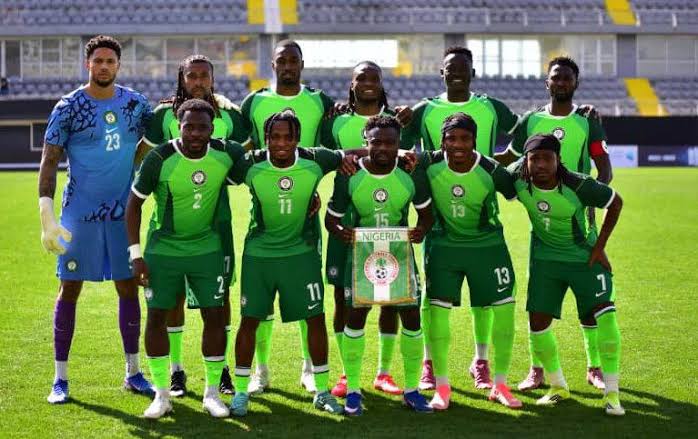
U-15 World Cup: Future Eagles spank New Caledonia 7-0, progress to round of 16
Nigeria’s Future Eagles trounced New Caledonia 7-0 on Wednesday to cruise to the Tier C Round of 16 at the inaugural FIFA Under-15 World Cup.
States
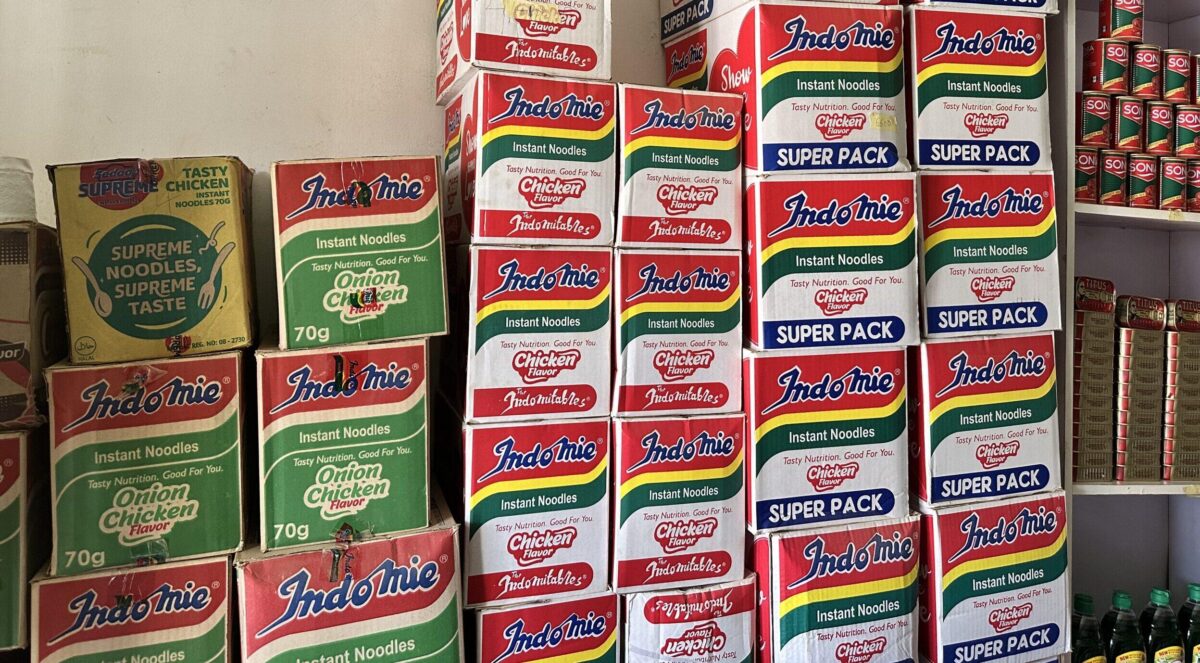
27-year-old woman caught stealing Indomie noodles, police tell court
A 27-year-old woman, Sarah Williams, was arraigned on Wednesday before a Kaduna Magistrates’ Court for allegedly stealing four cartons of Indomie noodles.
Rights
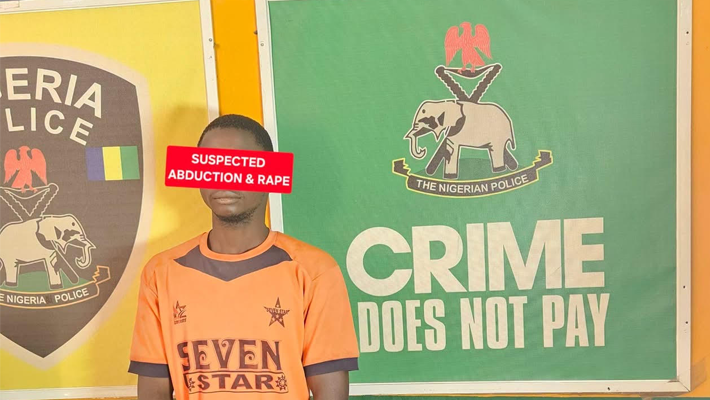
Bauchi police arrest man for defiling teenager
The police command in Bauchi says it arrested a 24-year-old, Jafar Mohammed, for alleged abduction and defilement of a minor.
States
Police save two murder suspects from mob lynching in Ondo
The state police spokesperson, DSP Abayomi Jimoh, said this in a statement on Wednesday in Akure.
World
Dozens killed in Spain’s high-speed train collision
At least 39 people were killed as two high-speed trains collided in Spain on Wednesday morning.
States
My friend married my fiancee, took over my apartment; I’m suing for cheating: Businessman
The defendants, who reside in Mararaba, were charged with criminal conspiracy, cheating, breach of trust and threat to life.


