

ANALYSIS: As Twitter ban passes day 200, all sides continue to lose in the drag out

It’s been 200 days since the regime of President Muhammadu Buhari banned the operations of social media platform, Twitter, in Nigeria, ensuring a continuous violation of its citizens’ rights to freedom of expression.
Data collected by NetBlocks, a cyber-security and internet governance firm, indicated that Nigeria loses $1.38 million for every hour that the suspension has subsisted. As such, the Nigerian economy might have lost about N568 trillion to the suspension.
The federal government announced the suspension of Twitter operations in the country on June 4, after the social media giant deleted a post by President Muhammadu Buhari for “violation of the company’s abusive behaviour policy.” By June 5, the suspension was carried out by telecommunications companies as Nigerians witnessed Twitter’s shutdown across all platforms.
The Buhari regime’s ban on Twitter garnered immediate backlash from citizens and the international community, further damaging Nigeria’s democratic and rights credentials on a global scale. Foreign governments like Canada, the United States and the United Kingdom all spoke against the ban, citing the infringement on the freedom of speech.
Government agencies stopped tweeting in compliance with the ban. Public health body, the National Centre for Disease Control, which had daily shared updates on Twitter of COVID-19 stopped sharing.
Banks, network providers and other essential services providers closed off their Twitter customer service channels. Broadcasting stations also complied with the ban in fear of retribution from the Buhari- led regime.
Ayobami Adekojo, a prominent Twitter commentator, described the ban as a “gross violation of the fundamental human rights of Nigerians.”
“President Buhari has shown once again that he is not a democratic leader. Despite the unemployment problem in Nigeria today, the decision to ban twitter has exacerbated the problem with young Nigerians losing access to a global marketplace where they can conduct business. It is unfortunate that President Buhari’s regime is shrinking the civic space daily,” Mr Adekojo said.
The ban has directly affected businesses, especially the Small and Medium-scale Enterprises (SMEs) and government at different levels as Nigeria’s unemployment and insecurity concerns continue to worsen.
“At a time when the country needs to foster critical dialogue, encourage expression of opinion and share vital information, citizens are asked to keep quiet, even though the government has shown that it is incapable of addressing any serious economic, social, security related and political challenges,” Rinu Oduala, a rights activist, said to Peoples Gazette.
Ms Oduala noted the trust deficit between the Buhari-led administration and the citizens, noting that the ban on the social media sites operations continued to further it.
“If the Nigerian government can now block Twitter, it can even try to block the internet during the upcoming elections. Their actions have shown they are not willing to bridge the trust gap,” she said.
The Buhari regime has continued to defend its decision. In September, Abubakar Malami, the attorney general of the federation, told the Community Court of Justice of ECOWAS that President Muhammadu Buhari’s order banning Twitter “legally violated” Nigerians’ fundamental human rights. Mr Malami insisted that matters of national service trumped the Nigerian Constitution, especially the fundamental rights section of the document.
Julius Gaiya, a public affairs analyst, tells The Gazette “the major problem is the gaps existing in the constitution which must be addressed, because the same Constitution which guarantees freedom of expression also states that freedom is not absolute in itself.”
Mr Gaiya makes reference to section 45 of the 1999 Constitution (as amended), noting that while “The section allows fundamental rights to be limited in the interest of defence, public safety, public order, public morality or public health. It also permits limitation of fundamental rights to protect the rights and freedom of other persons.”
He said further, “These limitations are open to many translations, which the government has decided to utilise, this doesn’t make it legal in any case, but the constitution leaving a lot to interpretation is why the ban is still in force without any real legal justification and is still the same reason the government has failed to prosecute anyone.”
Though the administration had said negotiations with Twitter was underway, there has been no clarity on the timeline or status of the negotiations.
The Minister of State for Labour and Employment, Festus Keyamo had said last month that the dialogue to lift the ban on Twitter was in progress with few conditions yet to be met. Mr Keyamo, in an interview on Channels Television programme, Politics Today, on Sunday, explained why the ban has not been lifted.
Information minister Lai Mohammed neither returned The Gazette’s calls nor reply messages when reached for comments on the ban on Tuesday. Mr Mohammed had, however, in September, promised that lifting the ban was just a “matter of days.”
President Buhari in his Independence Day broadcast said he has directed that Twitter ban be lifted “only if the conditions are met to allow our citizens continue the use of the platform for business and positive engagements.”
The government’s conditions for reinstating free access to Twitter in Nigeria include: physically registering as a business entity in Nigeria, payment of taxes, and agreement to block contents that threaten national security and cohesion on its platform.
With how long the negotiations have dragged out, it is obvious that the demands of the Buhari regime are not readily agreeable to Twitter.
Users, small businesses and even public bodies who require Twitter to enhance their endeavour may need to suffer a little longer until one of the contending sides blinks.

We have recently deactivated our website's comment provider in favour of other channels of distribution and commentary. We encourage you to join the conversation on our stories via our Facebook, Twitter and other social media pages.

More from Peoples Gazette

Agriculture
FG tasks ECOWAS on leveraging financing strategies for agroecology
The federal government has urged stakeholders in the agriculture and finance sectors in the West Africa region to leverage financing strategies to enhance agroecology practices

Politics
Katsina youths pledge to deliver over 2 million votes to Atiku
“Katsina State is Atiku’s political base because it is his second home.”
Anti-Corruption
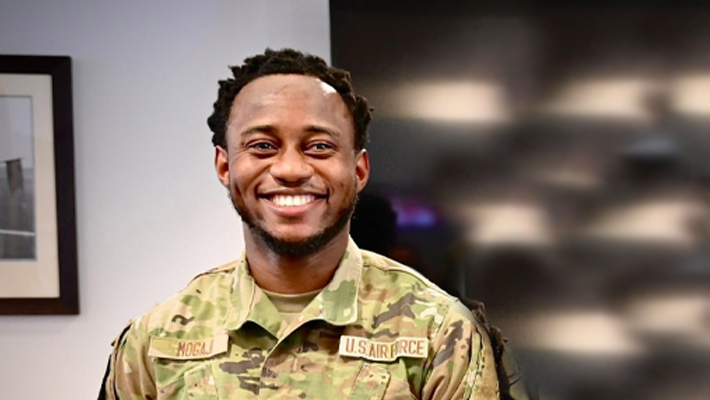
USAF cybercriminals Chijioke Odimegwu, Harafat Mogaji jailed 189 months for multimillion-dollar phishing heist
Chijioke Odimegwu and Harafat Mogaji, former members of the United States Air Force at the time, attacked businesses with email “spamming” and phishing campaigns.
Abuja
TCN announces maintenance, disruption in parts of Abuja
The Transmission Company of Nigeria says there will be a three-hour annual preventive maintenance exercise at the Kubwa 132/33kV transmission substation in Abuja.
NationWide
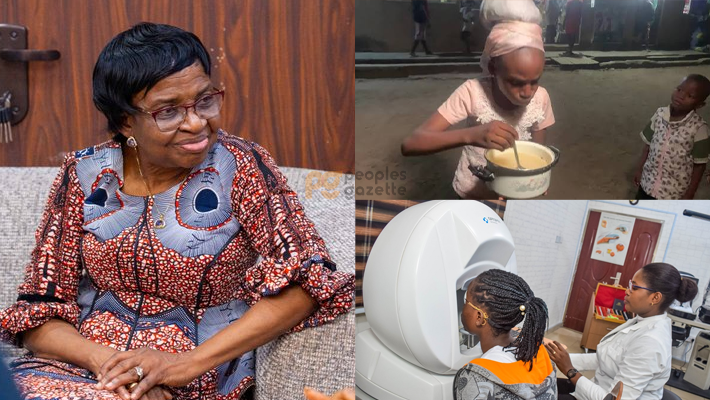
SPECIAL: Many Nigerians at risk as NAFDAC stays silent on cyanide testing in garri with 24 million battling vision loss
A NAFDAC spokeswoman told Peoples Gazette it did not know if cyanide is on the agency’s testing checklist and did not state how often market surveillance is conducted.

Economy
Benin secures €500 million in international financing with ADF support
Benin secured €500 million in international bank financing, supported by the African Development Fund, to facilitate priority investments in several sectors including education.
Economy
Navy recovers 80,000 litres of suspected stolen crude oil in Delta
The Nigerian Navy recovered approximately 80,000 litres of crude oil in anti-crude oil theft operations in Delta State.
States
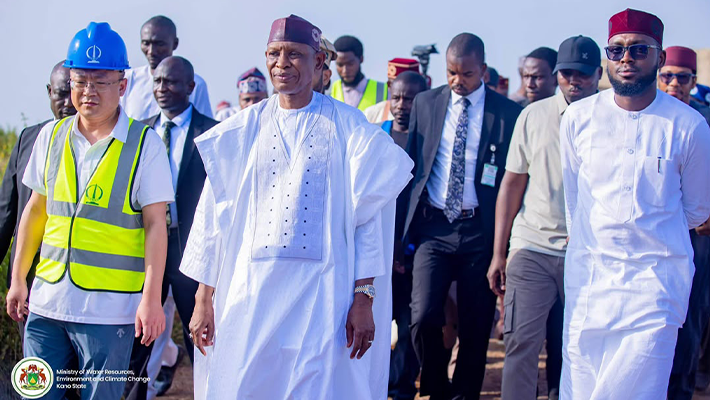
Kano govt restores 39.8 million-litre Goron Dutse reservoir after 30 years
Governor Abba Yusuf said restoring the facility was part of his government’s broader effort to revive the state’s critical infrastructure.


