

Governor Amuneke is who he is

His is not just ordinary commentary. It is a political satire. A mirror held up to our country, its rulers, people and politics. His is the art of laughter and lament. Kevin Arua, who goes by the nom de guerre, Kevin Black, and the popular Governor Amuneke, an online voice that exposes folly, mocks power, and makes us laugh even when the truth hurts, has in a short time become the symbol of our country’s contemporary satire.
But, satire isn’t art for art’s sake. In its purest form, it is an act of rebellion. It unsettles authority. It questions the absurd. It mocks the powerful and shakes citizens out of apathy. From Aristophanes to Jonathan Swift, from George Orwell to Adeola Fayehun, the satirist has always been a moralist in disguise.
Governor Amuneke continues that tradition. He takes our country’s madness and turns it into an art form, showing us the dim wards of our national asylum, where we shuffle about as bedraggled inmates, muttering gibberish to ourselves and mistaking decay for destiny.
In that asylum, corruption wears the white coat of competence, and failure parades as reforms. We are patients and attendants at once trapped in a cycle of madness we no longer recognise as madness.
Governor Amuneke’s satire holds up the mirror to this condition. He shows us our deranged laughter, our absurd routines, our surrender to mediocrity dressed as governance. His art forces us to see that the asylum is not just political, it is moral, social, and psychological. It is the place where we have learned to live with delirium, where outrage has become therapy, and where laughter is the only medicine left to dull the pain of citizenship.
He makes us confront the terrifying normalcy of dysfunction. The roads filled with potholes and the endless excuses that make for the theatre of the insane. Yet, even in this theatre, he insists on laughter, not as escape; but as illumination. His genius is that he makes us laugh while showing us the tragedy of who we have become: a country clapping for its tormentors, applauding decay, and electing jesters to preside over ruins. His satire, in the end, is not a shield for inaction.
Political satire has always been a weapon of the powerless. In our virtual spaces, whether it is TikTok, Instagram, or X (formerly Twitter), it has become the people’s parliament. When institutions fail, when the legislature becomes a bazaar of self-interest, and when the judiciary is on its knees, satire takes over. It becomes the only safe way to speak truth to power. Governor Amuneke has mastered that. He uses humour to reveal our collective tragedy. He makes us laugh at the same people who make us cry. The world he creates is fictional; but the fiction is only a mask. Behind his parodies lies the sharp edge of truth. He caricatures politicians who speak of “renewed hope’ while presiding over despair. He mocks officials who celebrate failure as progress. He exaggerates reality to the point where it becomes impossible to ignore. That is the genius of satire; it hides its fury behind laughter.
Scholars have long recognised satire as a political act. Mikhail Bakhtin, the Russian theorist, saw it as a form of the “carnivalesque”, where the world is turned upside down and the lowly ridicule the mighty. In our country, where governance is often theatre, satire becomes the theatre within the theatre. Governor Amuneke performs in this second stage, using the tools of mockery, exaggeration, and irony to make our country visible in all its absurdity.
Regardless, it is important that we do not conflate satire with nihilism. Satire is never mockery for its own sake; it uses laughter as a mirror, not a weapon while exposing folly so that reform may begin. Governor Amuneke may joke, but the joke is not idle. Every punchline conceals a question: why are things the way they are? Why do we tolerate incompetence? Why do we celebrate mediocrity? The laughter he provokes is not hollow, it is political consciousness in motion.
Our country’s virtual entertainment space has become the fertile ground for this genre. Comedians, skit makers, and influencers have taken over where columnists and editorial writers once held sway. Their language is accessible. Their reach is vast. They capture attention in ways that traditional media can no longer do. Governor Amuneke represents this new generation of political commentators, unbound by formal structures, unafraid of censorship, and deeply attuned to the mood of the people. What distinguishes him is his method. He does not preach. He performs. Through mimicry, costume, and local idiom, he constructs a universe of absurdity that reflects our own. He turns cabinet meetings into comedy sketches. He reimagines press conferences as theatre of laughter. He exaggerates the gestures, accents, and excuses of politicians until they collapse under their own weight. In laughing, we recognise the truth.
Satire thrives where democracy is weak. When the press is constrained, satire sneaks through the cracks. When the people are silenced, humour becomes their tongue. Governor Amuneke’s success is a reflection of our condition. He exists because the system itself has become a farce. The more ridiculous our politics gets, the sharper his parody becomes. In the age of virtual entertainment, satire is no longer confined to newspapers or television. It moves with speed, becoming viral. It bypasses censorship and travels from phone to phone, from street to street.
The digital space has democratised humour. Anyone with a smartphone can become a critic of power. But few do it with the intelligence and coherence that Governor Amuneke brings to the craft. His timing, diction, and creative direction show deep awareness of our country’s political language and political Scape. He deploys his craft to serve two purposes: entertainment and enlightenment. The first draws the audience in; the second keeps them thinking long after the laughter ends. He understands this balance. He entertains so that citizens can engage. He mocks to awaken, not to numb. His skits may appear lighthearted; but beneath the laughter is a fierce commitment to accountability.
It was Dustin Griffin who reminded us in his book, Satire: A Critical Reintroduction, that satire always carries moral intent. It may wear the mask of comedy, but it speaks the language of ethics. Governor Amuneke uses humour to highlight the moral bankruptcy of leadership. He exposes the contradictions of a country where politicians preach austerity while living in excess, where public officials swear oaths they never intend to keep. His humour humanises outrage. It makes criticisms of our political rulers everyday conversations.
What makes satire powerful in our country today is its accessibility. It reaches both the market woman and the graduate. It translates policy failure into visual metaphors that everyone can understand. When Governor Amuneke mocks a minister who cannot account for funds or a governor who blames the opposition for rainfall, he breaks down complexity into laughter. But that laughter, when multiplied across millions, becomes a chorus of dissent.
Yet, satire is a risky business. It provokes the powerful. It thrives on the edge of censorship. Our country has a long history of governments that dislike being laughed at. From the military era to the present democracy, humour has always been policed. But satire persists because it speaks in codes that authority cannot easily suppress. Governor Amuneke’s craft depends on this coded language of irony, of metaphor, of double meanings. He speaks truth without directly speaking it. The danger, however, is that the laughter may sometimes dull the anger. We laugh at what should make us rise. That is the paradox of our humour. Governor Amuneke’s challenge, and indeed the challenge of all satirists, is to keep the laughter sharp, to ensure it cuts through complacency. The objective is not merely to entertain but to stir citizens to awareness and, ultimately, to action.
What’s laughter to people who are hungry? Does political satire really matter?
Political satire matters because it keeps the civic conversation alive. It sustains dialogue in times of despair. When we share Governor Amuneke’s videos, we do more than elicit laugh, we participate in the subtle form of protest. We keep politics visible. We remind ourselves that governance should never be left unexamined.
Governor Amuneke is who he is: a mirror, a clown, a teacher, a rebel. He shows us our reflections, exaggerated yet real. Through him, we laugh at ourselves, at our leaders, and at the circus that politics has become. But more importantly, through him, we remember that laughter can be a form of courage. And that, perhaps, is the greatest role of political satire in Nigeria today: to make us laugh so that we may no longer fear to speak. But satire, like truth, often offends the thin-skinned. Its laughter unsettles power. Its mockery frightens men who mistake public office for the private empire, and the commonwealth for the private vault.
The recent arrest of the citizen journalist, Fejiro Oliver, shows just how far the state will go to silence humour. His “crime”? Referring to Governor Sheriff Oborevwori and Senator Dafinone as “Governor Amuneke”. A joke. A harmless euphemism for idleness. For doing nothing. Yet, the state turned laughter into an offence. The police went further, filing criminal charges, as though satire were treason, as though words could topple the government. Sadly, we are at that juncture where hunger stalks the streets, where citizens beg for the renewal of hope; yet the rulers find time to police laughter. It is tragic. It is absurd. It is proof that our democracy is insecure, that it fears even the sound of its own ridicule. Power, when it cannot stand laughter, is already weak. Soyinka famously quipped that “the man dies in all who keep silent in the face of tyranny”.
Dear reader, one day soon someone may be murdered by the state for laughing at tyranny.
Governor Amuneke’s world is fictional, but it exposes the truth that tyrannies, whether old or new, have always feared this: that laughter is resistance. When the people laugh at power, power loses its mysterious allure. When we call our governors “Amuneke”, we strip them of pretence. That is why satire matters. It levels the high and lifts the low. It brings governors down from their pedestals and returns our country to the commons. So let the laughter continue. Let the skits multiply.
Let the people speak in parody. For every Fejiro they arrest, a thousand Amunekes will rise. Satire is not treason. It is democracy speaking in its purest form. And in a country where truth is dangerous, humour may well be our last form of freedom – the kind that cannot be edited or deleted, to borrow Governor Amuneke’s phrase.
Abdul Mahmud is a human rights attorney in Abuja

We have recently deactivated our website's comment provider in favour of other channels of distribution and commentary. We encourage you to join the conversation on our stories via our Facebook, Twitter and other social media pages.

More from Peoples Gazette

States
Independence: NBA urges Nigerians to expect better future
The NBA said that ordinary Nigerians should be deriving benefit from the subsidy removal rather than hardship.

Agriculture
FG tasks ECOWAS on leveraging financing strategies for agroecology
The federal government has urged stakeholders in the agriculture and finance sectors in the West Africa region to leverage financing strategies to enhance agroecology practices

Politics
Katsina youths pledge to deliver over 2 million votes to Atiku
“Katsina State is Atiku’s political base because it is his second home.”
NationWide
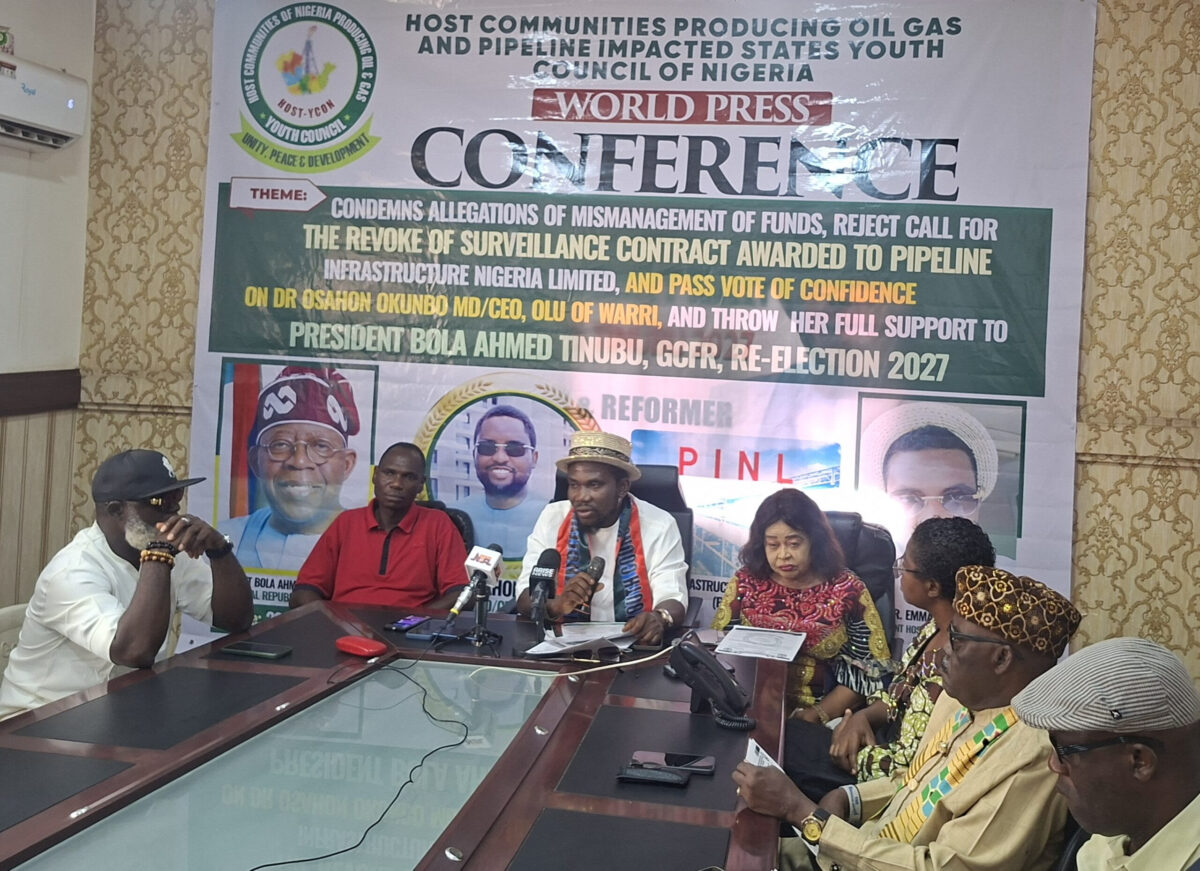
HOSTCON youth council backs Tinubu’s re-election
Mr Pathfinder urged the Federal Government to sustain effective pipeline surveillance.

NationWide
NCDC mobilises 500 IPC alumni, media fellows for Ebola preparedness campaign
Mr Idris encouraged IPC professionals to inform state authorities about their skills.
Heading 5
2027: INEC assures PWDs of inclusive participation in Zamfara
The REC stressed that the right to vote belongs to every eligible citizen.
Heading 1
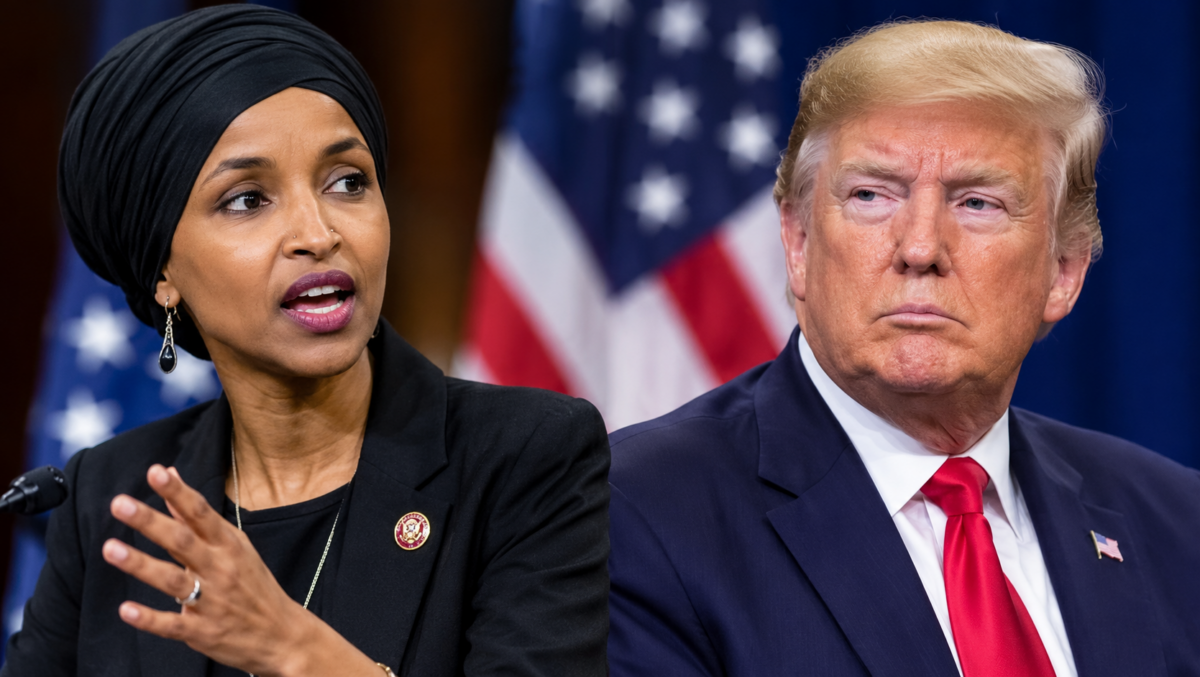
Ilhan Omar calls Trump ‘pedophile protection party’s president’
The Somali-born American politician insisted that her name had always been Ilhan Omar.
Heading 3
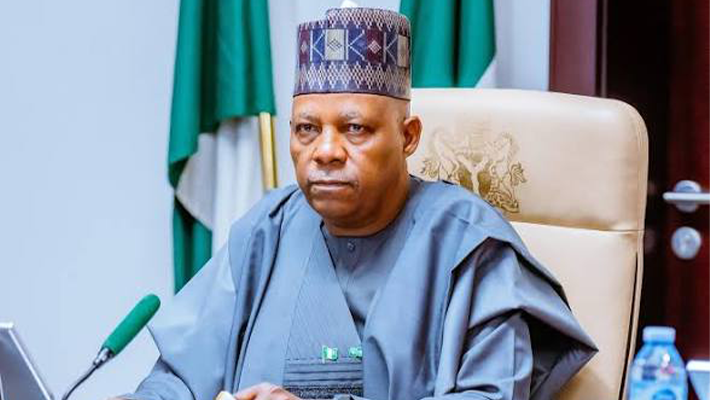
Shettima inaugurates teaching hospital, schools in Borno
Mr Shettima commended Governor Babagana Zulum for establishing the hospital.

Hot news Home top
14 bandits killed as hunters repel attack in Katsina village
The commissioner stated that intelligence report revealed the movement of 26 armed bandits on 13 motorcycles.


