

Afghanistan: Taliban government to allow education for women
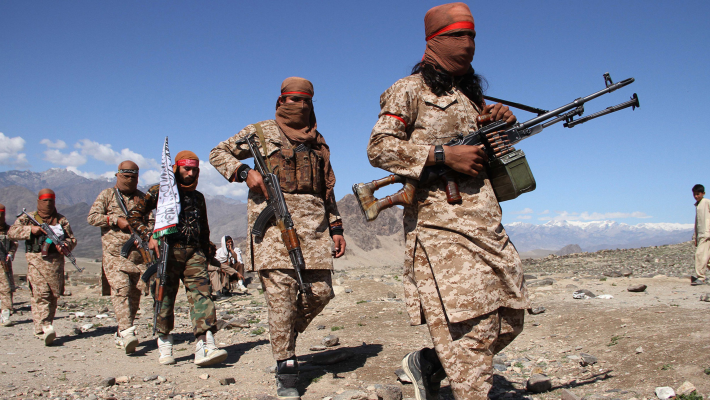
Extremist group Taliban says it will allow women access to education as it continues to advance with its plot to take over government from Afghan President Ashraf Ghani.
TRT World Now reports that Taliban spokesperson Suhail Shaheen said the insurgent’s government would respect the rights of women.
He also disclosed that the insurgents will allow women access to work, adding that punishments like executions, amputations and stoning will be at the discretion of courts.
“Rights of women will be respected – They will have access to education, work – They will be allowed to leave homes alone – Punishments like executions, stonings, amputations up to courts,” Mr Shaheen was quoted by TRT World to have said.
Peoples Gazette had earlier reported that Taliban fighters entered the city of Kabul on Sunday, demanding the unconditional surrender of the central government.
In the report, The Gazette disclosed that Mr Ghani will abdicate in the next few hours after the Taliban came into the city limits.
The extremist group has made major advances across Afghanistan as the U.S. and other countries started withdrawing their troops from the country. The original date for the full withdrawal of U.S. forces in Afghanistan was September 11, to mark the 20th anniversary of the 9/11 attacks.
The group has taken over most of southern, northern and western Afghanistan. Mazar-i-Sharif, the capital of Balkh province and the biggest city in the north, fell to the Taliban on Saturday, as regional leaders and security forces abandoned the city fleeing to Uzbekistan for safety.
While in charge of Afghanistan in the 1990s, the Taliban’s government was characterised by systematic violations against the rights of women and girls.
The U.S. government was forced to seize power from the insurgents in 2001 after series of human rights abuses including executions; and extreme suppression of freedom of religion, expression, and education was recorded under the Taliban rule.
However, in 2020, U.S. and the Taliban entered a truce, outlining a phased withdrawal of U.S. forces from Afghanistan in exchange for Taliban commitments to restrain from attacks on the U.S. or its allies from Afghan territory.
As negotiations advanced, Human Rights Watch in 2020 highlighted the need to address issues bothering on fundamental human rights, with special focus on the rights of women and girls; education; freedom of expression and the media.

We have recently deactivated our website's comment provider in favour of other channels of distribution and commentary. We encourage you to join the conversation on our stories via our Facebook, Twitter and other social media pages.

More from Peoples Gazette

States
Independence: NBA urges Nigerians to expect better future
The NBA said that ordinary Nigerians should be deriving benefit from the subsidy removal rather than hardship.

Agriculture
FG tasks ECOWAS on leveraging financing strategies for agroecology
The federal government has urged stakeholders in the agriculture and finance sectors in the West Africa region to leverage financing strategies to enhance agroecology practices

Politics
Katsina youths pledge to deliver over 2 million votes to Atiku
“Katsina State is Atiku’s political base because it is his second home.”

Africa
U.S. warns citizens travelling to South Africa over crime, terrorism, unrest
The acting national police commissioner said at least 10 vehicles were burnt in Johannesburg and 14 in Durban.

Economy
Nigeria’s $1 trillion economy depends on homegrown innovation, market access: NBTI DG
The DG said sustainable national prosperity cannot be achieved through government expenditure or natural resources alone.

NationWide
NBET begins N729 billion legacy debt payments to GenCos
Mr Odeyemi described the development as a significant milestone in implementing the debt reduction programme.
Africa
Anti-foreigner protests force South Africa to withdraw asylum seekers applications
The protests erupted over a Constitutional Court ruling easing access to asylum.

Heading 2
2028 Olympics: Super Falcons defeat Comoros 2-0 in first leg
The Nigerian team finally opened the scoring in the 48th minute with a tap-in by Michelle Alozie.

Heading 4
Flydubai co-pilot Hamam Al-Hammani inspired by 9/11 terror attack, radicalised in 2017: UAE
The 9/11 attacks claimed lives across 77 countries.


