

Anambra Election: INEC’s joint mid-day situational report
Introduction
On 8th November 2025, the Anambra Election Observation Hub, comprised of Yiaga Africa, The Kukah Centre, International Press Centre (IPC), Centre for Media and Society (CEMESO), Nigeria Women Trust Fund (NWTF), ElectHER, and TAF Africa, jointly deployed 711 citizen observers across the 21 LGAs of Anambra State. Each organization leads on a specific thematic pillar, including election integrity, results verification, election security, disability inclusion, gender participation, peacebuilding, misinformation tracking, and media safety.
The Hub employed a triangulated election observation methodology combining systematic, statistical, and technology-driven tools to provide a comprehensive assessment of the election. Over the course of the election, the Hub will issue two joint statements and release thematic reports based on findings from each organization’s area of focus.
This midday situational statement presents a preliminary assessment of the opening of polling units, deployment of election materials and personnel, accreditation and voting, as well as inclusivity and accessibility. Additional information and updates will be provided subsequently.
General assessment
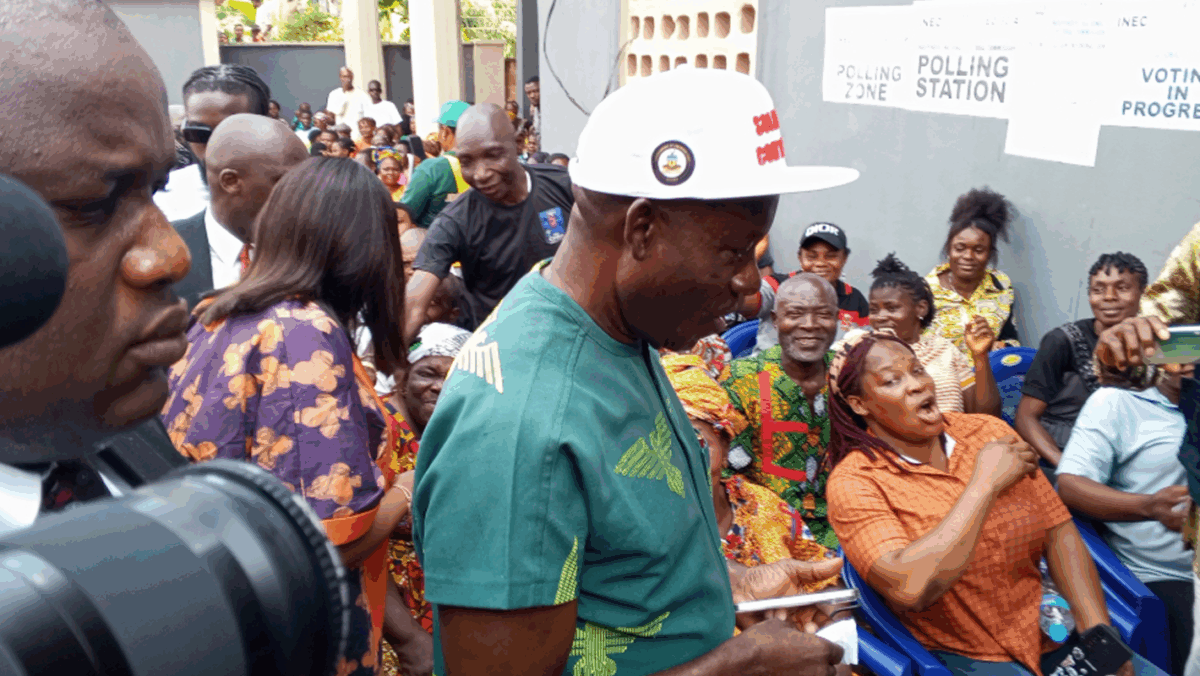
The Anambra governorship election has so far been conducted in a generally peaceful and secure environment. Election officials and security personnel in polling units displayed professionalism and adequate knowledge of electoral procedures.
While electoral materials were deployed as scheduled in most polling units, some logistical challenges, such as delays in the arrival of materials and election personnel, were recorded.
These led to the late commencement of polls in some polling units. Nevertheless, voters conducted themselves in a peaceful and orderly manner, reflecting a commendable level of political maturity and commitment to democratic principles. While it is too premature to provide exact turnout rates, preliminary observations from the partners indicate low voter turnout across several LGAs. As noted in our pre-election statements, the apathy witnessed in the buildup to the election appears to have manifested into low turnout on election day.
Midday Findings
Arrival of INEC officials and commencement of polls: By 7:30am INEC officials had arrived in only 49% of observed polling units. While this represents a notable improvement compared to previous off-cycle elections, 28% in 2021 and 17% in 2017, the fact that less than half of the polling units were operational at the official start time indicates INEC needs to continue to address the persistent logistical bottlenecks that plagued Nigeria’s elections.
Accreditation and Voting: Field reports indicate an uneven commencement of accreditation and voting across the LGAs observed. In Polling Unit 005, Ward 2, Dunukofia LGA, voting commenced at 8:31 a.m., demonstrating timely readiness by INEC officials. However, in Wards 1, 2, 3, and 4 of Nnewi North LGA, accreditation had not yet commenced as of 8:34 a.m., with election materials reportedly still at the Registration Area Centre (RAC).
Similarly, in Polling Unit 013, Ogbolo Ward, Ihiala LGA, INEC officials and security personnel had not arrived as of 8:44 a.m., delaying the start of voting activities.
Presence of Security Personnel: The presence of security personnel was generally observed across most polling units, including the Nigeria Police Force and Federal Road Safety Corps. For instance, in Orumba South (Polling Unit 10), two policemen and one FRSC official were reported on the ground.
Their presence contributed to maintaining a peaceful and orderly environment, with no security breaches or voter intimidation reported at the time of observation However, there were notable gaps in security coverage. Some units conducted voting without any police or security presence, as seen in Oyi (2 Nkwelle Ezunaka, PU 014). Such gaps could expose polling units to disputes or intimidation.
Vote Buying: Reported in Uruagu 1 and Nnewichi, party agents have been reportedly seen handing voters pieces of paper or taking their details for payment after casting their vote. This remains a persistent electoral integrity concern, as previously identified in the Hub’s Pre-Election Security and Risk Assessment Report. Field observations and reports from the Election Offences Tracking (EOT) system indicate isolated but notable instances of vote trading across some LGAs.
For instance, in Polling Unit 001, Amasea Ward, Awka North LGA, party agents were observed distributing cash to voters, ostensibly to influence voting choices. This occurrence underscores the continuing challenge of electoral inducement and the limitations of enforcement mechanisms at the polling-unit level.
Deployment of Election Materials and Personnel:
Accreditation and Voting (Deployment and Functionality of the BVAS):
Accreditation and voting had commenced in 85% of polling units by 9:30 am. The geographical distribution indicates that accreditation and voting had commenced in 87% of polling units in the Anambra Central Senatorial District, 82% of polling units in Anambra North, and 84% of polling units in the Anambra South Senatorial District by 9:30 a.m. Accreditation and voting commenced as late as between 10:30 to and 12 noon in XXX Polling Units in XXX LGA
Inclusivity and accessibility:
Critical incidents:
Preliminary Recommendations
The Anambra Election Observation Hub urges registered voters who have not yet voted to seize the remaining hours of the day to peacefully exercise their right to vote. Every vote counts in selecting the next governor and shaping the future of Anambra State.
Security personnel under the Inter-Agency Consultative Committee on Election Security (ICCES) should maintain a continuous and visible presence at all polling units, from the start of accreditation through the conclusion of voting and results collation. Deployment strategies should prioritise high-risk LGAs, such as Ihiala and Idemili North, to prevent potential disruptions, voter intimidation, or disputes.
INEC should ensure strict compliance with the guidelines for the results collation. Specifically, party agents and accredited media and election observers should be granted access to the collation centers. Collation officers should verify the results on the hardcopy results sheets and results transmitted with the BVAS during results collation.
Strengthen Disability Data Validation: INEC should routinely verify and update disability disaggregated voter data before elections to ensure that assistive tools deployed align accurately with the needs of voters in each polling unit.
Enhance Training of Ad Hoc Staff: Continuous and practical training modules should be provided for all election officials on disability inclusion, the use of assistive devices, and the administration of disability-related forms such as EC40H.
Ensure Consistent Deployment of Assistive Tools: Magnifying glasses, braille ballot guides, and other assistive materials should be prioritized and equitably distributed across polling units identified with registered voters with disabilities.
Establish On-Ground Accessibility Monitoring: INEC should collaborate with organizations of persons with disabilities (OPDs) to monitor accessibility and promptly address barriers encountered on election day.
Institutionalize Accountability for Compliance: INEC supervisors and presiding officers should be held accountable for failure to implement inclusive measures or administer required forms.
We commend the efforts of INEC, security agencies, and the electorate thus far and urge all stakeholders to remain vigilant as polls come to an end and counting and collation processes begin.
INEC
Saturday, November 8, 2025
Delivered at the Radisson-Onyx Hotel, Awka, Anambra State

We have recently deactivated our website's comment provider in favour of other channels of distribution and commentary. We encourage you to join the conversation on our stories via our Facebook, Twitter and other social media pages.

More from Peoples Gazette

States
Independence: NBA urges Nigerians to expect better future
The NBA said that ordinary Nigerians should be deriving benefit from the subsidy removal rather than hardship.

Agriculture
FG tasks ECOWAS on leveraging financing strategies for agroecology
The federal government has urged stakeholders in the agriculture and finance sectors in the West Africa region to leverage financing strategies to enhance agroecology practices

Politics
Katsina youths pledge to deliver over 2 million votes to Atiku
“Katsina State is Atiku’s political base because it is his second home.”

Education
Teachers deserve more than occasional commendations: Kayode Ojo
Mr Ojo argued that their welfare, professional development, working environment, and social dignity should remain central to education policies.

States
Gov Soludo intervenes in Anambra communal crisis
Mr Soludo summoned an emergency peace and security meeting with key stakeholders from the affected communities for Wednesday.

States
Gov Mutfwang condemns attacks on traders in Plateau
Mr Mutfwang condoled with the families and victims of the incident.

States
Ex-RTEAN chair, son remanded over murder in Ekiti
Mr Oriiyomi said the deceased was abducted by the defendants over a land dispute.
Education
Teachers’ Day: Provost, NAPTAN seek elevated status for teaching
Mr Azeez noted that the country remains among nations with low budget allocations to education.
States
Miners’ Deaths: FG donates N250 million to families of 37 victims
Mr Shettima conveyed the condolences of President Bola Ahmed Tinubu to the government and people of the state over the tragedy.


