

What should Tinubu do about National Assembly?

Two presidents in the last 24 years provide interesting examples of how to relate with the National Assembly. And between the two, the president-elect, Bola Ahmed Tinubu, can decide how to model his relationship with the 10th National Assembly.
The first example is President Olusegun Obasanjo. He was not only head of the executive branch, he was leader of his party, the Peoples Democratic Party (PDP), and the de facto head of its board of trustees. But it didn’t end there. Obasanjo was also, in a manner of speaking, head of the legislature.
That may sound like a misnomer in a presidential system of government. But that misnomer was the norm. Among his lesser misdemeanours, Obasanjo orchestrated the removal of three Senate presidents in four years and used five in his eight-year tenure.
In the famous case of the rather fiercely independent Chuba Okadigbo in 2000, for example, the former president executed his removal, in typical Tom-and-Jerry fashion, by literally swallowing Okadigbo whole the day after he ate a meal of pounded yam at the opening of the new Abuja home of the former Senate president.
Whether it was the Senate or the House of Representatives, Obasanjo kept real or potential adversaries on a leash by lining their path with banana peels, the euphemism for a web of corrupt enticements which they often overcame by yielding to.
A decade and a half after he left office as president, the hallways of the National Assembly still echo with the voices of Obasanjo’s fallen political adversaries. A number of them retaliated by pocketing bribes and still denying the former president his third term ambition.
The second example, President Muhammadu Buhari, is on the other extreme of the executive-legislature relationship. As soon as he assumed office, Buhari barricaded himself in the Villa. He assured those who had worked for his electoral success that he was for everyone and for no one, leaving them feeling duped.
The consequence of his curious ambivalence was a National Assembly where the ruling All Progressives Congress (APC) got in bed with the defeated PDP and became both the ruling party and the opposition party at the same time.
The question of which option worked better is hardly meaningful without considering the context of each dispensation. The dominant party in the Obasanjo years was the PDP, which controlled 21 states in the first four years, with 59 of 109 seats in the Senate and 206 of 360 in the House of Representatives, closely followed by the All Nigeria Peoples Party (ANPP) and the Alliance for Democracy (AD).
Also, after decades of military rule, the system was still evolving and largely in its experimental phase. Politicians were relatively new and inexperienced. There was no liaison between the executive and legislative arms. Obasanjo, a former military head of state with a pretty long list of enemies after his imprisonment, could not resist the temptation of behaving like a petty village headmaster.
A desire to avenge and vindicate himself, believing that it was his patriotic duty to do so, made him wield powers for which he would be bitterly criticised as lacking in democratic temperament.
But Obasanjo being Obasanjo, he did not mind imitating a low-grade version of Otto von Bismarck’s philosophy that the business of Nigeria’s redemption at the time – restructuring, corruption and a pariah economy – required bloody noses and a hand of iron.
By the time Buhari was elected eight years later, the landscape had changed somewhat. Yet, Buhari’s hands-off approach was dictated just as much by the relatively mature political landscape as by his complicatedly insular, almost abdicatory political style.
Tinubu is a different matter altogether. A former senator and state governor, he would be the only president in four since 1999 that combines legislative and executive experiences. His deputy, Kashim Shettima, also has the same credentials, as does party chairman Abdullahi Adamu.
On paper, therefore, a decision about how to define the incoming government’s relationship with the legislature shouldn’t be too difficult. But as we have seen in the last few weeks, it is easier said than done.
The conflicting statements between Shettima, on the one hand, and Governor Rotimi Akeredolu of Ondo, along with Adamu and the rank-and-file on the other, show that the ruling party is split right down the middle on how to fill the positions of presiding officers.
The highly fragmented composition of the legislature, which does not give the ruling party a comfortable majority, feeding off the bitterly contested elections, has put Tinubu in a tight spot. But an even bigger headache for him is that the problem is being fomented from close quarters inside his own party.
Both arms of the National Assembly – the Senate and House of Representatives – are engulfed in the leadership crisis, but the lower house is in the eye of the storm. The real battle is not only being fought here. It’s here, also, that the trade-offs could be made.
Tinubu confidant and outgoing speaker, Femi Gbajabiamila, does not want his deputy, Idris Wase, to succeed him. On the other side is another Tinubu confidant and three-time Rep, Abiodun James Faleke, who is not only pro-Wase but also locked in a battle with Gbajabiamila to become chief of staff.
The pro-Wase group, which also includes Akeredolu, argue that it is unfair and unjust to give nothing to the North Central, which accounted for the third largest block vote while handing the North-West two presiding posts in the National Assembly.
If the current arrangement stands – and it’s improbable – then it would be the first time in 24 years when one zone would have two presiding officers. Aminu Waziri Tambuwal defied his party to emerge as speaker in 2011, upsetting the PDP’s zoning arrangement.
In the wider zoning of party offices, the same tardiness dogged the APC with the current speaker, and Vice-President Yemi Osinbajo, coming from the same zone. Yet, neither VP Namadi Sambo (who is from the same zone with Tambuwal) nor Osinbajo (from the same zone as Gbajabiamila) was a presiding officer of the National Assembly.
It’s a danger that a party which has barely recovered from the Muslim-Muslim ticket controversy can barely afford: the prospects of two presiding officers from the same zone sitting over a joint session of the National Assembly.
But who will bell the cat? Party chairman Adamu is in a weak position, further weakened by his love of his own position. His cautious response that his party didn’t consult widely enough before the NWC’s announcement was a token of self-preservation. He spoke through zipped lips.
The truth, which he lacked the courage to say, regardless of the fact that he is also from the North Central, was that the lopsidedness was ill-advised and ought to be reviewed. Saying it as it is might have once again brought him into the firing line of North-West hawks in his party who want him removed. But after a successful election, what else does he have to lose?
The North-West, which played a significant role in the emergence of a Southern presidential candidate in the APC because it was the fair and right thing to do, cannot hold the same party at gunpoint for a reward that is both unfair and wrong.
It doesn’t make sense and certainly can’t be on the basis that it gave the president-elect the highest vote when the region has remained the country’s largest vote bank in the last six major electoral cycles, irrespective of who was elected president. With seven states, unlike other zones with an average of six states each, the North-West enjoys a numerical advantage.
It does seem like after overcoming multiple and multi-faceted ambushes to emerge president-elect, the trap by members of Tinubu’s inner circle – often the most problematic – may yet again require careful and considered attention. As it was with Obasanjo and Buhari, how he handles this moment could significantly define his years in office.
Ishiekwene is Editor-in-Chief of LEADERSHIP

We have recently deactivated our website's comment provider in favour of other channels of distribution and commentary. We encourage you to join the conversation on our stories via our Facebook, Twitter and other social media pages.

More from Peoples Gazette

States
Independence: NBA urges Nigerians to expect better future
The NBA said that ordinary Nigerians should be deriving benefit from the subsidy removal rather than hardship.

Agriculture
FG tasks ECOWAS on leveraging financing strategies for agroecology
The federal government has urged stakeholders in the agriculture and finance sectors in the West Africa region to leverage financing strategies to enhance agroecology practices

Politics
Katsina youths pledge to deliver over 2 million votes to Atiku
“Katsina State is Atiku’s political base because it is his second home.”
World
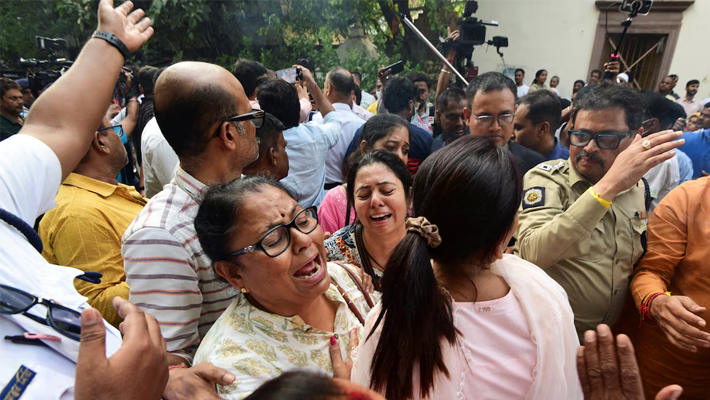
17 killed in stampede at India’s Durga Puja festival
West Bengal’s chief minister Suvendhu Adhikari confirmed a seven-year-old girl was among the people who died in the stampede.
States
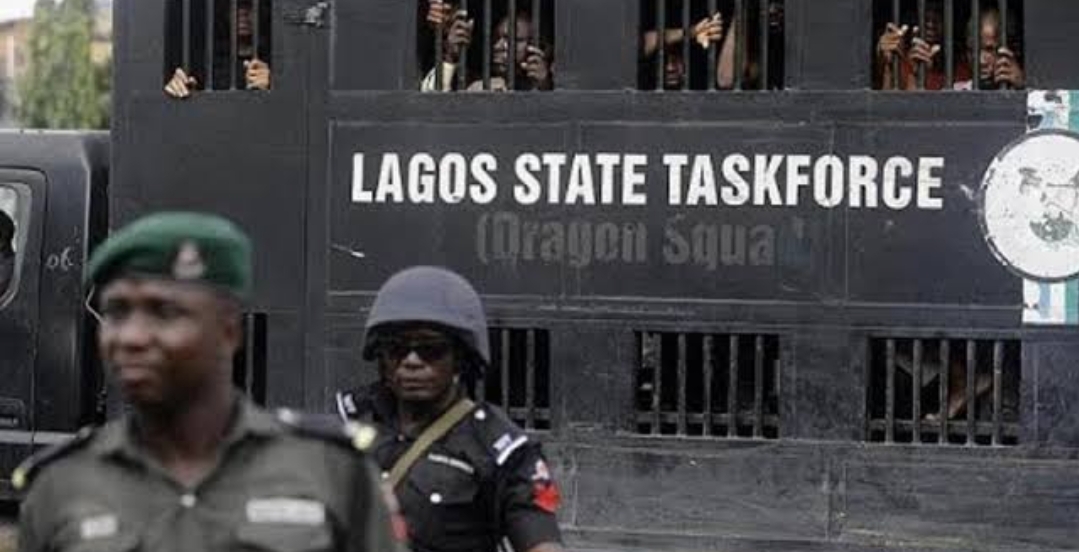
Lagos task force nabs dismissed operative for impersonation, extortion
Mr Akerele said the suspect was detained at Oshodi bus stop after a viral video of his apprehension circulated.
![Fuel queue at NNPC filling station [Credit: ThankGod Sabastine/Peoples Gazette]](https://gazettengr.com/wp-content/uploads/Screenshot_20230320-070535_WhatsAppBusiness.jpg)
Politics
APC woman leader defends Tinubu’s 30-day petrol discount
The women’s leader added that the government had distinguished the initiative from the former subsidy regime.
States
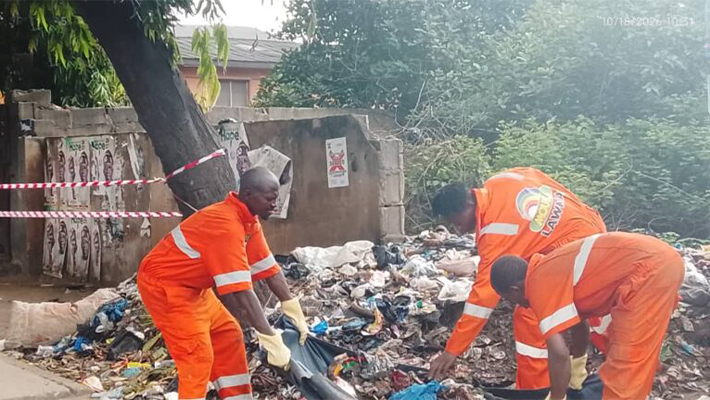
LAWMA deploys 25 trucks to clear waste in Oshodi
Mr Suleiman said the deployment involved 25 trucks, supported by a working floor that could accommodate four at a time.

States
Alleged cultists celebrate at Rivers police outpost they renovated; CP sanctions DPO
The police commissioner has ordered a full investigation to establish the circumstances surrounding the incident.

States
Lagos water network serves only 1.03% of 20 million residents: LWC
Mr Anifowoshe said the corporation had an installed water production capacity of about 210 million gallons per day (MGD).


