

Back story of Tinubu interview

Apart from General Sani Abacha, I have met one-on-one with every Nigerian leader since 1992, from General Ibrahim Babangida. However, I have only participated in one televised live group media chat with former President Olusegun Obasanjo.
If you have met Obasanjo before – whether for an interview or anything else – you might agree that he’s a handful and more. You never know what to expect with Obasanjo, especially when he is in his lair.
I narrowly missed being punched by the former president during an untelevised interview in his library in the Villa in 2004 for asking why his government was letting a political outlaw, Chris Uba, run amok in Anambra. The combined effort of presidential aides, the late Remi Oyo and Prof Julius Ihonbvere, rescued me from Obasanjo’s fury.
Are you OPC?
My experience wasn’t very different during the live presidential media chat. I had asked him why he ordered a shoot-on-sight against members of the militant Yoruba self-determination group Oodua People’s Congress (OPC), which operated mainly in the South-West, Obasanjo’s home base.
He was livid. He warned me, on air, that if I were going to bring the irreverence of my weekly column to the Villa, he would immediately throw me out of the panel. I insisted on an answer, to which he said, “If you’re a member of OPC, tell your people that I mean what I said!”
Three presidents, different styles
Presidents Umaru Musa Yar’Adua, Goodluck Jonathan, and Muhammadu Buhari, whom I also met at different times in different untelevised encounters in the line of duty, were distinct in their peculiar ways.
Yar’Adua spoke a little, measuredly and candidly. Jonathan was gentle, felicitous, and vulnerable without a care in the world. Buhari was taciturn, defensive, and tight-lipped, except when you touched on a raw nerve, mainly around his family or his relationship with Babangida, with whom he has had a fascinating Tom-and-Jerry relationship.
I poked Buhari on this soft spot in an untelevised group interview in 2016. His unusually animated, angry reply inspired a widely publicised story that covered The Interview magazine, entitled ‘Why Babangida removed me from power’.
Road to interview
The Monday televised interview with President Bola Ahmed Tinubu differed in many ways. Multiple sources, including those inside his cabinet, had pressured him to host an interview many times, but he refused, insisting that the time was not right and that there was much to be done.
In October, 17 months into his presidency, there was a nearly interview on the eve of the planned second round of the #EndBadGovernance protest. He cancelled at the last minute for personal reasons.
When I received a message on December 18 that I had been selected for a panel to interview the president, I assumed it would be live. Not that there’s any journalistic rule forbidding a recorded interview. Some of the best interviews I’ve read about or seen, from Oriana Fallaci to Larry King, were recorded. In a more recent example, the CNN interview with President-elect Donald Trump was recorded on November 25 and aired on December 12.
Live or recorded?
However, I hoped the interview with Tinubu would be live – a point I later found was shared by all panel members – because this was the first nearly halfway into his presidency. If eating this toad had taken 19 months, it’s better to eat it big for Nigerians to hear their president engaging them unfiltered.
The choice of live or recorded can sometimes be tricky. Like Ebenezer Obey’s famous story in the song of the journeyman and his donkey, you can’t please everyone. Some want it live because it allows spontaneity and could sometimes be a window into the persona of the interviewee. Others prefer a live interview for traps to catch the interviewee in their unguarded moments, which is why others oppose it.
The panel
We—a panel of seven—comprising Dr Reuben Abati (ARISE TV/ThisDay), Maupe Ogun-Yusuf (Channels TV), Nnamdi Odikpo (NTA), Jide Otitoju (TVC), Umar Farouk Musa (VOA), Ruth Olurounbi (Bloomberg News), and me—wanted to have this interview live and for two hours for the reasons I’ve explained.
That didn’t happen. Hours before the interview, which was postponed from Sunday to Monday because of the tragic deaths from palliative stampedes in different parts of the country, we finally settled for 90 minutes. The questions were entirely ours to decide, and that was what happened.
Some folks have been upset that the interview was not live and, to make matters worse, not a brawl. One gentleman, obviously with a heavy heart, said, “I expected my seniors on the job to rattle the president.” I get that. Another was not even interested in the interview. He aimed at me instead, saying that even though I’m an Igbo man (which I’m not), I did not wear a red cap (which I’ve never worn) because of an “inferiority complex!”
To cut or not?
It’s the nature of recorded interviews—and this one was no exception—that not everything is aired. Twenty questions were prepared, and at least 17 were asked point-blank, excluding unscripted queries and follow-ups.
Among the unaired questions were whether the president considered Nyesom Wike, the minister of the Federal Capital Territory, a political liability and whether direct payments to the local governments were not a derogation of the principle of federalism, which recognises the centre and the states as the fundamental constituent units of the federation.
Questions also arose about #EndSARS and state police and whether the president would request the Code of Conduct Bureau to release his assets, as one or two newspapers requested under the FOIA of 2011.
His answers were fascinating. He described Wike as a performing minister and a very good man. He said it twice, slowly but louder and with a hearty laughter of approval the second time. In response to the Supreme Court’s judgment on local government autonomy, he said, “There are at least two ideological views on that. The thing is that the constitution created the local governments, and there isn’t such a thing as ‘unfunded mandate.’”
Translation: If the law created local governments, it is not unlawful for them to receive their funding directly. That debate continues.
‘I’ll consider’
On state police, he said he didn’t expect any obstacles but expected a negotiated outcome in the country’s best interest. His response to the question on asset declaration was even more fascinating. I remember that in 2012, this question left Jonathan with a media chat black eye. He was asked if he didn’t care about the growing public demand that he should declare his assets. In what was initially thought to be a slip, he said, “I don’t give a damn!” That turned out to be a damn good headline the next day.
Tinubu took a different approach. He said he had done his part by filing his assets as required by the law and would do so again at the point of exit. But when asked if he would ask the CCB to release it since there is currently no law mandating the CCB, despite the FOIA, he said, “I will consider doing so.”
That, I think, is worth holding onto.
Everything couldn’t be covered in a one-hour broadcast, and perhaps one live or recorded interview will hardly satisfy the pent-up hunger to hear the president. But one presidential interview at a time, the gap is closing.
Ishiekwene is the Editor-in-Chief of LEADERSHIP and author of Writing for Media and Monetising It.

We have recently deactivated our website's comment provider in favour of other channels of distribution and commentary. We encourage you to join the conversation on our stories via our Facebook, Twitter and other social media pages.

More from Peoples Gazette

States
Independence: NBA urges Nigerians to expect better future
The NBA said that ordinary Nigerians should be deriving benefit from the subsidy removal rather than hardship.

Agriculture
FG tasks ECOWAS on leveraging financing strategies for agroecology
The federal government has urged stakeholders in the agriculture and finance sectors in the West Africa region to leverage financing strategies to enhance agroecology practices

Politics
Katsina youths pledge to deliver over 2 million votes to Atiku
“Katsina State is Atiku’s political base because it is his second home.”
Heading 5
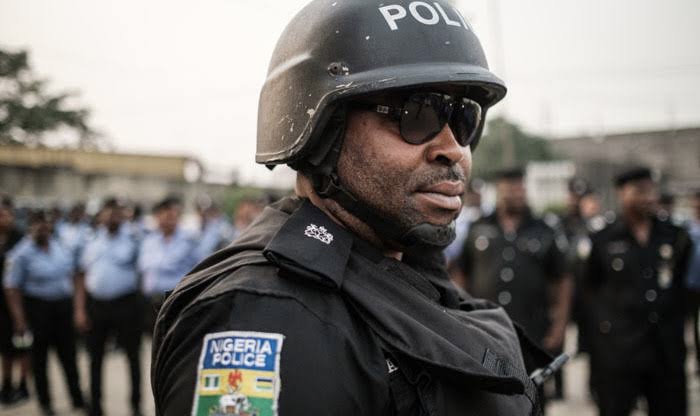
Police warn Nigerians against online scams, urge protection of personal information
Mr Ezima said the fight against cybercrime required more than arrests and prosecutions.
Heading 2
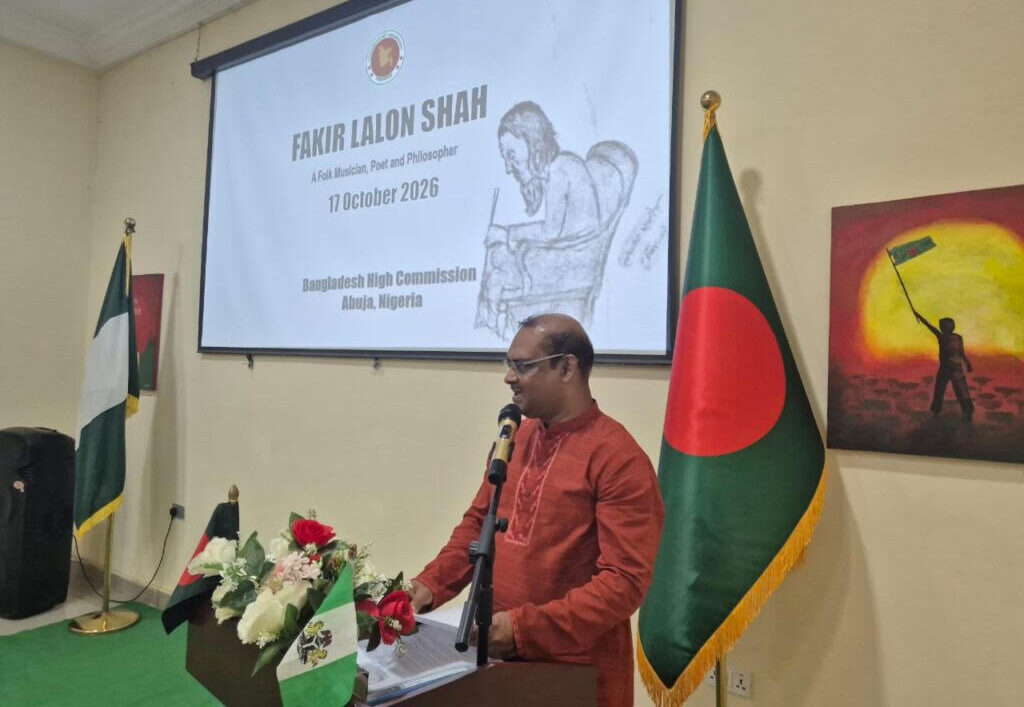
Nigeria, Bangladesh can strengthen cultural ties through music, says envoy
Mr Kabir said Lalon’s emphasis on self-knowledge offered lessons for young people navigating the internet.

NationWide
2027: North will deliver over 70 per cent of votes for Tinubu, Yilwatda says
Mr Yilwatda described the 2027 presidential election as an opportunity to renew Mr Tinubu’s mandate.

Diaspora
Runsewe urges Nigerians in diaspora to respect host countries’ laws
Mr Runsewe said the Netherlands incident was a hangover of Nigerian culture in a foreign land.

Heading 2
Tinubu’s economic reforms yielding results despite doubts: Bagudu
Mr Bagudu described Mr Tinubu as a visionary leader whose decisions demonstrated courage and commitment to national development.
Sport
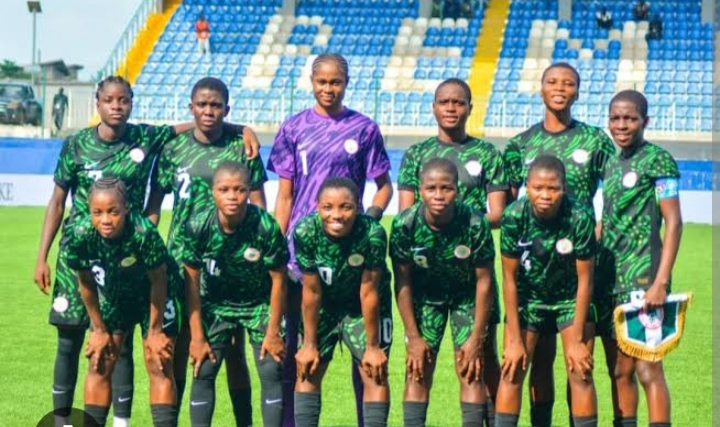
Flamingos lose 2-1 to Poland in FIFA U-17 Women’s World Cup opener
Poland’s Natalia Skrok made it two in the second half when Blanka Zajac, in the 65th minute, crossed into the Nigerian penalty area.


