

Banks’ lending to manufacturers drops by 22.5%

The Manufacturers Association of Nigeria (MAN) has expressed concern over the sharp decline in commercial bank credit to the manufacturing sector.
The manufacturers warned that the trend could undermine industrial growth, job creation and economic diversification.
Director-General of MAN, Segun Ajayi-Kadir, made this known in a statement on Tuesday in Lagos, in response to the 2025 credit allocation data.
According to him, commercial bank credit to manufacturing fell by N1.92 trillion, from N8.53 trillion in December 2024 to N6.61 trillion in December 2025, representing a 22.5 per cent year-on-year contraction.
Mr Ajayi-Kadir described the decline as disturbing, noting that manufacturing recorded one of the steepest credit contractions among major sectors of the economy.
He said the development left manufacturing trailing behind the oil and gas sector, which attracted N10.59 trillion in credit, and the finance sector, which attracted N9.24 trillion.
According to him, the trend reflects a growing preference for speculative and rent-seeking activities over productive sectors that can drive economic growth.
The MAN director-general noted that the contraction stood in sharp contrast to developments in emerging economies such as India and Vietnam, where industrial credit expanded significantly in 2025 to support manufacturing growth.
“Clearly, the Nigerian manufacturing sector cannot thrive without sustainable and growing financial foundations.
“The reduction in credit access could further limit capacity utilisation, stall technological upgrades and hinder job creation,” he said.
Mr Ajayi-Kadir attributed the decline in credit allocation to a combination of high interest rates, bureaucratic bottlenecks and policy inconsistencies.
He also criticised the failure to implement the N1 trillion manufacturing stabilisation fund, which was included in the federal government’s Accelerated Stabilisation and Advancement Plan (ASAP) in 2024.
According to him, manufacturers have waited for two years for the fund, which was designed to cushion the effects of currency depreciation and rising energy costs.
“The delay has left genuine manufacturers to operate in an interest rate environment exceeding 30 per cent without the promised fiscal support.
“As factories continue to scale down operations or exit the market, the gap between policy promises and actual disbursement highlights an implementation deficit that continues to constrain industrial development,” he said.
Mr Ajayi-Kadir identified reduced manufacturing capacity utilisation, stagnation of the sector’s contribution to gross domestic product (GDP), job losses, supply-side inflation and foreign exchange pressures as some of the major consequences of the credit squeeze.
He further warned that inadequate access to affordable financing could undermine the successful implementation of the 2025 Nigeria Industrial Policy (NIP).
“A visionary industrial policy without a functioning credit transmission mechanism will amount to a well-drafted but comatose aspirational policy.
“It is practically impossible to kick-start a manufacturing revolution without actively financing the factories tasked with building it,” he said.
To address the challenge, Mr Ajayi-Kadir called for a reduction in benchmark interest rates by 200 to 300 basis points over the next two quarters to improve the affordability of credit for manufacturers.
He also urged the government to provide incentives for banks that channel a significant share of their lending portfolios to manufacturing at single-digit interest rates.
He further recommended increasing the capital base of the Bank of Industry (BOI), expanding its intervention funds, operationalising a 50 per cent government-backed loan guarantee scheme for small- and medium-scale manufacturers, and immediately releasing the N1 trillion Manufacturing Stabilisation Fund.
Mr Ajayi-Kadir also advocated transferring the management of the fund to the BOI with a nine per cent interest rate cap and a seven-day processing timeline for qualified manufacturers.
He urged the government to conduct an urgent audit of the manufacturing sector to assess the impact of recent economic reforms and demonstrate its commitment to economic diversification through accessible and affordable financing.
“Until policy promises are translated into accessible capital through transparent and effective channels, Nigeria’s ambition of becoming a competitive manufacturing powerhouse will remain stalled,” he said.
(NAN)

We have recently deactivated our website's comment provider in favour of other channels of distribution and commentary. We encourage you to join the conversation on our stories via our Facebook, Twitter and other social media pages.

More from Peoples Gazette

States
Independence: NBA urges Nigerians to expect better future
The NBA said that ordinary Nigerians should be deriving benefit from the subsidy removal rather than hardship.

Agriculture
FG tasks ECOWAS on leveraging financing strategies for agroecology
The federal government has urged stakeholders in the agriculture and finance sectors in the West Africa region to leverage financing strategies to enhance agroecology practices

Politics
Katsina youths pledge to deliver over 2 million votes to Atiku
“Katsina State is Atiku’s political base because it is his second home.”
Education
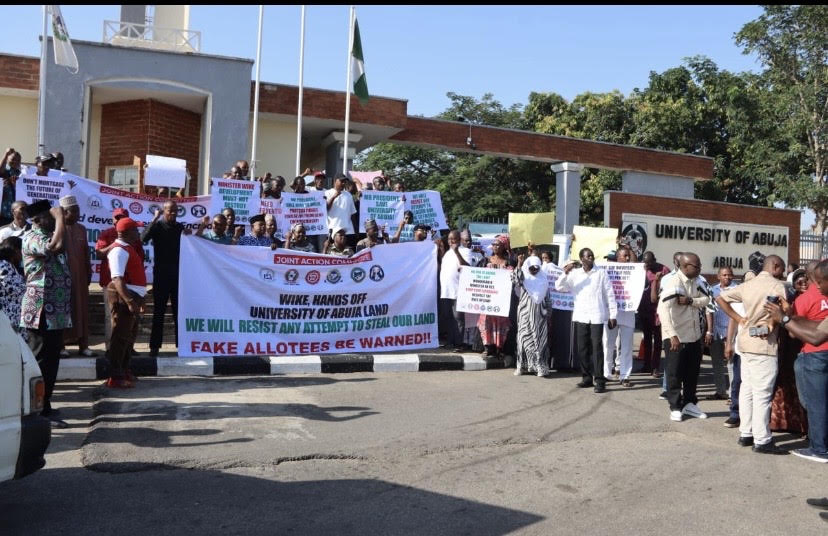
ASUU defends UNIABUJA over land grab by Wike
Speaking on Monday in Abuja, Mr Ugoh said that, according to NUC recommendations, many universities have more hectares of land than UniAbuja.
Africa
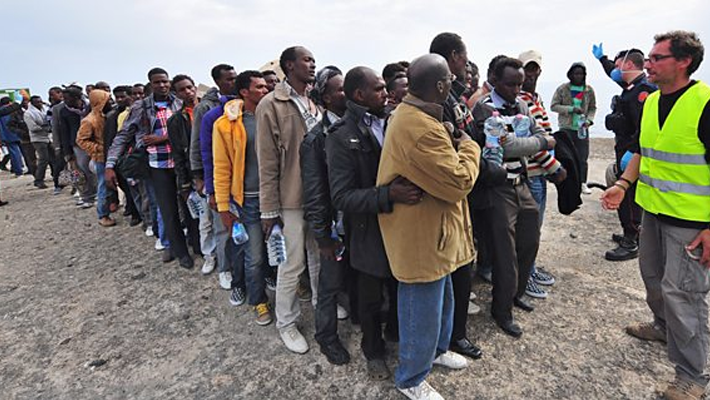
Five European countries plan to deport rejected asylum seekers to Rwanda
Five European countries have announced a partnership with Rwanda to establish deportation centres there in 2027 specifically for rejected asylum seekers.
Lagos
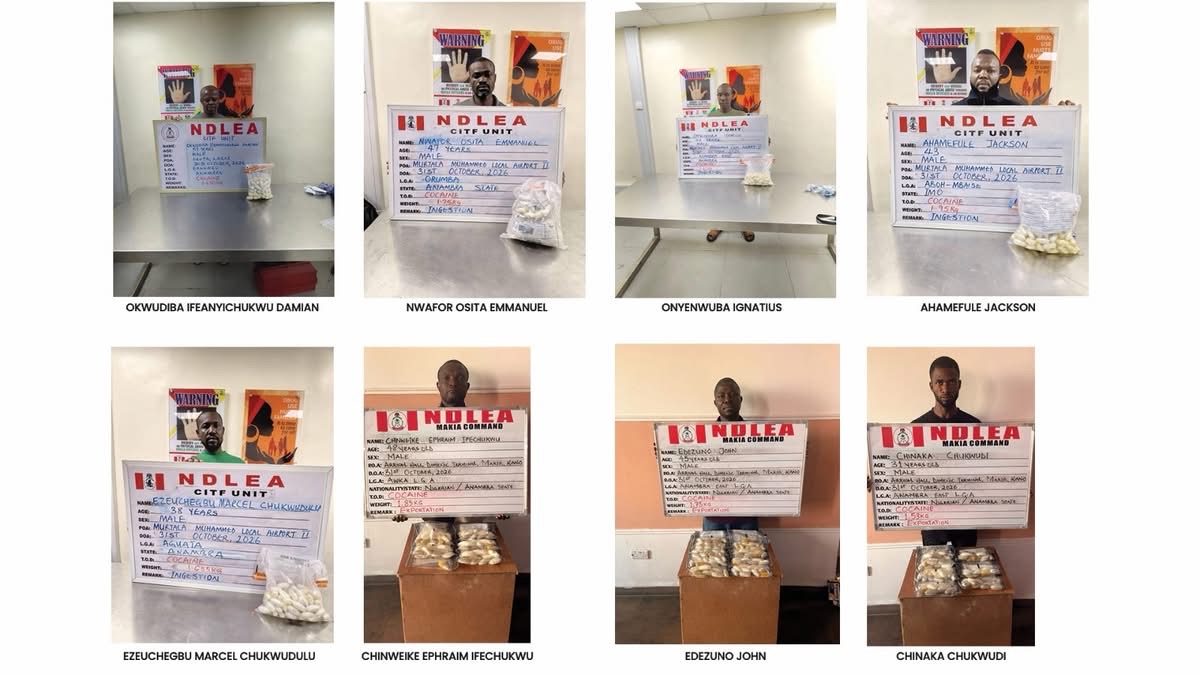
NDLEA busts Lagos, Kano alleged cocaine traffickers
The suspects said they planned to travel by road from Kano through Niger Republic to Libya, with Europe as the final destination for the drugs.

Education
Five South African students killed in road crash
Five South African students have been killed in an automobile crash. The government disclosed their deaths in a statement on Tuesday.

Africa
South Africa re-elected to ITU council
South Africa has been re-elected to the International Telecommunication Union council for a four-year term from 2027 to 2030.

NationWide
Nigeria makes NIN verification mandatory for domestic flights
The government threatened to ban domestic airlines from flying passengers without mandatory NIN verification, effective January 1, 2027.


