

Billions of chickens suffering in fast-food supply chains: Report
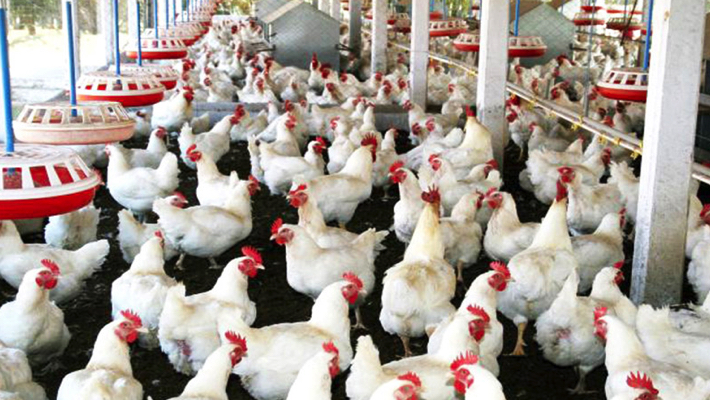
Billions of chickens are suffering needlessly in the fast-food supply chain, according to a new World Animal Protection report.
The Pecking Order report, which was made available to Peoples Gazette on Tuesday, detailed that the majority of food industry companies were failing to implement meaningful changes to improve the welfare of chickens in their supply chain.
“The Pecking Order Report released by World Animal protection earlier today has revealed that majority of companies in the food industry are failing to implement meaningful changes to improve the welfare of chickens in their supply chains,” the report partly read.
According to the report, companies’ inaction threatens not only animal welfare but also human health because the overuse of antibiotics in farming has led to an outbreak of deadly superbugs.
Speaking about the development, Victor Yamo, Farming Campaigns Manager at World Animal Protection, stated that companies must be held accountable for animal welfare protection.
“The Pecking Order is committed to shining a light on the chicken meat industry and encouraging companies to improve their animal welfare policies. While progress has been made by some companies, others must be held accountable for their shameful lack of consideration of animal welfare,” Mr Yamo said.
The report detailed that most of the local companies assessed were performing poorly and very poor in their approaches to broiler chicken welfare in their supply chains and they lacked any animal welfare policies or commitments.
Additionally, it was discovered that Carrefour, a major supermarket chain in Kenya, came in second with an overall score of 17 per cent and that Kenchic, a popular fast-food chain in the country, was the company leading broiler chicken welfare with a percentage of 42 per cent.
According to the report, billions of chickens suffer from chronic pain, skin lesions, and even heart failure every year as a result of selective breeding and their crowded living conditions, which provide little environmental enrichment.

We have recently deactivated our website's comment provider in favour of other channels of distribution and commentary. We encourage you to join the conversation on our stories via our Facebook, Twitter and other social media pages.

More from Peoples Gazette

States
Independence: NBA urges Nigerians to expect better future
The NBA said that ordinary Nigerians should be deriving benefit from the subsidy removal rather than hardship.

Agriculture
FG tasks ECOWAS on leveraging financing strategies for agroecology
The federal government has urged stakeholders in the agriculture and finance sectors in the West Africa region to leverage financing strategies to enhance agroecology practices

Politics
Katsina youths pledge to deliver over 2 million votes to Atiku
“Katsina State is Atiku’s political base because it is his second home.”

States
CDHR advises activists against selective rights advocacy
Mr Ogundipe called for evidence-based advocacy, accountability and stronger institutions.

Hot news Home top
Trump overrules Hegseth, cancels live-streaming of terrorist Nidal Hasan’s execution
Mr Trump stated, “The execution may be viewed in person by the immediate families of the victims, if they so choose. They deserve to witness JUSTICE!”

NationWide
FG plans 80% practical, 20% theoretical curriculum in tertiary institutions
The minister commended TETFund for its contributions to human capital development

States
Kwara doctors begin seven-day warning strike over salary structure, insurance deductions
The CMD expressed confidence in the state government’s commitment to workers’ welfare.

NationWide
FG confident raw materials summit will showcase Africa’s natural endowments
Mr Ike- Muonso said the summit would highlight Nigeria’s growing role as a hub for innovation-driven resource utilisation.
States
Suspect nabbed with 400 wraps of Indian hemp in Kogi
Ms Saliu said the suspect’s vehicle was intercepted by the police during a stop-and-search operation.


