

Nigeria targets local production of cancer equipment by 2030

Nigeria is targeting technology transfer and local production of radiotherapy and imaging equipment by 2030 to strengthen cancer care, the Minister of State for Health and Social Welfare, Iziaq Salako, has said.
Mr Salako said in a statement on Saturday after the Link Global Summit on Innovation and Practice in Oncology in Beijing, China, that Nigeria is seeking stronger partnerships to translate oncology innovations into practical solutions that can reach more patients.
“Looking to 2030, our ambitions are larger. We want technology transfer, and the local assembly and servicing of radiotherapy and imaging equipment in Nigeria,” Mr Salako said.
He said the federal government’s zero-duty and zero-VAT incentives for health manufacturing would support efforts to build domestic capacity.
Mr Salako called for joint clinical trials and registry-linked research to better understand cancer phenotypes affecting African populations.
He said Nigeria also wanted Artificial Intelligence-assisted treatment planning, adaptive radiotherapy and tele-oncology links between Chinese and Nigerian cancer centres.
The minister stressed that technology introduced into Nigeria must come with training and maintenance systems to ensure sustainable use and improved patient outcomes.
“Machines without people are monuments,” Mr Salako said, stressing the need for trained personnel, in-country servicing and spare-parts arrangements.
He said Nigeria wanted its cancer centres of excellence, the National Institute for Cancer Research and Treatment (NICRAT), and tertiary hospitals twinned with Chinese cancer hospitals.
Mr Salako said the Radiotherapy Working Group of the China-Africa Hospital Alliance should establish a clinical training base in Nigeria to serve as a West African hub for advanced radiotherapy training.
He said the base would also create a fellowship pipeline with Chinese institutions for radiation oncologists, medical physicists, radiotherapy technologists and biomedical engineers.
Mr Salako said Nigeria’s partnership with China also covered radiotherapy technical support, joint research and development and structured academic exchanges.
“The Memorandum of Understanding we sign today commits to radiotherapy technical support, joint research and development, to structured China-Nigeria academic exchange, and to helping Nigeria establish the professional bodies that will govern radiotherapy practice for a generation.
“Nigeria seeks key strategic outcomes in the months ahead: a joint work plan with named focal persons and quarterly milestones, so that this Memorandum lives beyond the signatures,” he said.
He said Nigeria’s cancer-control ambitions were anchored in the Nigeria National Cancer Control Plan 2026–2030, which prioritised prevention, decentralised diagnostics, radiotherapy and other treatment options across the geopolitical zones.
He said the government was also strengthening financial risk protection, developing the oncology workforce and building national clinical trial and cancer registry ecosystems.
Mr Salako said Nigeria aimed to build capacity to install, service and eventually produce cancer technologies, positioning the country as a contributor to global cancer care.
He said Nigeria recorded an estimated 127,763 new cancer cases and 79,542 deaths in 2022, but its mortality-to-incidence ratio improved from 62.3 per cent in 2022 to 59.6 per cent in 2024.
On treatment access, the minister said the National Cancer Access Programme, Catastrophic Health Insurance Scheme and National Cancer Health Fund were supporting essential cancer care.
He added that the Social Determinants of Cancer Care Fund was helping to improve affordability and reduce financial uncertainty for patients and families.
Mr Salako said NICRAT was also strengthening cancer research by training about 140 early-career scientists and funding 24 research grants.
He said partnerships developed through the summit should produce measurable improvements in cancer prevention, diagnosis and treatment across Nigeria and Africa.
“Innovation in oncology is meaningful only where it reaches the patient,” he said.
Mr Salako said bringing together governments, clinicians, researchers, industry, development partners and patient advocates could accelerate solutions to cancer challenges.
“Our ambition is simple: prevent more cancers, detect them earlier, expand access to quality treatment, reduce financial hardship and save more lives,” he said.
The summit provided a platform for stakeholders to exchange evidence, promote innovation and strengthen international partnerships to improve cancer outcomes across Africa and globally.
(NAN)

We have recently deactivated our website's comment provider in favour of other channels of distribution and commentary. We encourage you to join the conversation on our stories via our Facebook, Twitter and other social media pages.

More from Peoples Gazette

States
Independence: NBA urges Nigerians to expect better future
The NBA said that ordinary Nigerians should be deriving benefit from the subsidy removal rather than hardship.

Agriculture
FG tasks ECOWAS on leveraging financing strategies for agroecology
The federal government has urged stakeholders in the agriculture and finance sectors in the West Africa region to leverage financing strategies to enhance agroecology practices

Politics
Katsina youths pledge to deliver over 2 million votes to Atiku
“Katsina State is Atiku’s political base because it is his second home.”
States
Anambra: Police arrest 13 suspects, recover firearms, drugs
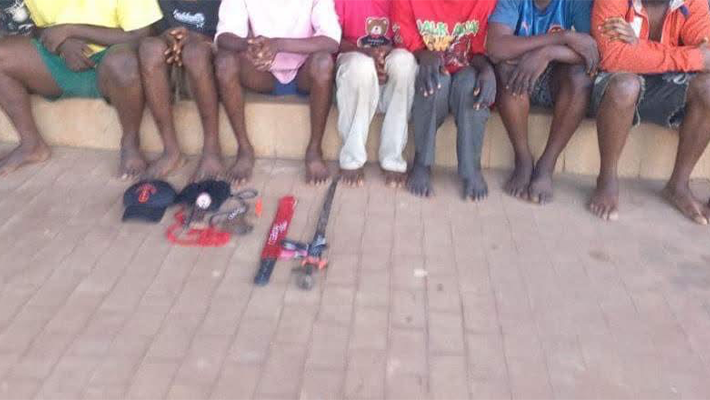
The police command in Anambra has arrested 13 suspects in separate operations and recovered firearms, ammunition, charms, and cult-related insignias.
World
Türkiye commiserates with Nigeria over 25 officers killed in plane crash
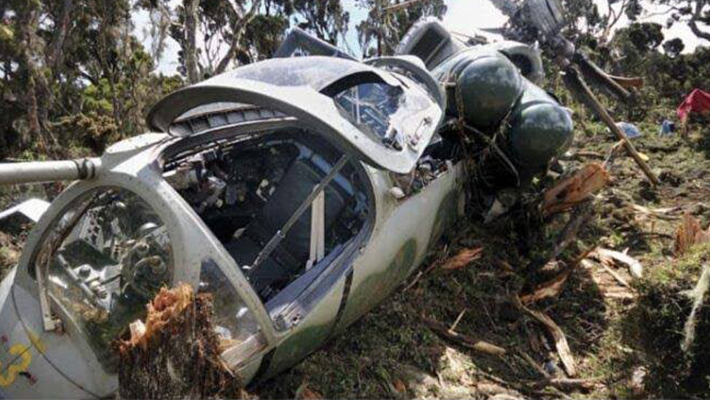
The government of Türkiye has condoled with Nigeria over the aircraft crash in Ondo, which killed 25 military men.

Africa
Tanzanian president urges parliamentary accountability
President Samia Hassan has called for greater parliamentary accountability and international cooperation to address global challenges.
States
DisCos installed 350,270 meters in Q2, says NERC
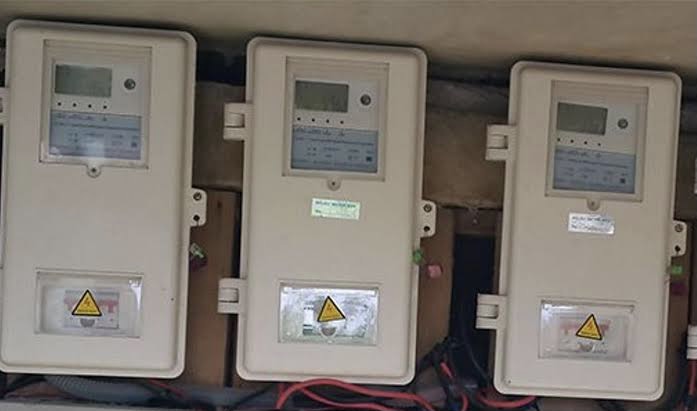
The Nigerian Electricity Regulatory Commission (NERC) on Tuesday said that electricity distribution companies (DisCos) installed 350,270 meters in the second quarter of 2026.

World
Pastor Caleb Flynn gets life sentence for murdering wife to marry church member Alleigha Botner
Caleb Flynn, a former music pastor and American Idol contestant, has been sentenced to life imprisonment without the possibility of parole for murdering his wife, Ashley Flynn.
Education
20,000 teachers get N50,000 wardrobe allowance each in Akwa Ibom
Governor Umo Eno has approved a N50,000 wardrobe allowance for each of the 20,000 teachers employed by the Akwa Ibom government.


