

Borrowing: Experts task Tinubu on moderation amid Nigeria’s rising debt

Some economic experts have urged President Bola Tinubu’s government to moderate borrowing to check the country’s debt profile.
The experts spoke in an interview with journalists on Sunday in Abuja against the backdrop of the recent approval of a fresh external borrowing plan of over $21 billion for the 2025–2026 fiscal cycle by the Nigerian Senate.
According to Ken Ife, a development economist, there is nothing wrong with borrowing, but the question is, where do we employ this borrowing?
“Where do we put the money? How do we use the money that we borrow? That’s one question that we have not answered.
“It means the borrowing is for consumption, and because it is for consumption, nothing has been produced,” he said.
Mr Ife, a lead consultant on Private Sector Development to the ECOWAS Commission, urged the federal government to strictly implement the fiscal responsibility law, which stipulates that government borrowing should be for development.
“Also, the law wants cost-benefit analysis; it also anticipates that when you are going to build infrastructure, you should be considering economic corridors.
” You should be considering industrial corridors, commercial corridors, residential corridors, so that infrastructure is going to be fully utilised,” he said.
A financial expert, Uche Uwaleke, who also spoke to journalists, said the country’s rising debt directly resulted from low domestic resource mobilisation.
Mr Uwaleke is the director of the Institute of Capital Market Studies, Nasarawa State University, Keffi.
According to him, the weak structure of the economy, which unduly relies on revenues tied to the vagaries of the international crude oil market, is also responsible for the debt profile.
He said a growing debt profile may be justified by the huge infrastructure gap in Nigeria.
“The implication is huge opportunity cost considering the fact that critical sectors requiring attention, such as education and health, are starved of funds,” he said.
According to him, the Fiscal Responsibility Act 2007 spells out that government borrowing must be long-term, concessional, and applied to capital projects and human capital development.
He said that tying government loans to self-liquidating projects ensured sustainability.
“Regrettably, the FRA 2007 has no enforcement provisions. It needs to be amended to make it difficult for any tier of government to borrow for purposes outside of the ones stipulated,” he said.
A former president of the Chartered Institute of Bankers of Nigeria (CIBN), Okechukwu Unegbu, said the country’s debt profile was embarrassing.
Mr Unegbu also called for fiscal prudence and effective deployment of earned revenue to reduce the dependence on borrowing.
Nigeria’s total debt reached N149.39 trillion in the first quarter of 2025, according to the Debt Management Office (DMO).
This represents a year-on-year increase of N27.72 trillion or 22.8 per cent compared to the same period in 2024.
The increase is partly attributed to new borrowings by the federal government and the depreciation of the Naira, which impacts the local currency value of external loans.
Government debt represents the total amount of money that the federal government, the 36 state governments and the Federal Capital Territory (FCT) are obligated to repay their lenders, both within the country and internationally.
Nigeria’s debt has intensified to concerning heights, with forecasts suggesting that the nation’s overall debt could reach N187.79 trillion by the end of 2025.
This scenario has arisen from a complex combination of factors, including extensive borrowing practices, currency devaluation, and inadequate financial governance.
(NAN)

We have recently deactivated our website's comment provider in favour of other channels of distribution and commentary. We encourage you to join the conversation on our stories via our Facebook, Twitter and other social media pages.

More from Peoples Gazette

Agriculture
FG tasks ECOWAS on leveraging financing strategies for agroecology
The federal government has urged stakeholders in the agriculture and finance sectors in the West Africa region to leverage financing strategies to enhance agroecology practices

Politics
Katsina youths pledge to deliver over 2 million votes to Atiku
“Katsina State is Atiku’s political base because it is his second home.”
Heading 3
FG urges South-South cooperatives to invest in proposed bank, digital platforms
The minister explained that the digital platform would improve transparency.
Heading 5
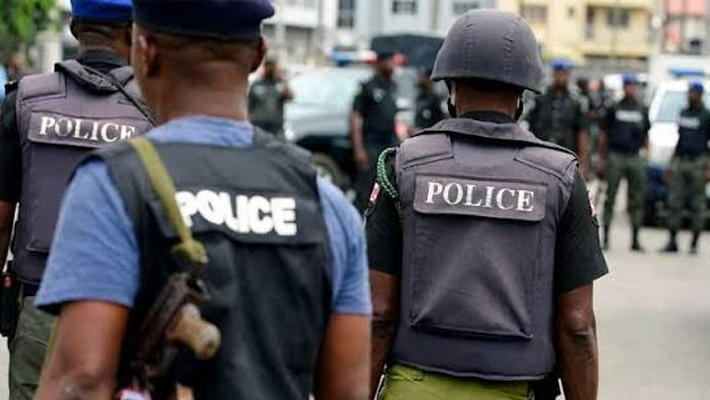
Police nab suspected robber in Lagos
Lagos police boss commended the operatives for their vigilance and professionalism.
Lagos
Lagos flags off skills training for youths in Agege
He said the programme covered youths aged 14 to 30 years.

Faith
Shettima lauds NAHCON, stakeholders for successful 2026 Hajj exercise
He said the performance recorded during the 2026 Hajj exercise should serve as the benchmark for future operations.

Hot news Home top
Half of England in drought amid heatwaves, low rainfall
The agency said some parts of Devon had gone 50 days without rain.
NationWide
Shettima tasks regional development commissions on innovation, integrity
Mr Shettima noted that the Renewed Hope Agenda was about translating policy into tangible improvements.


