

CBN cuts interest rate to 23%, cites easing inflation, stronger reserves
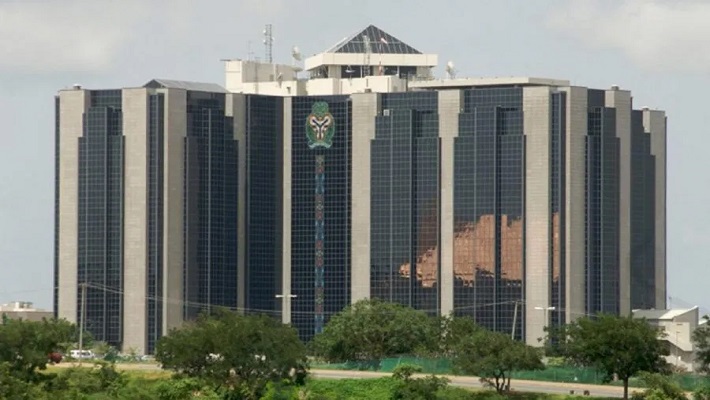
The Central Bank of Nigeria (CBN) has cut its benchmark interest rate to 23 per cent from 26.5 per cent, as inflation continues to ease and economic growth improves.
The decision represents a 350 basis points cut in the Monetary Policy Rate (MPR), the benchmark used by the central bank to influence interest rates and credit conditions in the economy.
CBN Governor Olayemi Cardoso announced the decision on Tuesday at the end of the two-day meeting of the Monetary Policy Committee (MPC).
“The Committee decided as follows: reset the Monetary Policy Rate to 23 per cent,” Mr Cardoso said.
The committee also recalibrated the standing facilities corridor to +50/-300 basis points around the MPR.
It retained the Cash Reserve Requirement (CRR) for deposit money banks at 45 per cent, merchant banks at 16 per cent and non-TSA public sector deposits at 75 per cent.
The CRR is the proportion of customers’ deposits that banks are required to keep with the central bank and cannot lend out.
Why CBN adjusted the rate
Mr Cardoso said the decision was intended to improve the transmission of monetary policy and strengthen the MPR’s role as the main signal for interest rates in the economy.
He said the committee had observed a growing gap between the MPR and prevailing market rates, which had weakened the effectiveness of the monetary policy.
The governor, however, stressed that the adjustment should not be interpreted simply as a change in the bank’s underlying monetary policy stance.
“The MPC emphasised that the recalibration of the corridor does not constitute a change in the current monetary policy stance, but rather an operational reset to enhance the effectiveness of monetary policy and support the transition to an inflation-targeting framework,” he said.
The decision comes as inflation slowed for the third consecutive month, and some other key economic indicators have improved.
Nigeria’s headline inflation fell marginally to 15.39 per cent in August from 15.43 per cent in July, according to the National Bureau of Statistics (NBS).
The rate had fallen from 15.93 per cent in May to 15.91 per cent in June before falling further in July and August.
Food inflation, which remains particularly important for households, fell to 19.57 per cent in August from 20.31 per cent in July.
Core inflation, which excludes volatile agricultural produce and energy prices, also declined to 13.29 per cent from 14.97 per cent.
Despite the slowdown in inflation, prices of items are still rising.
Stronger growth
The MPC also cited stronger economic growth, improved external reserves and developments in Nigeria’s external sector in explaining the decision.
Nigeria’s economy grew by 4.43 per cent in real terms in the second quarter of 2026, compared with 4.23 per cent in the corresponding period of 2025, according to the NBS.
Agriculture and services recorded stronger growth during the period, while Nigeria’s average daily crude oil production increased to 1.72 million barrels per day from 1.55 million barrels per day in the first quarter.
Mr Cardoso said the MPC also noted improvements in Nigeria’s external position.
According to him, the country’s balance of payments surplus increased to $3.51 billion in the second quarter of 2026 from $2.38 billion in the first quarter.
He said the current account surplus also increased by 67.92 per cent to $7.54 billion from $4.49 billion during the same period.
Gross external reserves stood at $55.25 billion as of 18 September, according to the governor, enough to cover approximately 11.3 months of imports of goods and services.

We have recently deactivated our website's comment provider in favour of other channels of distribution and commentary. We encourage you to join the conversation on our stories via our Facebook, Twitter and other social media pages.

More from Peoples Gazette

States
Independence: NBA urges Nigerians to expect better future
The NBA said that ordinary Nigerians should be deriving benefit from the subsidy removal rather than hardship.

Agriculture
FG tasks ECOWAS on leveraging financing strategies for agroecology
The federal government has urged stakeholders in the agriculture and finance sectors in the West Africa region to leverage financing strategies to enhance agroecology practices

Politics
Katsina youths pledge to deliver over 2 million votes to Atiku
“Katsina State is Atiku’s political base because it is his second home.”

Hot news Home top
WHO hails Nigeria as 62 contacts test negative for Ebola after 21-day isolation
Mr Ghebreyesus said Nigeria had entered the second half of the mandatory 42-day countdown.

Diaspora
20 Nigerians arrested in Pakistan over alleged drug trafficking
According to the ANF, the arrests followed a series of intelligence-gathering operations targeting drug dealers in the country.
Heading 3
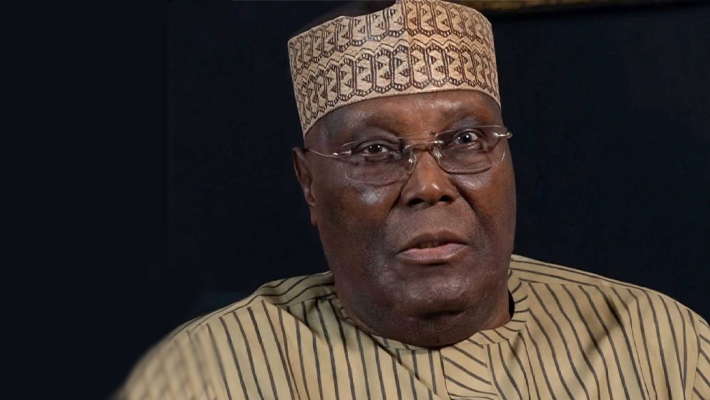
Living in Nigeria under Tinubu unbearable; cooking gas unaffordable: Atiku
Mr Abubakar said he was in Bauchi to continue preaching his affordable life campaign.

Politics
2027: Osun APC stages campaign walk for Tinubu’s re-election
Mr Oyebamiji said the APC was targeting 1.7 million votes for the president in Osun.

States
Gov Bago directs provision, repair of transformers across Chanchaga communities
The chairman said Mr Bago was concerned about the impact of prolonged power outages on households and businesses.

World
COP31 must turn climate-finance promises into actual funding, says UN chief
Mr Stiell said many developing countries remained trapped in a cycle of debt, climate disasters and high borrowing costs.


