

CBN flags election spending, vows to mop up excess liquidity ahead of 2027
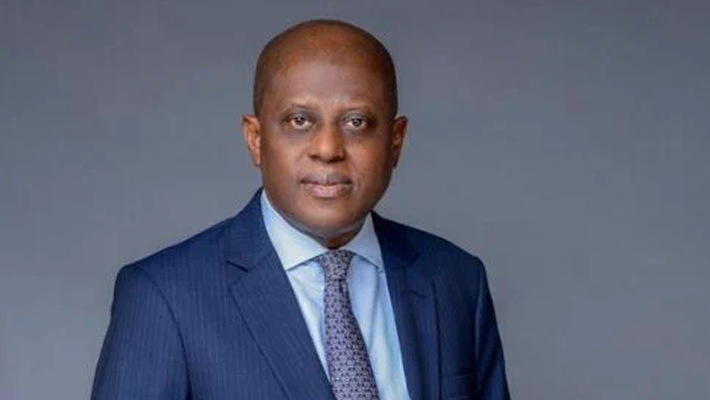
The Central Bank of Nigeria (CBN) has said it will move swiftly to withdraw excess liquidity from the financial system if increased spending ahead of the 2027 general elections threatens inflation, weakens the naira or undermines recent economic gains.
The CBN Governor, Olayemi Cardoso, said this on Tuesday while responding to questions from journalists after the Monetary Policy Committee (MPC) meeting.
Mr Cardoso said the bank had studied how Nigeria’s financial system behaves during election periods and developed different models to prepare for possible increases in cash circulation, banking system liquidity and foreign exchange demand.
“We have done a lot of analysis. We have simulated different scenarios. We have looked at different models and debated things at great length. So, we are ready,” he said.
The governor said the CBN would rely on economic data rather than assumptions about how election-related spending might affect the economy.
“We will carefully monitor currency in circulation, banking system liquidity, monetary aggregates, foreign exchange demand, and act accordingly,” he said.
This comes as political activities intensify ahead of the 2027 general elections, with parties, candidates and political groups expected to spend more on campaigns, mobilisation, logistics and other election-related activities.
Election periods in Nigeria are often associated with increased government and political spending. A sharp, unexplained rise in money circulating outside the banking system could add to inflationary pressure, increase demand for foreign exchange, and weaken the effect of the CBN’s monetary policy decisions.
The CBN on Tuesday reduced its Monetary Policy Rate by 350 basis points, from 26.5 per cent to 23 per cent, its biggest interest rate cut in recent times.
The decision is expected to ease borrowing costs and support economic growth after a long period of high interest rates.
Despite the rate cut, Mr Cardoso said the central bank would not hesitate to use other monetary policy instruments to prevent excess cash from destabilising the economy.
“We will proactively deploy any tools and instruments necessary to mop up excess liquidity. We are going to be proactive. We will not allow ourselves to be caught unawares in any form,” he said.
Warning against currency abuse
Mr Cardoso also warned that the availability of banknotes during the election period should not be interpreted as permission to misuse the naira or breach existing cash transaction limits.
“As for currency being available, it is available. It is available. We have worked hard and long enough to ensure that currency will be available.
“Currency abuse will not be permitted. We will intensify our vigilance in that respect and work collaboratively with law-enforcement agencies,” he said.
He said the CBN would continue to encourage electronic payments because digital transactions are more transparent and leave traceable records.
“Of course, electronic payments improve transparency, and we will encourage people to use them because they leave a trail,” he said.
Mr Cardoso added that the CBN would enforce existing limits on cash transactions and would not overlook violations during the election period.
“If people expect that we will look the other way regarding those limits, we will not. We are not going to,” he said.
CBN, finance ministry to coordinate policies
Mr Cardoso said the recently signed memorandum of understanding between the CBN and the Federal Ministry of Finance would strengthen the government’s response to the economic pressures that may arise during the election cycle.
The agreement provides for closer cooperation on government cash management, borrowing, debt issuance, liquidity forecasting, foreign exchange flows, and inflation management.
According to the governor, managing election-related liquidity is no longer a responsibility that either the fiscal or monetary authorities can handle alone.
“It is no longer a question of, ‘Oh, it is your problem.’ No. It is a problem for both of us,” he said.
Mr Cardoso said increased spending during the election period would not reverse the progress recorded in inflation management and foreign exchange stability.
“I worry less about it, and I am confident that we will be able to manage the volume of money expected to be in circulation during that period so that it does not destabilise any of the hard work that has been done,” he said.
Return to global indices
The CBN governor also said Nigeria’s return to major global market indices would attract more foreign investment, strengthen foreign exchange liquidity and deepen the country’s capital market.
FTSE Russell recently reclassified Nigeria from an unclassified market to a frontier market. The global index provider said foreign investors no longer experienced significant delays in repatriating capital or completing foreign exchange transactions.
Mr Cardoso said large international fund managers often rely on global indices to decide where to invest.
He said investors in emerging markets such as Nigeria are largely guided by economic fundamentals and returns rather than sentiment.
He said endorsements from institutions such as FTSE Russell and JPMorgan would give international investors greater confidence in Nigeria.
“Now that they have FTSE Russell and JPMorgan giving the thumbs-up and saying this is a good place to invest, I do not want to say they will rush, but I do not think they will be slow in coming here either,” he said.
The governor said the expected inflows would improve liquidity in the foreign exchange market, strengthen Nigeria’s external position and help the CBN’s monetary policy decisions pass more effectively through the financial system.
He said he foresees Nigeria’s capital markets deepening and, in turn, making monetary policy transmission work better.
He said he expects Nigeria’s capital markets to deepen over time, which would also improve monetary policy transmission.

We have recently deactivated our website's comment provider in favour of other channels of distribution and commentary. We encourage you to join the conversation on our stories via our Facebook, Twitter and other social media pages.

More from Peoples Gazette

States
Independence: NBA urges Nigerians to expect better future
The NBA said that ordinary Nigerians should be deriving benefit from the subsidy removal rather than hardship.

Agriculture
FG tasks ECOWAS on leveraging financing strategies for agroecology
The federal government has urged stakeholders in the agriculture and finance sectors in the West Africa region to leverage financing strategies to enhance agroecology practices

Politics
Katsina youths pledge to deliver over 2 million votes to Atiku
“Katsina State is Atiku’s political base because it is his second home.”

Health
FG partners international organisations to combat hunger, child malnutrition nationwide
Mr Pate emphasised the federal government’s commitment to addressing both acute and chronic malnutrition.
NationWide
How did Tinubu graduate before government college Lagos existed? Phrank Shaibu asks Shettima
While Shettima debates school records, families are skipping meals, workers cannot afford the journey to work and his government calls their suffering reform.

Economy
GDP growth, lower inflation figures not enough to improve Nigerians’ lives: NESG
Mr Yusuf said reforms must deliver decent jobs, greater purchasing power, improved security and reduced poverty for households.
States
Police launch investigation into shooting of two corporals in Kogi
The two police officers were said to be involved in shootings that led to their deaths.

NationWide
Nigeria may declare Ebola outbreak over by December 7: FG
The Ebola patient in Nigeria and her husband were flown to Switzerland on Monday.
NationWide
National Assembly has strengthened democracy since 1999: Nwawuba
Mr Nwawuba said the National Assembly has contributed to economic and security developments.


