

Chinese researchers pioneer flexible chip design for next-generation wearables
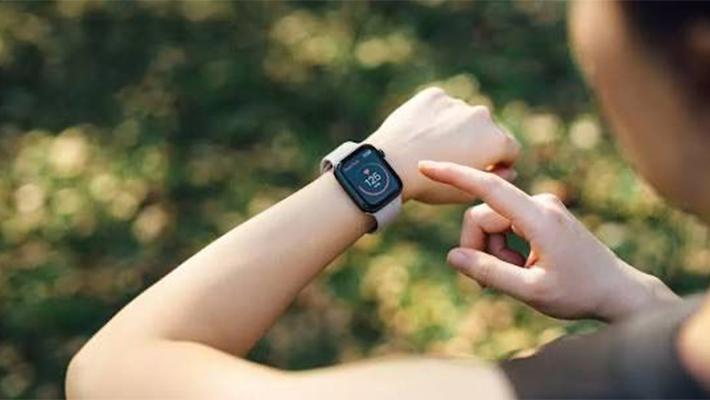
Chinese researchers unveiled a new flexible chip on Tuesday that could drive the next wave of innovation in wearable technology.
The breakthrough, detailed in a study published in the journal Nature, aims to enable more efficient, powerful computing directly on the body, such as on the skin.
It can also be integrated into fabrics, reducing reliance on distant data centres.
Most current wearables rely on rigid chips, which can be uncomfortable and limit functionality.
While flexible electronics exist, they often lack the processing power for tasks like real-time health tracking, forcing devices to send data to the cloud, a slow and energy-intensive process.
To overcome this, a research team from Tsinghua University created the FLEXI series of chips.
One of their key advantages lies in a “compute-in-memory” design that allows calculations to run in memory itself.
This approach will reduce energy use and boost speed, making it ideal for small, battery-powered wearable devices.
Developed using a low-temperature process on flexible plastic, FLEXI chips are thin, light, and cost less than $1 each.
They are also highly durable, withstanding more than 40,000 bending cycles while maintaining stable performance for over six months.
The chips achieve a clock frequency of up to 12.5 megahertz and a power consumption of just 2.52 milliwatts, according to the study.
In a real-world test, the team used a FLEXI chip to run a neural network that analysed heart rate, breathing, temperature, and skin moisture.
It identified daily activities with 97.4 per cent accuracy, demonstrating standalone health monitoring without phones or the cloud.
“Our FLEXI platform merges high performance, ultra-low power, and strong durability. It opens the door to a new class of wearable devices that are comfortable, long-lasting, and smart enough to process data on the spot,” said Ren Tianlin, a professor from Tsinghua University.
These advances lay a solid hardware foundation for the future of edge AI, paving the way for smarter, more autonomous devices in healthcare, smart clothing, and the Internet of Things, Ren added.
(Xinhua/NAN)

We have recently deactivated our website's comment provider in favour of other channels of distribution and commentary. We encourage you to join the conversation on our stories via our Facebook, Twitter and other social media pages.

More from Peoples Gazette

Agriculture
FG tasks ECOWAS on leveraging financing strategies for agroecology
The federal government has urged stakeholders in the agriculture and finance sectors in the West Africa region to leverage financing strategies to enhance agroecology practices

Politics
Katsina youths pledge to deliver over 2 million votes to Atiku
“Katsina State is Atiku’s political base because it is his second home.”

Abuja
Landlord in court for allegedly removing tenant’s apartment doors, windows
The defendant pleaded not guilty to the charge.

States
Ekiti man arraigned over alleged theft of sports kits worth N80,000
The prosecutor said the offences contravened Sections 302 and 181(1)(d) of the Criminal Law of Ekiti State, 2021.

Heading 3
South Africa heads for court to stop Mandela’s daughter from auctioning late president’s belongings
The complainants argued that 29 objects form part of South Africa’s national heritage.

States
Man drags ex-fiancée to court over alleged unreturned wedding gifts
The defendant’s counsel, Sani Sanusi, denied the allegation.

Heading 4
Netizens call for probe as body of missing UK student on excursion found in Portugal river
Mr Amaral’s sister, Jennifer, mourned him on social media with an emotional tribute, saying she would never stop loving him.

Heading 1
Ireland tightens citizenship rules for Nigerians, others, proposes eight years’ residence, language test, civics exam
The bill seeks to ban applicants from receiving social welfare payments or housing supports at any time during the naturalisation process.


