

COP30 opens with urgent call to deliver on climate promises, scale up finance

COP 30 opens on Monday with an urgent call to deliver on climate promises and accelerate the implementation of the Paris Agreement across all sectors.
Thousands of diplomats and climate experts are gathering in Belém, Brazil’s Amazon, for COP 30, the latest round of UN climate talks. Their task couldn’t be clearer: turn promises into action and agree on tougher plans to cut greenhouse gas emissions.
After decades of pledges and annual summits from Kyoto to Sharm el-Sheikh, the planet continues to warm, and pressure on governments and big business to act – not just talk – has never been greater.
Holding COP 30 in Belém, at the edge of the world’s largest tropical rainforest, underscores the stakes: the Amazon region is both a vital carbon sink and a frontline in the fight against deforestation and climate change.
So, this year’s meeting aims to shift gears. Delegates will review national climate plans, push for $1.3 trillion a year in climate finance, adopt new measures to help countries adapt, and advance a ‘just transition’ to cleaner economies.
COP30 has been billed as a turning point – a moment of truth and a test of global solidarity. Scientists say the planet is on course to temporarily breach the 1.5°C warming limit set by the Paris Agreement.
That overshoot could still be short-lived, experts warn, but only if countries act quickly to ramp up efforts to cut emissions, adapt to climate impacts, and mobilise finance.
Speaking at the Leaders’ Summit, UN secretary-general Antonio Guterres was blunt.
“It’s no longer time for negotiations. It’s time for implementation, implementation, and implementation,” said Mr Guterres.
Under Brazil’s presidency, COP30 will focus on an action agenda comprising 30 key goals, each driven by an ‘activation group’ tasked with scaling up solutions.
The effort has been dubbed a mutirão – an Indigenous word meaning “collective task”, reflecting Brazil’s push to spotlight Indigenous leadership and participation at the conference and in the global fight against climate change.
The government says it wants all sectors, from Indigenous communities to business leaders, to help deliver on past climate promises.
Action agendas at COPs are built on voluntary pledges rather than binding law. However, the scale of change required is enormous: at least $1.3 trillion in climate investments annually by 2035.
Another key focus in Belém is the latest round of Nationally Determined Contributions, national climate plans that spell out how countries intend to cut emissions. To keep warming below 1.5°C, global emissions must fall by 60 per cent by 2030. Current NDCs would deliver only a 10 per cent cut.
Of the 196 Parties to the Paris Agreement, only 64 had submitted updated NDCs by the end of September. At preparatory talks in Germany in June, many countries warned that this ambition gap must be closed at COP30.
Delegates are also expected to approve 100 global indicators to track progress on climate adaptation, making results measurable and comparable across nations.
Today, 172 countries have at least one adaptation policy or plan, though 36 are outdated. The new indicators should help shape more transparent and effective policies.
With the planet heating faster than ever, adaptation is now a central pillar of climate action. However, the UN Environment Programme warns that adaptation finance must increase twelvefold by 2035 to meet the needs of developing countries.
COP30 will also advance the Just Transition Work Programme aimed at ensuring climate measures don’t exacerbate inequality. Civil society groups are calling for a “Belém Action Mechanism” to coordinate just transition efforts and expand access to technology and finance for the most vulnerable nations.
The Conference of the Parties to the UN Framework Convention on Climate Change remains the world’s leading forum for tackling the climate crisis. Decisions are made by consensus, driving cooperation on mitigation, adaptation, and finance.
Over the years, COPs have delivered landmark deals. In 2015, the Paris Agreement set the goal of keeping global temperature rise “well below 2°C” while striving for 1.5°C.
At COP 28 in Dubai, countries agreed to transition away from fossil fuels “in a just, orderly and equitable manner” and to triple renewable energy capacity by 2030.
At COP 29 in 2024, Baku raised the annual climate finance target for developing nations from $100 billion to $300 billion, with a roadmap to scale up to $1.3 trillion.
Taken together, the legal framework built over three decades under the UNFCCC has helped avert a projected 4°C temperature rise by the end of this century.
COP30 opens Monday, November 10, and runs through November 21.
(NAN)

We have recently deactivated our website's comment provider in favour of other channels of distribution and commentary. We encourage you to join the conversation on our stories via our Facebook, Twitter and other social media pages.

More from Peoples Gazette

Agriculture
FG tasks ECOWAS on leveraging financing strategies for agroecology
The federal government has urged stakeholders in the agriculture and finance sectors in the West Africa region to leverage financing strategies to enhance agroecology practices

Politics
Katsina youths pledge to deliver over 2 million votes to Atiku
“Katsina State is Atiku’s political base because it is his second home.”
Africa
AfDB, African deposit funds collaborate on sustainable, long-term investment
Mr Attout said the agreement would transfer Africa economically.

Lagos
Plastic pollution raises environmental concerns in Lagos
Mr Abdulmujeeb stated, “When I’m in a public vehicle, I will just throw empty plastic drink outside the window.”

States
Edo community seeks intervention over alleged bridge destruction
Residents of Evbo-Iyamu have appealed to Governor Monday Okpebholo, Oba Ewuare II and security agencies to intervene over the alleged destruction of a bridge.
Sport
Cross River to establish football talent-hunt programme
The Cross River government to establish a football talent-hunt programme to identify, develop and sponsor talented young footballers to professional clubs outside Nigeria.
Health
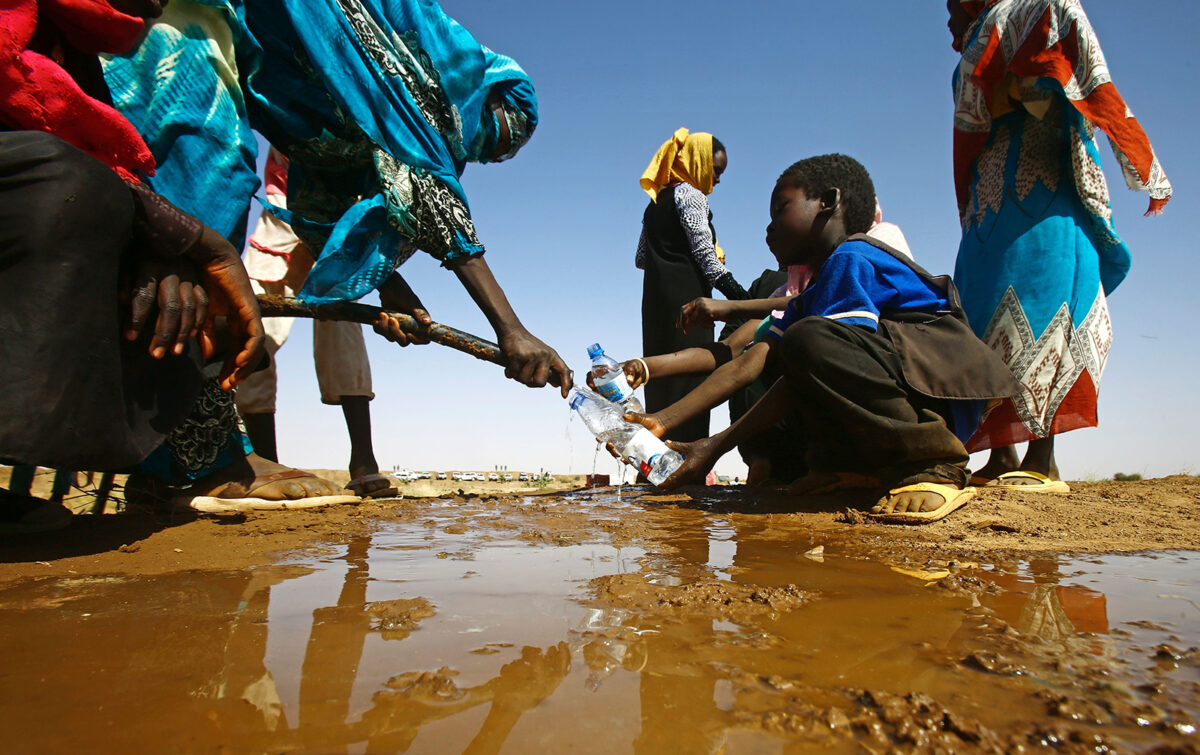
UN backs cholera vaccination campaign in Sudan’s North Darfur
The United Nations and humanitarian partners have launched a 10-day cholera vaccination campaign in Sudan’s North Darfur despite ongoing insecurity in the region.
Politics
Cross River cancels controversial LG recruitment, approves fresh 4,000 jobs
The Cross River government has announced the cancellation of the 2024/2025 local government recruitment exercise.


