

CSOs call on World Bank to stop financing factory farming

More than 30 civil society organisations have called on the World Bank Group to stop financing industrial livestock production and redirect funds to sustainable, small-scale food systems that protect people, animals, and the planet.
This call comes as part of a coordinated global mobilisation across 25 countries during the World Bank and International Finance Corporation Spring Meeting, according to a statement by World Animal Protection on Wednesday.
The worldwide planned actions aim to spotlight the continued use of public funds to support large-scale industrial livestock production, an approach widely linked to climate change, biodiversity loss, public health risks, and growing food insecurity.
Globally, the World Bank Group invested approximately $1.4 billion in industrial livestock production between 2023 and 2024 alone. Its private sector arm, the International Finance Corporation, approved 38 industrial livestock investments worth nearly $2 billion between 2020 and 2025.
“Sub-Saharan Africa is a significant recipient. A 2023 white paper by the Stop Financing Factory Farming Campaign (S3F) revealed that the region received 22 animal agriculture projects of 62 projects across developing regions, valued at approximately $1.395 billion, accounting for 41.9% of the $3.3 billion in total direct support from development finance institutions, including the World Bank Group.
“These figures highlight the region’s share of global financing flows into industrial animal agriculture and raise concerns about the long-term impacts on rural livelihoods, ecosystems, and climate resilience across Africa.
“Despite growing concerns over the environmental and social costs of factory farming, the World Bank Group announced plans to expand its agribusiness portfolio to $9 billion annually by 2030. At the same time, the IFC is undertaking a once-in-a-decade review of its environmental and social Performance Standards, creating a pivotal opportunity to align public finance with climate commitments, biodiversity protection, and sustainable development goals,” the organisation stated.
WAP warned that continued investment in factory farming could undermine traditional African food systems, which are largely based on smallholder farmers who produce the majority of the continent’s food. Instead of strengthening food security, large-scale industrial livestock systems often concentrate wealth in a few individuals, increase environmental degradation, and expose communities to pollution and disease risks.
Sally Kahiu, external affairs lead at WAP, said, “Africa’s food future depends on investments that strengthen smallholder farmers, protect ecosystems, and ensure long-term food security. Public funds should not be used to expand factory farming systems that threaten communities, animals, and the environment. We call on the World Bank Group to champion sustainable, locally driven food systems that truly support Africa’s development and resilience.”
Meanwhile, the Stop Financing Factory Farming Campaign continues to urge international financial institutions to adopt transparent policies that phase out funding for industrial livestock operations.
“Public finance should be a force for equitable development, not a driver of environmental harm and social exclusion,” said Opeyemi Elujulo, the executive director of Youth in Agroecology and Restoration Network and S3F Youth, Policy, and campaign lead.

We have recently deactivated our website's comment provider in favour of other channels of distribution and commentary. We encourage you to join the conversation on our stories via our Facebook, Twitter and other social media pages.

More from Peoples Gazette

States
Independence: NBA urges Nigerians to expect better future
The NBA said that ordinary Nigerians should be deriving benefit from the subsidy removal rather than hardship.

Agriculture
FG tasks ECOWAS on leveraging financing strategies for agroecology
The federal government has urged stakeholders in the agriculture and finance sectors in the West Africa region to leverage financing strategies to enhance agroecology practices

Politics
Katsina youths pledge to deliver over 2 million votes to Atiku
“Katsina State is Atiku’s political base because it is his second home.”
World
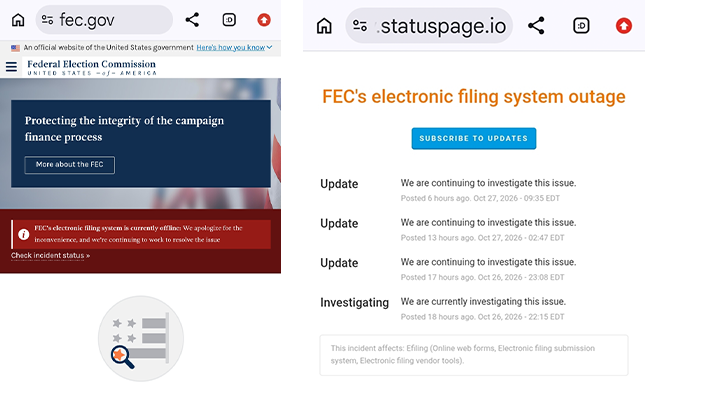
Hackers hit U.S. Federal Election Commission website, disrupt e-filing system ahead of midterm elections
For the past 18 hours, the U.S. FEC website has suffered an “electronic filing system outage” due to an attack by hackers.

World
Netherlands embraces AI, to cut 25,000 jobs
The Dutch government said it has added 46,500 jobs to its workforce since 2018 but can no longer afford the salaries.

Anti-Corruption
Alleged Fraud: Witness tells court funds paid into firms linked to Yahaya Bello came from LG accounts
Mr Justice said the EFCC obtained and analysed bank records to trace the movement of funds through several companies under investigation.

Politics
2027: ADC, NDC, PDP, Labour Party allege intimidation in Edo, demand protection
They urged security agencies to remain impartial and ensure equal protection for all political parties before, during and after the elections.

NationWide
Knocks, praises over Obi’s pledge to shun foreign trips if elected president
Mr Obi said Nigerians could no longer afford to elect leaders who were unavailable to govern the country.

Politics
Wike, Fubara, Abe unite Rivers leaders behind Tinubu’s 2027 re-election bid
Mr Wike urged PDP members across Rivers and other states to support Mr Tinubu, regardless of party affiliation.


