

Defence, interior ministers pledge stronger collaboration to fix Nigeria’s security gaps

Defence Minister Christopher Musa has called for deeper synergy between the ministries of defence and interior, saying Nigeria’s internal security challenges can only be effectively tackled through seamless collaboration and shared responsibility.
Mr Musa made the call on Friday in Abuja during a courtesy visit to the Minister of Interior, Olubunmi Tunji-Ojo, where they both pledged to strengthen inter-ministerial cooperation to address evolving security threats.
He described the two ministries as “two sides of the same national security coin,” noting that the distinction between internal and external security had become increasingly blurred by asymmetric threats such as terrorism, insurgency, banditry, and cross-border crimes.
Mr Musa stressed that no single agency or ministry can address challenges in isolation and called for intelligence-driven, whole-of-government responses.
The defence minister emphasised the importance of stronger intelligence collaboration, proposing the strengthening of a joint intelligence fusion framework between the Defence Intelligence Agency and interior agencies such as the Nigerian Immigration Service, the Nigeria Security and Civil Defence Corps (NSCDC), and the Nigerian Correctional Service.
He also advocated the use of secure technology platforms for real-time information sharing, regular joint simulations and tabletop exercises, and clear protocols for joint operations to reduce friction and maximise resources.
Mr Musa assured that the Ministry of Defence would continue to support capacity-building for internal security agencies through specialised training in counterterrorism, intelligence gathering, and crisis response, as well as logistical and technical support where required.
In his response, Mr Tunji-Ojo agreed that weak internal security architecture inevitably overstretched the military, noting that effective internal security agencies would enable the armed forces to focus on their core defence mandate.
“Our national security architecture stands on a tripod of intelligence, internal security, and defence. If one leg is weak, the entire structure is threatened,” he said.
The interior minister warned against rivalry and territorialism among security institutions, stressing that Nigerians were more concerned about safety and performance than ministerial boundaries.
He identified border security as a critical area for collaboration, particularly through the Nigerian Immigration Service, adding that no country could guarantee the safety of its citizens without securing its borders.
Mr Tunji-Ojo also clarified the role of the NSCDC, saying the corps was not meant to be a “police version 2.0” but a specialised agency focused on protecting critical national assets such as schools, oil and gas facilities, solid minerals, telecommunications, and power infrastructure.
He described attacks on such assets as acts of “economic terrorism”, noting that effective protection required military-grade training and close cooperation with the armed forces.
Both ministers underscored the importance of integrated data management, stressing that Interior Ministry databases should serve as critical inputs for defence planning and national security decision-making.
They further agreed to activate an inter-ministerial technical committee to meet regularly, review progress, address bottlenecks, and institutionalise cooperation at both strategic and operational levels.
Messrs Musa and Tunji-Ojo expressed confidence that sustained collaboration between their ministries would enhance national security, improve public confidence, and deliver a safer Nigeria.
(NAN)

We have recently deactivated our website's comment provider in favour of other channels of distribution and commentary. We encourage you to join the conversation on our stories via our Facebook, Twitter and other social media pages.

More from Peoples Gazette

States
Independence: NBA urges Nigerians to expect better future
The NBA said that ordinary Nigerians should be deriving benefit from the subsidy removal rather than hardship.

Agriculture
FG tasks ECOWAS on leveraging financing strategies for agroecology
The federal government has urged stakeholders in the agriculture and finance sectors in the West Africa region to leverage financing strategies to enhance agroecology practices

Politics
Katsina youths pledge to deliver over 2 million votes to Atiku
“Katsina State is Atiku’s political base because it is his second home.”

World
Study finds trust in science fell below pre-COVID-19 levels, links decline to financial hardship
“The steepest declines are among people who feel they are struggling financially,” the study finds.
States
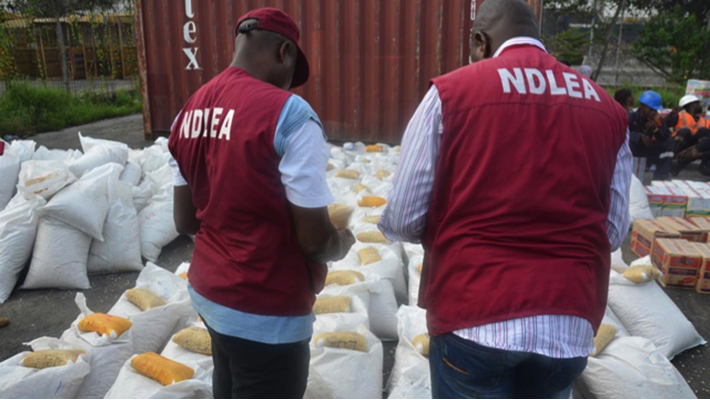
Large consignments of illicit drugs seized in Lagos, Kano, five other states: NDLEA
NDLEA said in a statement that the states were Lagos, Taraba, Kano, Kaduna, Edo, Cross River and Ondo.
States
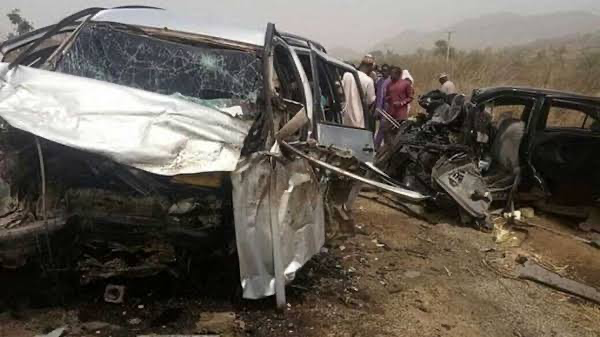
Adamawa govt to dualise Girei-Yola Road to curb crashes
The commissioner said the dualisation of the road was among other measures the government planned to curb frequent crashes.

NationWide
FG sets performance targets for MDAs to address delays, overlapping regulations
The minister also called for stakeholder consultations before introducing new regulations.

Economy
OPay files for U.S. IPO, plans secondary listing on Nigerian Exchange
Opay sought to file an initial public offering on the NYSE, and its success will determine whether a secondary listing will proceed on NGX.
Abuja
Abuja business owners, residents express frustration over power outage
An AEDC official said the outage was due to a technical fault on the 330KV Shiroro-Katampe transmission line belonging to the TCN.


