

Despite N516 billion revenue, Lagos still borrowing to pay salaries: Report
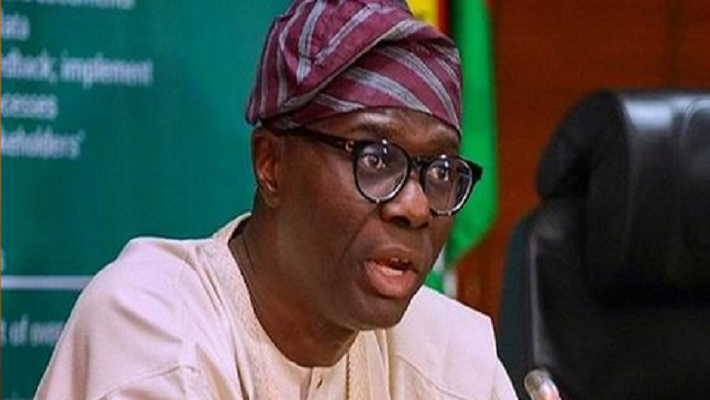
More than a third of Nigerian states earn revenue so low that it cannot cover their recurrent expenditure and repay debts, according to a BudgIT report published on Friday.
The 13 states include Lagos, Abia, Kogi and Adamawa.
Lagos earned N516 billion in 2019 but it spent N556 billion on overhead and debt servicing. Abia spent N67 billion on overhead and debt servicing but earned only N66 billion that year.
Successive administrations in the Nigerian commercial capital — all members of the same political bloc since 1999 — have refused to open its books to public scrutiny.
Freedom of information filings seeking explanation for public funds use in the state have also been turned down in an audacious enforcement of secrecy.
Kogi made only N69 billion but its debt repayment and recurrent expenditure cost N102 billion, marking yet another gloomy picture for the north-central state.
Rivers and Anambra rank first and second respectively in BudgIT’s 2020 Fiscal Sustainability Index that evaluates the fiscal performance of states. The worst performers are Benue, Ekiti, Adamawa, Osun and Bayelsa.
Many states do not generate enough internal revenue and depend on monthly allocations from the federal government.
When Nigeria’s inflows from oil fell in 2016 and a recession set in, about two-thirds of states could not pay their civil service workers let alone invest in education or healthcare. These states turned to the federal government for a bailout.
An economist Adedayo Bakare told Peoples Gazette that state governments are not collecting enough taxes because a large part of the economy in those states is informal and unregistered for certain taxation.
He said, “Businesses in the formal economy are bearing the extra tax burden. The government needs to track the informal businesses and ensure they also pay their fair share.”
Some states are responding to revenue shortfalls by setting new taxes and fees. In August, Lagos began requiring ride-hailing firms such as Uber to pay a license fee. Their drivers were also required to pay N20 per trip into a fund, which the state says will be used to fund road maintenance.
COVID-19 and the resulting decline in oil prices are again putting pressure on states dependent on petrodollars from the federal government. In August, the Nigerian Governors Forum urged Abuja to consider another bailout for states.

We have recently deactivated our website's comment provider in favour of other channels of distribution and commentary. We encourage you to join the conversation on our stories via our Facebook, Twitter and other social media pages.

More from Peoples Gazette

States
Independence: NBA urges Nigerians to expect better future
The NBA said that ordinary Nigerians should be deriving benefit from the subsidy removal rather than hardship.

Agriculture
FG tasks ECOWAS on leveraging financing strategies for agroecology
The federal government has urged stakeholders in the agriculture and finance sectors in the West Africa region to leverage financing strategies to enhance agroecology practices

Politics
Katsina youths pledge to deliver over 2 million votes to Atiku
“Katsina State is Atiku’s political base because it is his second home.”
States
Kano will lead other northern states to secure victory for Tinubu in 2027, says Gov. Yusuf
Mr Yusuf said the North had confidence in Mr Tinubu and remained committed to supporting his second-term ambition.

NationWide
CGC Volleyball League: Anambra Queens, COAS Spikers record wins
Sunshine Spikers also recorded a straight-set victory over Life Camp VC, winning 25-22, 25-21 and 25-20.
States
Cross River targets N19 billion revenue from 2026 carnival
Mr Otu noted that the government was repositioning the festival as a major economic asset.

Lagos
Two die, two injured in Lagos road crash
Mr Bakare-Oki expressed sympathy to the families of the deceased and wished the injured victims a speedy and complete recovery.

Education
SSANU suspends two-week ultimatum after FG releases eight months’ arrears
Mr Ibrahim urged the Federal Government to address other outstanding demands affecting SSANU members in federal and state universities.
World
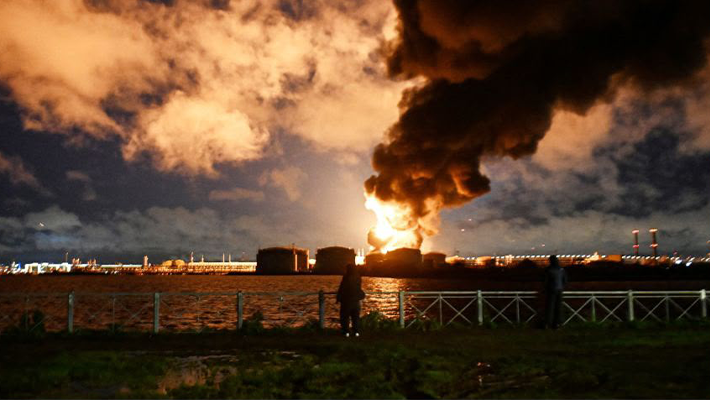
Ukraine attacks Russia’s key oil terminal despite Trump’s ceasefire pact claim
Mr Zelensky said Russian forces launched nearly 2,700 drones, 1,700 aerial bombs and 66 missiles at Ukraine over the past week.


